Activating brown fat: how to stimulate this heat-producing tissue
Share
Brown adipose tissue (BAT, Brown Adipose Tissue) is one of the most exciting discoveries in contemporary metabolic physiology. Long considered a peculiarity of infants, who need it to regulate their body temperature, its presence and activity in adults were only formally confirmed in 2009, thanks to PET-scan imaging, in three independent studies published simultaneously in the New England Journal of Medicine. This discovery sparked a revolution in our understanding of energy metabolism.
Here is how brown fat works, why our lifestyle puts it to sleep, and three studied ways to stimulate it for your metabolic health.
What is brown fat (brown adipose tissue, BAT)?
To understand brown fat, you must first understand what radically distinguishes it from the white fat we all know, the one that accumulates around the waist after the holidays.
The role of mitochondria and UCP1: thermogenesis explained
Ordinary white fat is essentially a warehouse: its cells (white adipocytes) contain a large single lipid droplet that stores excess energy in the form of triglycerides. They are metabolically passive; they are not meant to burn anything.
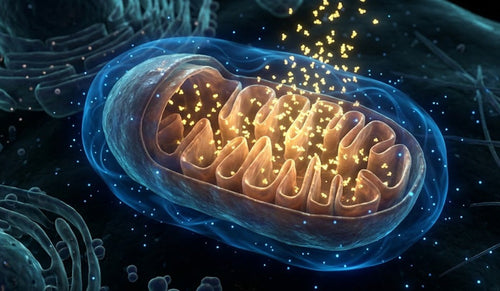
Brown adipocytes are structurally opposite: they do not contain a large fat droplet, but hundreds of small lipid droplets and, above all, an extraordinarily high density of mitochondria, hence their characteristic reddish-brown color (mitochondria contain cytochrome, a reddish pigment). These mitochondria are the engine of brown fat.
The precise mechanism relies on a unique protein: UCP1 (Uncoupling Protein 1, or "thermogenin"). Normally, mitochondria use the proton gradient of their inner membrane to synthesize ATP, cellular energy. UCP1 uncouples this process: it allows protons to cross the inner membrane without producing ATP, dissipating energy directly as heat. This is non-shivering thermogenesis, your internal heater that burns lipid fuel to heat your body.
Reference: Cypess, A.M. et al. (2009). "Identification and importance of brown adipose tissue in adult humans." The New England Journal of Medicine, 360(15), 1509-1517. This study, published simultaneously with two others in the same issue of the NEJM, confirmed by PET-scan imaging (FDG-PET) the presence of metabolically active BAT in 7.5% of women and 3.1% of men examined in the cold, definitively establishing the existence of functional brown adipose tissue in healthy adults.
Key takeaway: brown fat is the physiological opposite of white fat. Where one stores, the other burns. Where one is passive, the other is one of the most metabolically active tissues in the body on an equal weight basis.
Why the modern lifestyle switches off our BAT
Brown adipose tissue is a "thermal emergency" tissue: it activates in response to cold to maintain body temperature. This activation occurs through the sympathetic nervous system, which releases norepinephrine on brown adipocytes, triggering the metabolic cascade of thermogenesis.
The problem: our modern lifestyle has eliminated almost all the stimuli that kept this system active.
- Widespread central heating: our interiors maintain a constant temperature of 20-23°C (68-73°F), eliminating the thermal stress that was the main trigger for BAT in our ancestors.
- Constant insulating clothing: we no longer experience significant thermal variations, even when going outside.
- Sedentary lifestyle: physical exercise also stimulates BAT activity via molecules called myokines (released by contracting muscles); a sedentary lifestyle deprives BAT of this second activation signal.
The result: in a normal-weight adult living in a temperate Western environment, active BAT often represents only a few grams of tissue, compared to 50 to 80g in infants and populations living in cold regions. It is a tissue that atrophies for lack of stimulation, like an unused muscle.
Comparison table: white fat vs brown fat
| Criterion | White fat (WAT) | Brown fat (BAT) |
|---|---|---|
| Main function | Energy storage in the form of triglycerides, passive energy reserve | Heat production through thermogenesis, active combustion of lipids and glucose |
| Location in adults | Subcutaneous tissue (belly, thighs, hips), visceral fat (deep abdomen) | Supraclavicular regions (above the collarbones), cervical, mediastinal, paravertebral areas |
| Cell structure | Large single lipid droplet, few mitochondria, "passive" cell | Multiple small lipid droplets, very dense in UCP1-rich mitochondria |
| Response to cold | No specific metabolic activation | Immediate activation via the sympathetic nervous system (norepinephrine), thermogenesis triggered |
| Impact on blood sugar | Visceral fat secretes pro-inflammatory adipokines worsening insulin resistance | Actively absorbs blood glucose during activation, improves insulin sensitivity |
| Reversibility | Can be reduced by calorie deficit and exercise | Can be recruited and increased by cold exposure, certain nutrients, and deep sleep |
3 methods science has studied to activate your brown fat
These three levers act on distinct but complementary biological pathways. Used together, they constitute a coherent, gradual, and safe BAT activation protocol.
Cold exposure: thermal hormesis
Cold is the primary physiological trigger for brown fat, and by far the best documented. Exposure to a cool ambient temperature activates the sympathetic nervous system, which releases norepinephrine on brown adipocytes via adrenergic nerve endings. This norepinephrine activates UCP1 and triggers thermogenesis in a few minutes.
The key concept here is hormesis: moderate biological stress, applied regularly, strengthens and adapts the system rather than weakening it. Moderate cold is a first-class hormetic stressor for metabolism, provided you stay within reasonable doses.
Documented protocols:
- Room at 18-19°C (64-66°F) at night: this is the simplest and best documented intervention. An NIH (National Institutes of Health) study published in 2014 followed volunteers sleeping for 4 weeks in a room at 19°C (66°F) after several weeks at 24°C (75°F). Result: the volume of metabolically active BAT had increased by about 42% and insulin sensitivity had significantly improved.
- Progressive cold showers: ending your shower with 30 seconds to 2 minutes of cold water stimulates BAT activation via the same sympathetic mechanism. Studies on cold water immersion show an increase in energy expenditure of 15 to 30% in the hours following exposure, largely attributable to BAT.
- Outdoor walking in cool weather: voluntarily exposing yourself to the ambient cold (slightly underdressed compared to your usual comfort) for a few hours a week is enough to keep BAT in a regular state of activation.
Reference: Cypess, A.M. et al. (2009), NEJM, op. cit. And: Yoneshiro, T. et al. (2013). "Recruited brown adipose tissue as an antiobesity agent in humans." Journal of Clinical Investigation, 123(8), 3404-3408. This study demonstrates that regular exposure to moderate cold (17°C (63°F) for 2h/day, 6 weeks) significantly increases the mass and activity of BAT in adult volunteers, with a concomitant reduction in white fat mass.
Thermogenic nutrition: capsaicin and EGCG
The sympathetic nervous system is the common activation pathway for BAT, whether by cold or by certain bioactive molecules. Two food compounds have been the subject of serious clinical studies for their ability to partially mimic the effect of cold on brown adipose tissue.
Capsaicin (and capsaicinoids from chili peppers): the molecules that give chili peppers their spiciness bind to TRPV1 receptors (heat and pain receptors) in the gastric mucosa and afferent nerves. This activation triggers a sympathetic response that stimulates BAT activity and increases energy expenditure. Studies measure an increase in thermogenesis of 4 to 5% after consuming capsaicin, with a concomitant reduction in appetite and preferences for fats.
EGCG (epigallocatechin gallate) from matcha tea: green tea catechins, and EGCG in particular, inhibit an enzyme called catechol-O-methyltransferase (COMT), which normally breaks down norepinephrine. By inhibiting this degradation, EGCG prolongs the effect of norepinephrine on the beta-adrenergic receptors of brown adipocytes, amplifying and prolonging their thermogenic activation. In combination with caffeine (also present in green tea), the effect is synergistic.
Reference: Hursel, R. & Westerterp-Plantenga, M.S. (2010). "Thermogenic ingredients and body weight regulation." International Journal of Obesity, 34(4), 659-669. This meta-analysis of 11 studies on capsaicin and 18 studies on green tea confirms significant effects on energy expenditure and fat oxidation, partly through the activation of the sympathetic nervous system and BAT. Complement: Yoneshiro, T. et al. (2019). "BCAA catabolism in brown fat controls energy homeostasis through SLC25A44." Nature, 572, 614-619.
Practical integration:
- Matcha tea: 1 to 2 cups of quality matcha (powder, prepared at 80°C (176°F)) in the morning or before going out into the cold, the combination of EGCG + caffeine + cold creates a documented synergy of BAT activation.
- Chili peppers: incorporate fresh chili peppers or cayenne pepper powder into your daily meals, without aiming for high doses. A spicy meal provides a few milligrams of capsaicin. A Purdue University meta-analysis (Ludy et al., Chemical Senses, 2012) concludes, and I quote: "Collectively, the studies reviewed provide supportive evidence for roles of capsaicin and capsiate in weight management." The authors also note that the effect remains modest.
- Complementary thermogenic spices: cinnamon (improves insulin signaling in adipocytes), fresh ginger (gingerols with thermogenic properties close to capsaicin) are coherent additions to a pro-BAT nutritional routine.
Combining the right thermogenic nutrients, managing your blood sugar, improving your micronutrient intake, this is what our personalized naturopathic support helps you set up in a coherent and sustainable way.
Start my personalized follow-upDeep sleep and cellular recruitment: the unsuspected role of melatonin
This is perhaps the most underestimated lever of all, and certainly the most accessible, because it requires no particular effort beyond careful sleep hygiene.
Melatonin, a hormone produced by the pineal gland in response to darkness, is known as "the sleep hormone". But recent research is discovering an unsuspected metabolic role for it: it directly activates the MT1 and MT2 receptors present on adipocytes, stimulating a process called "browning", the conversion of white adipocytes into "beige" (or "brite") adipocytes, intermediate cells that acquire metabolic characteristics close to brown fat with UCP1 expression.
In other words: a high nighttime melatonin level, the one you get naturally with deep sleep in total darkness, participates in the recruitment of new metabolically active cells. An NIH study confirmed that a group of volunteers sleeping in a cool room (19°C (66°F)) for 4 weeks saw their BAT grow significantly, an effect probably mediated in part by the increase in nighttime melatonin favored by a cool ambient temperature.
Reference: Jiménez-Aranda, A. et al. (2013). "Melatonin induces browning of inguinal white adipose tissue in Zucker diabetic fatty rats." Journal of Pineal Research, 55(4), 416-423. This article established the molecular mechanism by which melatonin activates the adipose "browning" genes via the MT1/MT2 receptors, increasing the expression of UCP1 in white adipocytes and converting them into thermogenic cells. Human complement: Lee, P., Celi, F.S. et al. (2014), Diabetes, 63(11), 3686-3698, NIH study on sleep at 19°C (66°F).
Improving your melatonin naturally:
- Cool room at 18-19°C (64-66°F): the perfect combination, cold stimulates BAT directly and promotes deep sleep with high melatonin that stimulates "browning" in the longer term.
- Total darkness: the slightest light source inhibits melatonin production. A sleep mask or blackout blinds are literal metabolic investments.
- No blue screens after 9 p.m.: blue light from smartphones and screens suppresses melatonin for up to 3 hours after exposure. A blue light filter or blue light blocking glasses in the evening is a documented intervention.
- Light dinner: a heavy evening meal increases nighttime blood sugar and insulin, which inhibit melatonin secretion and nighttime BAT thermogenesis.
The mistakes to avoid for a healthy metabolism
Brown fat is an effective improvement tool, but it is sometimes presented on social media with an enthusiasm that overflows into unrealistic expectations. Two mistakes deserve clarification.
1. Wanting to go too fast: thermal shock is not hormesis
Thermal hormesis relies on gradual progression. Going directly from a hot shower to 5 minutes of ice water immersion does not activate your BAT, it is an acute physiological stress that can cause reflex bradycardia, arrhythmia, a drop in pressure, or hypothermia depending on your cardiovascular condition.
The golden rule: start with 15 seconds of cold water at the end of your shower, increase gradually over weeks, never fully immerse yourself in ice water without long acclimatization. The benefits of moderate cold are just as real as those of extreme cold, with an infinitely more favorable risk profile.
2. Thinking that BAT replaces diet and exercise
Let's be precise about the orders of magnitude. An adult with well-activated BAT burns about 50 to 150 extra kcal per day through this tissue during cold exposure, which is the equivalent of a square of chocolate. It is useful as a metabolic accelerator in the long term, especially for blood sugar regulation and insulin sensitivity. It is not a quick weight loss solution.
BAT is less active in overweight people (researchers observe less active BAT in PET imaging in obese subjects) and in older people. This is precisely why making it a lever early, jointly with a balanced diet and regular physical activity, is an intelligent metabolic prevention approach.
Steer your physiology consciously
Brown adipose tissue is the perfect illustration of a fundamental truth in biology: our genes were shaped for an environment that our modern lifestyle has almost entirely eliminated. Cold, movement, overnight fasting, sleeping in the dark - all moderate physiological stressors that kept our biology in a state of active readiness, and which the comforts of the 21st century have gradually erased.
Reactivating brown fat means partially reintroducing these stimuli intentionally, with the progression and consistency that biology requires. The documented benefits go beyond simple calorie burning: improved insulin sensitivity, better blood sugar regulation, reduced metabolic inflammation, and better sleep quality. All of these align perfectly with a long-term naturopathic approach.
Le Terrier du Bien-Être's support program helps you build a comprehensive metabolic improvement protocol, including BAT activation, thermogenic nutrition, sleep management, and blood sugar balance, tailored to your unique constitution and lifestyle.
Join the program, €10/monthBrown fat and heart health
Brown fat doesn't just produce heat. It also releases chemical messengers called batokines, which act on the liver, muscles, and blood vessels. A major study published in Nature Medicine in 2021 showed that people with active brown fat are less likely to have type 2 diabetes, hypertension, and heart disease, regardless of weight. This is an association, not proof of cause and effect, but it is a lead that is being taken very seriously.
Omega-3 EPA and DHA, found in small oily fish, are also being studied for their ability to support the activity of this tissue.
Frequently asked questions about brown fat and metabolism
Can we create brown fat, or only activate the fat we already have?
Both are possible, and this is one of the most exciting discoveries in recent research. On the one hand, we can activate existing BAT (primarily supraclavicular in adults) through cold, norepinephrine, and thermogenic nutrients. On the other hand, it is possible to recruit new active adipocytes through two mechanisms: the conversion of white adipocytes into "beige" adipocytes (browning), stimulated by melatonin, exercise, and certain myokines; and the biogenesis of new cells from adipose precursors. PET imaging studies have confirmed that interventions lasting several weeks (regular cold exposure, sleeping in a cool room) measurably increase the volume of active BAT in adults.
Where exactly is brown fat located in adults?
In adults, brown adipose tissue is primarily located in the supraclavicular regions (above the collarbones and in the hollow above the clavicle); this is where PET-scan imaging studies have most consistently identified it. It is also found in the posterior cervical region (base of the neck), the mediastinum (around the heart and major blood vessels), the para-aortic areas (along the abdominal aorta), and in smaller amounts in the paravertebral regions. Its deep location explains why it is invisible to the naked eye and cannot be felt, unlike subcutaneous white fat.
Does a cold shower really help you lose weight?
Directly, the effect of a cold shower on weight loss is modest: a 2- to 3-minute cold shower burns a few extra calories through thermogenesis. The benefit is more indirect and metabolic in the long term: regular cold exposure (of which a cold shower is an accessible form) gradually stimulates BAT activity and recruitment, improves insulin sensitivity, reduces inflammation, and improves blood sugar regulation. After 6 to 12 weeks of regular practice, these adaptations can contribute to a better body composition, but a cold shower alone, without consistent nutrition and physical activity, will not produce noticeable results.
Why do babies have more brown fat than adults?
Newborns have a proportionally larger body surface area than adults, immature thermoregulation, and cannot shiver effectively to produce muscle heat. They compensate with a large amount of BAT, mainly distributed in the back, between the shoulder blades, around the kidneys, and in the neck, which can account for up to 5% of their body mass. This tissue is their primary defense mechanism against getting cold. As a child grows, develops muscle mass, and gains access to heated environments, BAT gradually recedes. This is the regression that adult interventions (regular cold exposure, nighttime melatonin) partially attempt to counteract.
Is matcha better than regular green tea for activating brown fat?
Yes, for one simple reason: matcha is made from whole tea leaves ground into powder (all of which is consumed during preparation), while brewed green tea only extracts a fraction of the catechins. For an equivalent serving size, matcha typically contains 3 to 5 times more EGCG than regular brewed green tea. The way matcha is grown (shading the plants in the final weeks before harvest) also increases the concentration of L-theanine, which modulates the effect of caffeine for gentler, more sustained stimulation of the sympathetic nervous system - ideal for activating BAT without excessive stimulation.
Is brown fat less prevalent in overweight people?
Yes, this is one of the most consistent findings from PET imaging studies of BAT. Obese or significantly overweight people consistently show less detectable active BAT than people of normal weight with similar body types. The mechanism is likely bidirectional: being overweight (and the thermal insulation it provides) reduces the need for thermogenesis, decreasing BAT activity, which, when less stimulated, gradually recedes. This clinical observation highlights the importance of activating this system early, before the accumulation of white fat creates a vicious cycle of gradually declining metabolic activity.
Can brown fat help regulate blood sugar?
Yes, and this is one of the most documented benefits and most relevant to overall health. When activated, brown adipose tissue absorbs blood glucose through GLUT-4 transporters, to some extent independently of insulin. PET-scan studies (which use specifically labeled glucose to visualize BAT) have documented significant glucose uptake by cold-activated BAT. Intervention studies show that regular BAT activation improves overall insulin sensitivity, reduces fasting blood sugar, and lowers postprandial spikes. For people with insulin resistance or prediabetes, BAT activation is a particularly interesting metabolic lever.
Does exercise also activate brown fat?
Yes, through a mechanism that is different from cold but complementary. Contracting skeletal muscles release myokines, signaling molecules, the most studied of which in this context is irisin. Irisin activates "browning" (the conversion of white adipocytes into thermogenic beige adipocytes) by stimulating the expression of UCP1 in white adipose tissue. Animal and human studies have documented an increase in BAT and beige adipocytes after regular exercise programs, regardless of cold exposure. This is another reason to combine physical exercise, moderate cold exposure, and thermogenic nutrition in a consistent BAT activation protocol.
Warning: this article is written for educational purposes. It does not constitute a medical weight-loss program. In cases of cardiovascular disease, diabetes, or any chronic condition, consult your doctor before any intense cold exposure or significant dietary changes.
Main sources: Cypess, A.M. et al. (2009), New England Journal of Medicine, Yoneshiro, T. et al. (2013), Journal of Clinical Investigation, Hursel, R. & Westerterp-Plantenga (2010), International Journal of Obesity, Jiménez-Aranda, A. et al. (2013), Journal of Pineal Research, Lee, P., Celi, F.S. et al. (2014), Diabetes (NIH study).