Symptoms of insulin resistance: 4 clinical signs not to be ignored
Share
Insulin resistance is the silent epidemic of the 21st century. It precedes type 2 diabetes by an average of 5 to 10 years, a valuable window of intervention that conventional medicine rarely detects due to a lack of systematic screening. During all these years, however, the body sends clear, readable, scientifically documented signals. They show up on your skin, in your figure, in your blood pressure, and in your hormonal balance.
This article helps you spot these signals early and shares natural levers that may help the process recede.
Important if you are being treated for diabetes: never change or stop a treatment without your doctor's advice. Changing your diet or physical activity while on medication can cause blood sugar to drop sharply (hypoglycemia). Notify your doctor before starting, so they can adjust your treatment if necessary.
Understanding the biochemistry: what is insulin resistance?
The key role of insulin: the "key" that opens your cells
After every meal, your blood sugar increases. In response, the pancreas secretes insulin, a hormone whose role is to act as a "key": it binds to receptors on the surface of your cells (muscles, liver, adipose tissue) and "opens their door" to allow glucose to enter and be used as fuel or stored as glycogen.
It is an elegant, precise, and remarkably efficient system when it works properly.
When cells become "deaf": the mechanism of resistance
Imagine that you send the same signal to your cells dozens of times a day, for years, because your diet is chronically high in high-glycemic index carbohydrates. Gradually, your cells adapt to this constant exposure to insulin by reducing the number and sensitivity of their receptors. They become, literally, "deaf" to the insulin signal.
Faced with this cellular silence, the pancreas reacts in the only way it knows: by producing even more insulin to compensate. This is compensatory hyperinsulinemia, a state in which your blood insulin level is chronically high even if your blood sugar still appears normal. It is precisely during this silent phase, sometimes lasting several years, that the clinical signs we will describe appear.
Reference: Reaven, G.M. (1988). "Banting lecture 1988. Role of insulin resistance in human disease." Diabetes, 37(12), 1595-1607. Gerald Reaven's foundational work on Syndrome X (later renamed metabolic syndrome) formalized the concept of insulin resistance as a common precursor to type 2 diabetes, hypertension, and dyslipidemia, establishing the theoretical framework in which all modern metabolic medicine is based.
The 4 physical symptoms of insulin resistance
These four signs are not anecdotal curiosities. Each one is based on a precise biochemical cascade, documented by international medical literature. Their combined presence should systematically prompt a thorough metabolic assessment.
Skin signals: acanthosis nigricans and acrochordons
Your skin is a mirror of your metabolism. Two skin manifestations are now clinically recognized as reliable markers of hyperinsulinemia.
Acanthosis nigricans is a brownish, velvety hyperpigmentation that appears in skin folds, the neck, armpits, groin, elbows, and behind the knees. It results from the excessive activation of IGF-1 (insulin-like growth factor) receptors in the skin by excess circulating insulin: keratinocytes and fibroblasts receive a signal to proliferate and hyper-melanize. It is not a disease in itself, but a warning sign.
Acrochordons (or "soft fibromas," those small hanging bits of skin in the neck or armpits) respond to the same mechanism: hyperinsulinemia activates skin growth receptors and causes local proliferation of connective and epidermal tissue. Their clustered presence in a young adult is a particularly informative signal.
Reference: Plourde, G. & Marks, J.G. (1998). "Acanthosis nigricans as a marker of insulin resistance." Journal of the American Academy of Dermatology, 38(5), 834-835. This study formally established the correlation between the severity of acanthosis nigricans, fasting insulin levels, and insulin resistance measured by euglycemic clamp, making this skin sign an accessible and free clinical screening tool. Complement: Tamega et al. (2010), Anais Brasileiros de Dermatologia on acrochordons as skin biomarkers of metabolic syndrome.
To check: lean in front of a mirror and examine the skin of your neck, armpits, and groin. A slightly darker shade, a velvety texture, or the presence of several small soft growths are signals to report to your doctor.
Visceral fat accumulation
Not all fats are equal in terms of metabolic risk. Subcutaneous fat, the kind you can pinch under the skin of your thighs or arms, is metabolically relatively passive. Visceral fat, the kind that accumulates deep around the abdominal organs (liver, pancreas, intestines), is a whole different matter.
Insulin is a storage hormone. Chronically elevated, it preferentially directs fat storage to visceral adipose tissue. And this visceral adipose tissue is not inert: it is an inflammatory endocrine organ that secretes pro-inflammatory adipokines (TNF-alpha, interleukin-6, resistin), further worsening insulin resistance and maintaining a metabolic vicious cycle.
Practical measure: waist circumference is the simplest and best-documented clinical proxy for visceral fat. The warning thresholds recognized by the WHO and the IDF (International Diabetes Federation) are 94 cm (37 in) in men and 80 cm (31 in) in women.
Reference: Després, J.P. & Lemieux, I. (2006). "Abdominal obesity and metabolic syndrome." Nature, 444(7121), 881-887. This review published in Nature helped establish abdominal visceral fat as an independent cardiovascular and metabolic risk factor, and described its close two-way link with insulin resistance: insulin resistance promotes visceral deposition, and visceral adipose tissue worsens insulin resistance via its pro-inflammatory secretions.
Unexplained high blood pressure
An unexpected, yet solidly documented link since the 90s, connects high blood pressure to insulin resistance. For many doctors, these two conditions are still treated separately. Biochemistry, however, sees them as two sides of the same metabolic coin.
The mechanism is precise: excess insulin stimulates the reabsorption of sodium by the renal tubules. More sodium retained in circulation means more water retained, and therefore an increase in blood volume. Increasing the volume of a liquid in a closed circuit means increasing the pressure: blood pressure rises.
In parallel, hyperinsulinemia activates the sympathetic nervous system and stimulates the production of endothelin-1 (an effective vasoconstrictor), contributing to the hardening of vascular walls. This double mechanism, sodium retention and vasoconstriction, explains why some "idiopathic" hypertension (without an apparent cause) responds better to nutritional intervention than to a change in sodium intake.
Reference: Reaven, G.M., Lithell, H. & Landsberg, L. (1996). "Hypertension and associated metabolic abnormalities, the role of insulin resistance and the sympathoadrenal system." New England Journal of Medicine, 334(6), 374-381. This NEJM study formalized the renal mechanism of hyperinsulinemic hypertension, paving the way for a unified understanding of metabolic syndrome.
To monitor: a blood pressure higher than 130/85 mmHg repeatedly, especially if accompanied by the other signs on this list, deserves an insulin assessment.
Hormonal and intimate imbalances
The fourth sign is often the most confusing for those who experience it, because it seems a priori removed from blood sugar. And yet, the link is direct, documented, and clinically recognized.
In women, PCOS (Polycystic Ovary Syndrome): it is the most frequent endocrine pathology in women of childbearing age (5 to 10% of the female population). Hyperinsulinemia plays a central pathogenic role: it stimulates the ovaries to produce an excess of testosterone and androgens, disrupting ovulation and causing the clinical manifestations of PCOS (irregular cycles, hormonal acne, hirsutism, ovarian cysts). Addressing the underlying insulin resistance, without hormonal medication, can help regularize cycles in a significant number of patients, alongside medical care.
In men, erectile dysfunction: an erection is a vascular phenomenon that depends on the quality of the endothelium (the inner wall of the blood vessels). Chronic hyperinsulinemia generates oxidative stress that impairs endothelial function and reduces the bioavailability of nitric oxide (NO), the main mediator of penile vasodilation. Erectile dysfunction is now recognized as an early marker of systemic endothelial dysfunction, and its association with insulin resistance is statistically significant in several studies.
References:
Diamanti-Kandarakis, E. & Dunaif, A. (2012). "Insulin resistance and the polycystic ovary syndrome revisited." Endocrine Reviews, 33(6), 981-1030.
Yao, F. et al. (2013). "Erectile dysfunction may be the first clinical sign of insulin resistance and endothelial dysfunction in young men." Andrology, 1(6), 843-848.
Summary table: assess your metabolic risk
The table below summarizes the 4 clinical signs with their associated biological markers and the most frequently reported functional sensations, exactly the type of content that can help you prepare an informed medical consultation.
| Clinical sign | What you observe | Associated blood test | Daily sensation |
|---|---|---|---|
| Skin signals | Acanthosis nigricans (dark skin in folds), acrochordons (bits of skin in neck/armpits) | Fasting insulin, IGF-1 | No pain, sign often ignored |
| Visceral fat | Waist circumference greater than 94 cm (37 in) (M) / 80 cm (31 in) (F), hard belly despite a normal BMI | HOMA-IR, triglycerides, TG/HDL ratio | Fatigue after meals, post-lunch slump, bloated belly |
| Hypertension | Blood pressure higher than 130/85 mmHg repeatedly without an identified cause | Fasting blood sugar, insulin, creatinine | Headaches at the end of the day, heavy-headed feeling |
| Hormonal imbalances | Irregular cycles, hormonal acne, hirsutism (F), erectile dysfunction (M) | Free testosterone, LH/FSH, SHBG, blood sugar, insulin | Intense sugar cravings, irritability, reactive hypoglycemia |
The most accessible test: the Triglyceride/HDL ratio on a standard lipid panel is a very reliable proxy for insulin resistance. A ratio higher than 3 (in g/L) or 1.5 (in mmol/L) is highly predictive of hyperinsulinemia. Ask your doctor for it at your next check-up.
Naturopathy: how to improve insulin sensitivity naturally?
Insulin resistance is not a life sentence. It is an acquired metabolic state, and what is acquired can be corrected. The metabolic plasticity of the human body is remarkable: intervention studies show significant improvements in insulin sensitivity in 8 to 12 weeks with the right levers.
Low glycemic index and anti-inflammatory nutrition
The nutritional goal is twofold: reduce the amplitude and frequency of blood sugar spikes (to allow insulin levels to drop between meals), and reduce systemic inflammation that maintains receptor resistance.
- Priority to fiber: soluble fibers (legumes, oats, psyllium) slow down carbohydrate absorption and lower the postprandial blood sugar spike. Consumed first during the meal (before proteins, before carbohydrates), they form a viscous matrix in the intestine that reduces sugar absorption by 20 to 73% according to studies.
- Cruciferous vegetables and liver detoxification: the liver plays a central role in blood sugar regulation (via gluconeogenesis and glycogenolysis). Cruciferous vegetables (broccoli, cabbage, radish, arugula) activate phase II of liver detoxification via glucosinolates, indirectly improving insulin clearance.
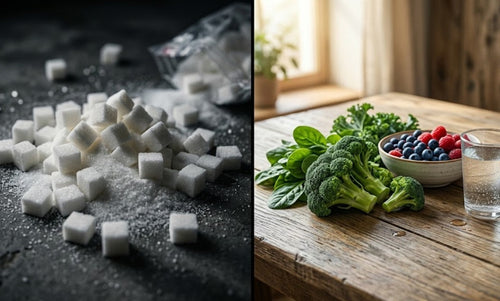
- Reduction of refined sugars and ultra-processed foods: every blood sugar spike is followed by an insulin spike. Removing sources of rapid hyperglycemia (sodas, white bread, breakfast cereals, pastries, fruit juice) is the most impactful intervention on chronic insulin levels.
- Quality fats: omega-3s (small fatty fish, walnuts, flax seeds) improve cell membrane fluidity and receptor sensitivity to insulin. Extra virgin olive oil (oleocanthal, polyphenols) reduces systemic inflammation.
Movement to resensitize muscles
Your skeletal muscles represent the largest glucose "sink" in the body, they absorb up to 80% of postprandial glucose under normal conditions. And here is the key point: during muscle contraction, the GLUT-4 receptors move to the surface of the cell membrane and absorb glucose independently of insulin. Moving after meals therefore lets you bypass insulin resistance altogether.
Two types of exercise have documented complementary effects:
- Aerobic exercise (brisk walking, cycling, swimming): improves insulin sensitivity within 24 to 48 hours following the session, via the activation of AMPK pathways and the depletion of muscle glycogen.
- Strength training / resistance: increases total muscle mass, each additional kilogram of muscle is an additional glucose "reservoir" that lastingly reduces baseline insulin levels.
Intermittent fasting and chrononutrition: letting the pancreas rest
Intermittent fasting (the most documented 16:8 or 14:10 protocol) acts directly on insulin resistance via a simple mechanism: prolonged periods without food intake allow insulin levels to drop to basal levels, giving cellular receptors time to recover their sensitivity.
At the same time, chrononutrition (concentrating calorie intake at the beginning of the day and lightening it in the evening) exploits the fact that insulin sensitivity follows a circadian rhythm, peaking in the morning and gradually declining in the evening. A carbohydrate-rich breakfast is physiologically better managed than an identical dinner.
We offer a complete protocol to help insulin resistance recede, or even work toward diabetes remission with your doctor, at your own pace, with a tracking log and clear, science-based explanations of the mechanisms at work in your body.
Move toward remissionYour body can improve if you give it the means
Insulin resistance is a message from your body, not a sentence. Every skin sign, every extra centimeter of waist circumference, every blood pressure that is too high is a piece of information, a signal that something in your daily metabolism deserves to be adjusted.
Human metabolic plasticity is one of the most reassuring facts in modern biology: the body knows how to reconfigure itself. Intervention studies show significant restoration of insulin sensitivity in just a few weeks of targeted changes. Without medication, without surgery, with consistent nutrition, movement, and sometimes a few well-chosen supplements.
Start with a check-up with your doctor: fasting blood sugar, insulin levels, HOMA-IR, and a complete lipid panel with the TG/HDL ratio. These four tests, which are easy to get (and covered by health insurance in France), will give you an accurate picture of your actual metabolic health. And if the picture is concerning, you now know what to do.
Le Terrier du Bien-Être's support program guides you step by step: analysis of your lab results, personalized nutritional protocols, management of insulinogenic stress, and weekly follow-up. For those who want results, not approximations.
Join the program, €10/monthTwo main causes to keep in mind
Insulin resistance most often develops in two environments. The first is excess visceral fat, the kind that surrounds the organs in the abdomen: it releases fatty acids and inflammatory signals that interfere with insulin's action. The second is low-grade chronic inflammation, fueled by highly processed foods, lack of sleep, stress, and a sedentary lifestyle. Addressing these two environments, rather than just sugar, is what allows insulin resistance to recede.
Want daily support? Le Terrier's personalized follow-up, at €10 per month, allows you to ask us questions in writing and progress at your own pace.
Frequently asked questions about insulin resistance
Is insulin resistance reversible?
It can recede significantly, especially if you act before diabetes develops. It is largely linked to lifestyle, and the same levers can improve it: weight loss, physical activity, diet and sleep. In the large American Diabetes Prevention Program trial (3,234 high-risk people, New England Journal of Medicine, 2002), lifestyle changes reduced the risk of developing diabetes by 58%. The authors conclude, and I quote: "The lifestyle intervention was more effective than metformin." The earlier you act, the better the results.
What breakfast should you choose if you are insulin resistant?
Choose a breakfast rich in protein and healthy fats, low in fast carbohydrates. Examples: scrambled eggs with avocado and sautéed vegetables; full-fat cottage cheese with nuts and seeds; sardines on whole-grain sourdough bread. Avoid commercial cereals (very high glycemic index despite health claims), fruit juices (free fructose), pastries, and sweetened yogurts. If you consume carbohydrates in the morning, start with fiber (vegetables) and protein to smooth out the blood sugar spike; chrononutrition also promotes carbohydrate intake in the morning, when insulin sensitivity is at its peak.
How can you measure your own insulin resistance?
Several complementary approaches: waist circumference (thresholds: 94 cm (37 in) for men / 80 cm (31 in) for women) is the most accessible clinical proxy. On a blood test, the calculation of HOMA-IR (Homeostatic Model Assessment of Insulin Resistance) is done using fasting blood sugar and fasting insulin according to the formula: (fasting insulin [µIU/mL] x fasting blood sugar [mmol/L]) / 22.5. An HOMA-IR greater than 2.5 is suggestive of insulin resistance. The Triglyceride/HDL ratio on a lipid panel is also a validated indicator: a ratio greater than 3 (in g/L) is predictive. Ask your primary care doctor for these tests; in France, they are all covered by health insurance.
What is the difference between insulin resistance and type 2 diabetes?
Insulin resistance is the cause of type 2 diabetes; it precedes it by an average of 5 to 10 years. During the insulin resistance phase, blood sugar can remain normal because the pancreas compensates by producing more insulin (compensatory hyperinsulinemia). Type 2 diabetes is diagnosed when the pancreas can no longer compensate, and fasting blood sugar exceeds 1.26 g/L (126 mg/dL, 7 mmol/L) on two occasions. The window between insulin resistance and diagnosed diabetes is precisely when lifestyle changes have the most impact and can delay, or even prevent, progression to diabetes.
Is intermittent fasting effective against insulin resistance?
Yes, with a solid level of evidence. Intermittent fasting (mainly the 16:8 protocol) improves insulin sensitivity through several mechanisms: it allows insulin levels to drop to baseline during the fasting window (receptor recovery), activates AMPK (the fasting state enzyme that improves muscle glucose uptake), and promotes lipolysis (mobilization of visceral fat). A 2022 review in Annual Review of Nutrition confirms significant reductions in HOMA-IR with various forms of time-restricted eating. However, intermittent fasting is not suitable for all situations; it is contraindicated in pregnant women and people with eating disorders, and must be supervised when taking insulin or sulfonylureas.
Do acrochordons disappear if you treat insulin resistance?
Small, recent acrochordons can sometimes regress slightly when chronic insulin levels drop significantly, because the cell proliferation signal that created them is reduced. However, established acrochordons rarely disappear spontaneously; they require removal by a dermatologist (cryotherapy, electrocoagulation, CO2 laser) for bothersome lesions. The benefit of addressing the underlying insulin resistance is mainly preventive: limiting the appearance of new acrochordons and, above all, helping to rebalance metabolism before it progresses to prediabetes or type 2 diabetes. You can read our full article on this specific topic to learn more.
Which dietary supplements help improve insulin sensitivity?
Several supplements have serious scientific literature: berberine (barberry extract) is one of the best documented, with, in some trials that are often small and of variable quality, effects close to those of metformin on insulin resistance; magnesium bisglycinate (a co-factor for more than 300 enzymatic reactions, often deficient in cases of insulin resistance); chromium (potentiates insulin's action on its receptors); alpha-lipoic acid (an effective antioxidant that improves muscle glucose uptake); and Ceylon cinnamon (which may improve insulin signaling at moderate doses, with mixed results across studies). These supplements are aids, never substitutes for nutritional changes and physical exercise. Consult your doctor before taking any supplements, especially if you are taking diabetes medication.
Is PCOS caused by insulin resistance?
The link is bidirectional and well documented. Insulin resistance is present in 65 to 80% of women with PCOS (even lean women with the condition), and it plays a central pathogenic role: hyperinsulinemia stimulates the theca cells of the ovaries to produce an excess of androgens (testosterone, DHEA), disrupting folliculogenesis and ovulation. Studies suggest that addressing insulin resistance with lifestyle interventions significantly improves PCOS markers (androgen levels, cycle regularity, and inflammatory markers) in a large number of patients, sometimes without any hormonal treatment. The management of PCOS should systematically include a complete metabolic check-up.
Disclaimer: this article is written for educational and informational purposes only. It does not constitute medical advice, a diagnosis, or a prescription. If you recognize yourself in the signs described, consult your primary care doctor for a complete metabolic check-up.
Main sources: Reaven, G.M. (1988), Diabetes, Plourde & Marks (1998), JAAD, Després & Lemieux (2006), Nature, Reaven, Lithell & Landsberg (1996), NEJM, Diamanti-Kandarakis & Dunaif (2012), Endocrine Reviews, Yao et al. (2013), Andrology.