Why morning light is your best health asset (and why your sunglasses ruin it)
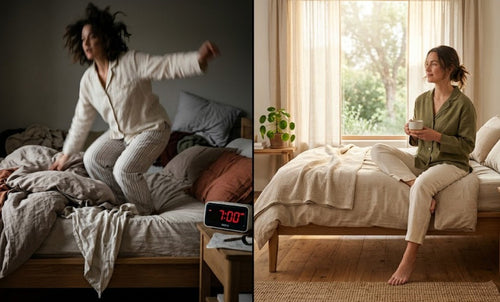
Difficulty waking up, an energy slump by mid-morning, trouble falling asleep at night: what if much of this discomfort is determined in the first few minutes of your day? Light is our body's main "time giver," what chronobiologists call a Zeitgeber. Simply put: it sets our internal clock every day. Getting exposed to natural light in the morning is one of the simplest, free, and best-documented ways to regain energy upon waking and improve sleep at night. Let's look at why, how to do it practically, and above all, how to do it while respecting the safety of your eyes, because there are also some ideas circulating on this subject that need to be qualified.
How your eyes program your brain

Light sensors dedicated to the clock
Our retina is not just for seeing. In the early 2000s, David Berson's work (2002) revealed a special category of cells, melanopsin ganglion cells. These sensors do not participate in seeing shapes: their role is to measure ambient light intensity and inform the brain. They are particularly sensitive to a part of visible light, in blue-turquoise tones, which is very present in natural daylight. It is this signal that tells the body: "it is daytime, it is time to be awake."
The suprachiasmatic nucleus, the conductor
The information from these cells goes directly to a small structure in the brain, the suprachiasmatic nucleus, the body's true central clock. It is what synchronizes a multitude of rhythms: hormonal secretions, body temperature, alertness, digestion. Without a daily "reset" by light, this clock tends to drift slightly, because its spontaneous cycle is not exactly 24 hours. Morning light is precisely the signal that resets it to the right schedule every day.
Cortisol and melatonin: the hormonal dance
Two hormones summarize this wakefulness and sleep game well. In the morning, exposure to light contributes to the natural peak of cortisol (the "cortisol awakening response"), which gets us going, promotes alertness and energy. At the same time, light inhibits the secretion of melatonin, the sleep hormone, which should be low during the day. When evening comes, when light decreases, melatonin rises and prepares for falling asleep. By properly setting this cycle in the morning, we strengthen the day/night contrast, and therefore the quality of sleep.
| Hormone | Effect of morning light | Perceived benefit |
|---|---|---|
| Cortisol (wakefulness) | Supports its morning peak | Energy, alertness upon waking |
| Melatonin (sleep) | Slowed during the day | Less daytime sleepiness |
| Melatonin, in the evening | Rises more clearly | Easier falling asleep |
This mechanism explains why morning light is a valuable ally against difficulties falling asleep, and joins what we explain about the importance of context and rhythms in our article on chronic fatigue and the environment.
Want an opinion on your situation? During a vitality assessment, we review together your diet, your sleep, your stress, and your goals, then we build a plan adapted to your rhythm.
Should you take off your sunglasses in the morning?
We often read that you should absolutely take off your sunglasses in the morning to "activate" your clock. There is some truth to it, but let's be precise, because the formula is a bit exaggerated.
What is accurate, and what is less so: the real lever is not so much "taking off your glasses" as exposing yourself to sufficiently intense light. Very dark or wraparound sunglasses reduce the amount of light that reaches the retina and can therefore attenuate the circadian signal. On the other hand, let's clarify two things that are often misunderstood. First, this signal passes through visible light (especially blue-turquoise), and not UV: talking about a "blocking of UV" that would deprive the clock is inaccurate, especially since early in the morning, UV is very weak anyway. Then, outdoor natural light is so intense (several thousand lux, even in overcast weather) that even without tinted glasses, a short outing is more than enough. The useful message is therefore positive: expose yourself to morning light, rather than feeling guilty about wearing glasses.
The clock shift, the real daily challenge
The most common problem is not so much glasses as the overall lack of morning light: we wake up in the twilight, we rush in the car, we spend the day under artificial lighting that is far too weak for the clock. As a result, the "it is daytime" signal arrives late and weakly, which can delay the internal clock and complicate falling asleep at night. Conversely, a good dose of natural light in the morning advances and stabilizes the rhythm. That is what really matters, much more than the debate about glasses.
The 3-step morning protocol

1. The right timing: within two hours after waking up Try to expose yourself to natural light early enough, ideally in the 60 to 120 minutes following waking up. These time markers are practical orders of magnitude, not rigid thresholds: the important thing is regularity. A coffee on the balcony, the walk to work or school, a few minutes in the garden is enough to send the signal.
2. The right duration: according to the weather With a clear sky, ten minutes are often enough. In overcast weather, count rather 20 to 30 minutes, because the light intensity is lower (but remains much higher than that of an illuminated interior). Again, these are flexible markers: the more light there is, the less time is needed. There is no need to time it to the end: aim for regularity rather than performance.
3. Outside, really outside This is the key point: go outside. Behind a window, the light intensity drops enormously, often by a factor of ten or more, which greatly weakens the signal received by the clock. Even a gray sky outside is much brighter than a room bathed in sunlight seen from the inside. No need for full sun or to stare at anything: the ambient light of the sky is more than enough.
A simple gesture, not another injunction See this routine as a gift you make to yourself, not as an additional constraint to check off. No need for a military protocol or complicated apps: opening the shutters wide, taking your breakfast near an open window, walking outside for a few minutes, that already makes a real difference. And if some mornings you don't have the time, it's okay: it is regularity over time that counts, not daily perfection. This logic wonderfully complements other pillars of well-being like time spent in nature.
Want to establish good sleep and energy routines for the long term, adapted to your daily life? Join Le Terrier's personalized follow-up at ten euros per month: we build together realistic and sustainable habits, at your pace, to regain momentum upon waking and a restorative sleep.
Precautions and eye safety
Never stare at the sun, under any circumstances This is the absolute rule of this article. Exposing yourself to morning light never means looking at the sun. Staring at the sun, even low on the horizon and even for a few moments, can burn the retina irreversibly (solar retinopathy). The circadian benefit comes from the ambient light of the sky, captured effortlessly when you are simply outside, looking straight ahead or toward the ground. Never try to "aim" at the sun, it would be dangerous and perfectly useless.
Sensitive eyes, pathologies and medications: ask advice Certain situations require medical advice before increasing your light exposure: history of retinal pathology (AMD, retinopathy), recent eye surgery, strong photophobia, or taking photosensitizing medications (certain antibiotics, diuretics, anti-inflammatories, dermatological treatments...). In these cases, do not give up your sunglasses without talking to your doctor or ophthalmologist: your comfort and safety take precedence over any routine. Indirect and soft light remains beneficial.
FAQ on morning light
How long should you expose yourself to light in the morning?
In practice, ten minutes for a clear sky and 20 to 30 minutes for overcast weather make good markers, ideally taken in the two hours following waking up. These are orders of magnitude, not strict rules: the essential is regularity and being outside, where the light intensity is much higher than that of an interior. Even a gray sky brings more than enough to send the signal to your biological clock.
Should you really take off your sunglasses in the morning?
Very dark or wraparound sunglasses reduce the light reaching the retina and can attenuate the circadian signal, but the formula "you absolutely must take them off" is exaggerated. Outdoor light is so intense that a short exposure remains beneficial even with glasses. And if you have sensitive eyes or a medical reason to wear them, keep them: your comfort comes first. The real lever is not taking off your glasses, but exposing yourself to natural morning light, outside.
Is light behind a window effective?
Much less than outside. A pane of glass strongly reduces the light intensity that reaches the eye, often by a factor of ten or more. Yet it is precisely this intensity that counts for the biological clock. Sitting near an open window is a good compromise on days when going out is impossible, but nothing replaces a few minutes really outside, where even an overcast sky is much brighter than an illuminated room.
Does morning light help you sleep better?
Yes, indirectly but clearly. By properly setting your biological clock in the morning, you strengthen the contrast between day and night: melatonin, the sleep hormone, then rises more clearly when evening comes, which facilitates falling asleep. It is one of the basic tips in sleep hygiene. Conversely, a lack of light in the morning and too much artificial light in the evening tend to delay the clock and complicate falling asleep.
Can I watch the sunrise to benefit from the light?
No, never stare at the sun, even low on the horizon and even briefly: it can damage the retina irreversibly. The desired benefit comes from the ambient light of the sky, not from the solar disk. It is enough to be outside, looking horizontally or slightly downwards, for your retinal sensors to receive the signal. No need to "aim" at the sun, and above all no benefit to doing so, only a risk.
Does a light therapy lamp replace sunlight?
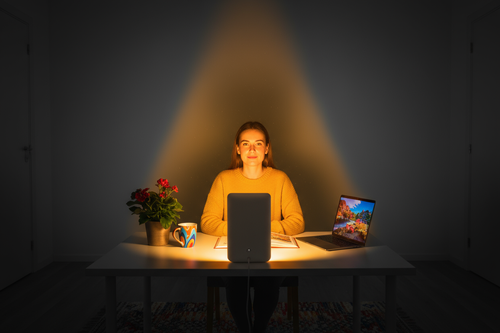
It can be a useful aid, especially in winter, in regions with little sun or for certain people prone to seasonal depression. A quality light therapy lamp (often 10,000 lux) provides intense light that is difficult to obtain indoors. However, it does not fully replace the benefit of being outside, and its use deserves some precautions: in case of mood disorder, eye pathology or treatment, ask advice from a healthcare professional before using it regularly.
What to do when you get up before sunrise?
In winter or for early risers, it is common to wake up in the dark. You can then use bright indoor lighting upon waking, possibly a dawn simulator or a light therapy lamp, then expose yourself to natural light as soon as it appears. The important thing is to seek true daylight as early as possible in the morning. The signal remains beneficial even if it arrives a little after sunrise, as long as it remains in the first part of the day.
Can morning light damage my eyes?
Exposing yourself to ambient morning light, without staring at the sun, is safe for the vast majority of people. The only real danger would be to look directly at the solar disk, which you should never do. Certain situations however call for caution: retinal pathology, recent eye surgery, strong light sensitivity or taking photosensitizing medications. In these cases, keep your glasses and ask the advice of your ophthalmologist before changing your exposure habits.
A simple reflex with profound effects
Let's recap without adding anything. Light is the great conductor of our internal clock: captured by dedicated cells of the retina, it informs the brain of the time of day, supports the cortisol peak that wakes us up and prepares, in cascade, a clearer secretion of melatonin when evening comes. Exposing yourself to natural light in the morning, outside, for a few minutes, is therefore one of the most profitable gestures for energy and sleep. Remember the real lever: it is not so much a matter of glasses as a question of going out to get true daylight, regularly. And always keep in mind the safety rule that takes precedence over everything: we enjoy ambient light, we never stare at the sun, and in case of fragile eyes or treatment, we ask advice. A simple, free reflex, with surprisingly profound effects. Let's remind you: this content is educational and does not replace medical advice.