
Addiction, dopamine, and chronic fatigue: why willpower isn't enough (and how to change your environment)

A square of chocolate, then a whole bar, after a difficult day. Endless scrolling just before falling asleep, when you're overcome with fatigue. A glass of wine to unwind. The series you binge-watch when your body demands rest. And this underlying fatigue that never goes away, this vague urge to escape without even knowing where to. If you recognize yourself in any of these phrases, this article is for you, and it begins with a statement we want to make right away, with as much kindness as possible: you are not lacking willpower. These behaviors affect millions of people, from all walks of life and of all ages. They are not a moral weakness. They are a signal that something in our living environment no longer meets our deep needs. Let's decipher together the biology of this phenomenon, and above all, the concrete levers to get out of it.
The Rat Park experiment: the substance myth debunked

To understand addiction differently, let's go back to the 1970s-80s, at Simon Fraser University in Canada. Psychologist Bruce Alexander started with a disturbing intuition: what if classic addiction experiments were biased by their conditions? At the time, studies showed rats self-administering morphine until death, but these rats were locked alone, in empty and cramped cages.
Alexander then designed two environments. In the first, the classic setup: a rat alone, isolated in a bare cage, with a choice between pure water and water laced with morphine. These rats consumed morphine compulsively. In the second, which he called "Rat Park": a vast enriched space, populated with cage mates, equipped with toys, hiding places, varied food, and the same access to morphine. The result is striking: these rats largely ignored the substance. Some rats previously made dependent even spontaneously reduced their consumption once transferred to this rich environment.
The lesson, and our honest nuance: Alexander's conclusion is not that substances are harmless. It's that a living being whose environment meets their basic needs seeks to escape into a substance much less. For the sake of rigor, let's clarify that Rat Park, an influential study and the foundation of a change in perspective, has seen debates and nuanced replications, as is often the case in science. But its central intuition (the weight of the environment in addiction) is now largely corroborated by other fields of research that we will see. It is this convergence that makes the idea solid, far beyond a single experiment.
The biology of escape: dopamine, cortisol, and the nervous system
Dopamine is not the pleasure hormone
It is repeated everywhere that dopamine is "the pleasure hormone". This is a misleading simplification. Dopamine is above all the neurotransmitter of anticipation, motivation, and seeking, it pushes you toward a reward, rather than providing you with pleasure once the reward is obtained. It is what creates the "here, what if I watch one more video", the "what if I open this package". Every notification, every new post that appears, every sweet bite triggers a small dopaminergic burst of anticipation. Understanding this is liberating: when you scroll compulsively, it is a very old reward circuit working as intended, and that certain industries know how to stimulate well.
The impact of cortisol on your receptors
Add chronic stress to this, and the trap closes. The work of Nora Volkow, director of the National Institute on Drug Abuse (NIDA) in the United States, has documented how prolonged stress and the cortisol it generates reduce the brain's sensitivity to dopamine, notably by decreasing the availability of certain dopaminergic receptors. The consequence is cruel: the more stressed and exhausted you are, the less your reward circuit responds, and therefore the more you need intense stimuli (sugar, screens, etc.) to feel anything. A circle is established: stress impoverishes the reward circuit, so we seek stronger compensations, which further exhaust this circuit, reinforcing the need. The cage creates the need, and the need reinforces the cage. We also detail this central role of cortisol in our article on cortisol and metabolic stress.
Want an opinion on your situation? During a vitality assessment, we review together your diet, your sleep, your stress, and your goals, then we build a plan adapted to your pace.
The 3 modern cages that drain our energy
If addiction is a response to an impoverished environment, what does this environment look like today? It takes three major forms, often combined.
The digital cage
Social networks did not become captivating by chance. Tristan Harris, a former Silicon Valley engineer, has documented how platforms deliberately exploit the same mechanisms as slot machines, random and variable reward, to maximize screen time. The endless feed, permanent social comparison, the feeling of never being up to date: it is an invisible and comfortable cage. Publications in journals such as JAMA have associated intensive social media use, especially among adolescents, with an increase in anxiety and depressive symptoms. Adults are not spared.
The food cage
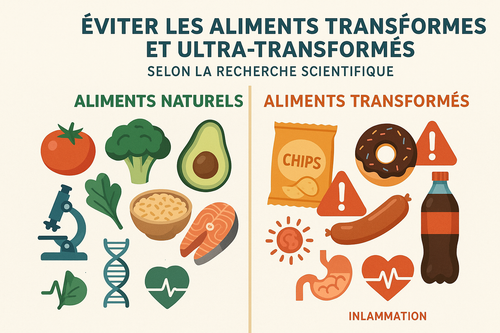
Sugar and ultra-processed foods are the second cage. Serge Ahmed, a researcher at INSERM in Bordeaux, showed in a striking study that rats given a choice between intensely sweet water and intravenous cocaine mostly preferred sugar. Sugar is not a moral weakness: it is a molecule that evolution has made deeply attractive, and that the food industry exploits. The NOVA system, developed by researcher Carlos Monteiro, classifies foods according to their degree of processing; ultra-processed foods, formulated to bypass our natural satiety signals, now represent a major part of the calories consumed in Western countries. To understand what this excess of sugar concretely does to your body, see our article on the symptoms of excess sugar. It is not you who lack discipline: the product is designed so that you will want more.
The lifestyle cage
The third cage is the most systemic, the one we do not really choose: a job that has lost its meaning, commutes that devour hours, cramped housing, the absence of nature, fraying social ties. John Cacioppo, a pioneer in loneliness research, has shown through brain imaging that chronic loneliness activates circuits close to those of physical pain. And the contrast is cruel: you can feel deeply alone in the middle of a densely populated large city. Human density does not protect from relational emptiness, it can even accentuate it. Various studies comparing urban and rural populations report often higher rates of anxiety and depressive disorders in cities, not because the city is bad in itself, but because it frequently concentrates several impoverishment factors at once.
Meaning burnout: when a good lifestyle is no longer enough
And then there are those we rarely talk about. Those who eat well, exercise, sleep properly, maybe meditate, and who despite everything feel drained, unmotivated, pierced by a dull fatigue and an urge to escape that they cannot explain. If this is your case, read this carefully: there is nothing "wrong" with you. You are facing what could be called a meaning burnout.
The fundamental psychological needs
Psychology research is enlightening. Deci & Ryan's self-determination theory has established that three psychological needs are fundamental to human beings: autonomy (feeling that you have a say in your life), competence (feeling capable, progressing), and social connection (belonging, being connected to others). When one of these needs is persistently frustrated, compensatory behaviors, including addictive behaviors, tend to increase. Christina Maslach, who defined burnout, has on her part shown that deep exhaustion is not so much related to the quantity of work as to the loss of meaning, recognition, and control.
Martin Seligman, founder of positive psychology, synthesized five pillars of lasting well-being in his PERMA model: positive emotions, engagement, relationships, meaning, and accomplishment. When only one of these pillars collapses, even in a person who otherwise takes great care of their body, the entire structure can shake. A deep fatigue is therefore not always physical: it can be the signal of a living environment that no longer nourishes what really matters.
| Escape behaviors (drain energy) | Nourishing behaviors (restore energy) |
|---|---|
| Passive scrolling and social comparison | Real conversation, presence |
| Automatic sweet snacking | Real, shared, savored meal |
| Binge-watching to numb | Creative activity or learning |
| Staying locked up, immobile | Movement, walking, contact with nature |
| Isolating yourself when things go wrong | Asking, connecting, sharing |
| Waiting for "real life" to begin | Giving meaning to the present, acting |
An important and kind word If you are going through persistent fatigue, a lasting loss of motivation, deep sadness, or an urge to flee everything that does not go away, these signals deserve to be taken seriously and to receive proper support. The naturopathic approach presented here acts on the terrain and the environment, but it never replaces the support of a doctor or a psychologist. Talking to a healthcare professional, or simply to a trusted person, is not an admission of weakness: it is one of the most powerful gestures to get out of the cage. If you feel distressed, do not wait: reach out to the people around you.
Leaving the cage: the naturopathic and holistic protocol

The good news comes directly from Rat Park: if the impoverished environment creates the escape, then enriching your environment is the way out. Not through a list of guilt-inducing rules, but through a patient reconstruction of what really nourishes. Three complementary axes.
Action 1: restore the brain's biochemistry through nutrition A deficient brain poorly produces its neurotransmitters. The precursor amino acids (tryptophan for serotonin, tyrosine for dopamine), omega-3s, magnesium, B vitamins, and stable blood sugar are the biochemical foundations of motivation and mood. Reducing ultra-processed foods and sugar spikes means removing the fuel from the dopaminergic vicious circle and giving the brain what it needs to function serenely.
Action 2: regulate the autonomic nervous system Getting out of "permanent stress" mode (sympathetic) to reactivate the "rest and recovery" mode (parasympathetic) is essential. Regular movement, contact with nature, slow breathing, and vagus nerve stimulation lower cortisol and restore the sensitivity of the reward circuit. The simple contact with nature has measured effects on stress, a subject we explore in our article on the benefits of barefoot walking and contact with the earth. To soothe an overheated mind, the techniques described in our article on how to calm anxiety thanks to neuroscience are valuable allies.
Action 3: rebuild social connection and meaning This is the most often neglected pillar, and yet the most powerful according to the science of Rat Park. Cultivating authentic relationships, belonging to a community, contributing to something greater than ourselves, regaining autonomy and a meaningful goal: these are not comfort options, they are biological needs as real as eating or sleeping. Rebuilding your human environment and your sense of meaning is giving yourself the "Rat Park" your brain needs to stop escaping.
Rebuilding your environment is not done alone, nor overnight. To be accompanied step by step in the implementation of these three pillars, nutrition, nervous regulation, connection, and meaning, join Le Terrier's 10-euro monthly follow-up: a kind and personalized support to regain, step by step, your vitality and your momentum.
FAQ on chronic fatigue and addictions
Why am I addicted to sugar in the evening?
In the evening, after a day of stress and self-control, your willpower reserves and your blood sugar are at their lowest, while cortisol and fatigue have desensitized your reward circuit. Sugar then becomes a quick compensation to get a dopamine burst. It is not a lack of discipline: it is a logical biological response to a state of exhaustion. Stabilizing your blood sugar during the day and truly nourishing your brain greatly reduces these evening cravings.
What is the Rat Park experiment?
Rat Park is a series of experiments conducted by psychologist Bruce Alexander in the 1970s-80s. Rats isolated in an empty cage compulsively consumed morphine, while rats placed in a rich and social environment (Rat Park) largely ignored it. The conclusion: addiction is not only a matter of substance, but also and above all a response to an impoverished environment. This influential study has seen debates, but its intuition is corroborated by other research.
Is dopamine really the pleasure hormone?
No, it is a misconception. Dopamine is above all the neurotransmitter of anticipation, motivation, and seeking: it pushes you toward a reward rather than providing the pleasure itself. This is why scrolling, notifications, or snacking trigger an urge for "more", sometimes without real satisfaction. Understanding this mechanism helps to no longer blame yourself and to act on the triggers rather than on willpower alone.
How to lower cortisol naturally?
Several natural levers lower cortisol: regular, gentle movement, contact with nature, slow, deep breathing (which stimulates the vagus nerve), quality sleep, reducing stimulants (caffeine, sugar, screens in the evening), and above all, nourishing social connections. Stress management is not a luxury: it is what restores the sensitivity of the reward circuit and reduces the need for addictive coping mechanisms.
Can you be exhausted even if you have a healthy lifestyle?
Yes, absolutely. You can eat well, exercise, and sleep well, and yet feel deeply exhausted: this is what we can call a crisis of meaning. According to research (Deci & Ryan, Maslach, Seligman), human beings need autonomy, social connection, competence, and meaning. When one of these basic needs is chronically frustrated, fatigue and demotivation set in despite an impeccable lifestyle. Fatigue is not always physical.
Is addiction a lack of willpower?
No. Reducing addiction to a lack of willpower is both false and guilt-inducing. Addictive behaviors result from biological mechanisms (dopamine, cortisol, desensitization of the reward circuit) and environmental factors (isolation, stress, products designed to be irresistible). It is a human response to an environment that does not meet our needs. Understanding this allows us to move from guilt to responsibility: taking action on our environment rather than blaming ourselves.
Why are social media so addictive?
Because they are designed to be. Platforms deliberately use the principle of variable rewards, the same as slot machines: you never know when the next interesting post will appear, which drives you to scroll endlessly. Added to this are constant social comparison and the infinite feed. Studies have linked intensive social media use to increased anxiety and depressive symptoms. Regaining control involves concrete boundaries (notifications, screen time) rather than willpower alone.
Where to start to break free from these behaviors?
Start small and without guilt. Rather than trying to change everything through willpower, take action on your environment: one real meal a day, ten minutes of walking in nature, an authentic conversation, a simple limit on screens in the evening. Gradually replace an escapist behavior with a nourishing one. And if fatigue, sadness, or loss of motivation persist, talk to a doctor or psychologist: seeking support is an act of strength, not weakness.
From guilt to compassionate responsibility
The greatest change this article can offer you is not a technique, but a change in perspective. As long as we believe that our escapes - sugar, screens, alcohol, escapism - are character flaws, we lock ourselves in guilt, which in turn fuels stress, which fuels escape. Understanding that these behaviors are human and logical responses to an impoverished environment changes everything: we move from guilt to compassionate responsibility. Not "What is wrong with me?", but "What does my environment need to truly nourish me?". Whether you are hooked on sugar and screens, or you are "doing everything right" yet still feeling empty, the way out is the same: patiently rebuild an environment - nutritional, neurological, and human - that meets your real needs. You are not weak. Your cage is real, and the door exists. Finally, let us remember that this content is educational: in cases of persistent psychological distress or established addictive behavior, the support of a healthcare professional is essential and invaluable.




5 comments
Édifiant il ne reste plus qu’à appliquer merci infiniment terrier-du-bien-etre.
Je suis très impressionné par votre pédagogie, je vous encourage à continuer la recherche.
Merci !
Merci beaucoup pour ce majestueux enseignement. Troop constructif
Vraiment, tout ce temps je me posé la question pourquoi j’y arrive pas, qu’es-ce qui ne va pas chez moi, aujourd’hui grâce à votre article je viens de voir que ma boîte manques beaucoup des déco (vitalité ) afin de sortir de ma zone de confort et de mes addictions.
Infiniment merci
Excellent article : vrai, simple et efficace. Merci à vous