

Nail fungus: causes, natural approaches and when to see a doctor
You hide them under socks even in summer. You avoid sandals, saunas, and swimming pools. A nail fungus infection, or onychomycosis, is not life-threatening, but it deeply affects self-confidence and can persist for months or even years despite over-the-counter topical treatments. The reason for this chronic failure is simple: these treatments attack the visible fungus but ignore the biological terrain that allows it to establish itself and return. At Le Terrier du Bien-Être, our approach is systemic: it looks at both the pathogen and the internal conditions that made it possible. In this guide, we detail the entire naturopathic protocol: anti-fungal diet, skin alkalization with baking soda, and direct fungicidal action with tea tree essential oil.
Understanding the Enemy: What Is a Fungal Infection (Onychomycosis)?
Dermatophytes, the Keratin-Eaters
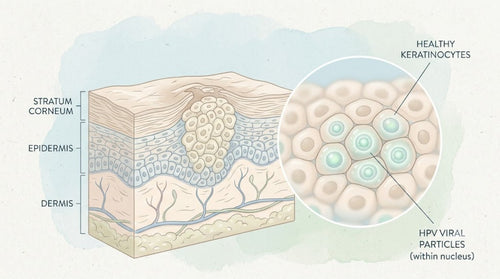
Onychomycosis is caused in 90% of cases by dermatophytes, primarily Trichophyton rubrum and Trichophyton mentagrophytes. These microscopic fungi produce keratinases, enzymes specialized in digesting keratin, the structural protein that makes up your nails and the superficial layer of your skin. Once established under the free edge of the nail or in its micro-cracks, dermatophytes slowly advance toward the matrix (the nail root), opacifying, yellowing, and thickening the nail plate as they progress. This is why an untreated fungal infection can take years to completely eradicate: the nail grows an average of 3 mm per month, and you must wait until the entire nail has been renewed from a sanitized matrix.
The Myth of Poor Hygiene and the Concept of Terrain
Dermatophytes are present in our daily environment: locker room floors, damp tiles, the inside of shoes. Almost all of us are regularly in contact with these fungi without ever developing a fungal infection. The difference does not lie in exposure, but in the terrain. An organism whose skin immune system functions correctly, whose skin pH is slightly acidic but balanced, and whose blood sugar is stable naturally repels these pathogens without conscious effort. A chronic fungal infection is therefore always a message: something in your internal biology has created favorable conditions for the fungus to establish itself. This is the message that must be decoded and taken into account, not just the visible nail plate.
Why Do Conventional Topical Treatments Often Fail?
Over-the-counter topical antifungals, such as amorolfine or ciclopirox-based nail polishes, have a recognized clinical efficacy rate but a structural limitation: they attack the fungus on the surface of the nail without changing the internal conditions that allowed it to establish itself. As soon as treatment is stopped, or even during its duration if the terrain is not addressed, the surviving dermatophytes in the deeper layers resume their proliferation.
The fundamental question is not "How do you kill this fungus?" but "Why hasn't my body spontaneously repelled it?". Three internal factors create a terrain favorable to onychomycosis: chronically high blood sugar, which provides the fungus with its preferred energy substrate (glucose); a skin pH that is too acidic, which corresponds to its optimal proliferation environment; and insufficient local immunity, often linked to a high overall toxic load or a micronutrient deficiency. Addressing these three factors simultaneously is exactly what our 3-step protocol does.
Want an opinion on your situation? During a vitality assessment, we review your diet, sleep, stress, and goals together, then build a plan tailored to your pace.
The Systemic Approach: Our 3-Step Natural Protocol

Step 1, Starve the Fungus Through Diet
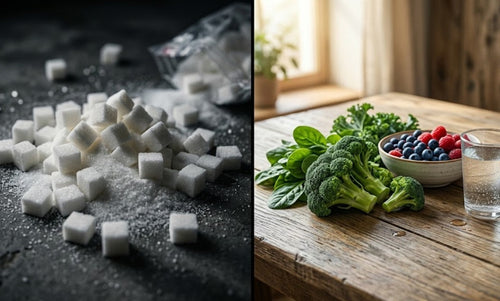
Glucose is the essential energy fuel of dermatophytes. A diet rich in refined sugars and products with a high glycemic index creates mild and chronic tissue hyperglycemia that directly fuels fungal proliferation. Data published in the Nutrients Journal confirms that hyperglycemia simultaneously impairs the local immune response, reducing the effectiveness of skin phagocytes, which form the first line of defense against fungi. Therefore, carbohydrate restriction is not an auxiliary trick: it is the central metabolic lever of the protocol. Our article on the symptoms of excess sugar in the body will help you identify if your current diet is fueling this favorable terrain.
Dietary protocol, minimum 21 days Eliminate: refined sugars, white flours, pastries, sodas, industrial fruit juices, alcohol, and mold-ripened cheeses. Favor: green and cruciferous vegetables, quality animal proteins, coconut oil (naturally antifungal caprylic acid), raw garlic (antifungal allicin), ginger, and turmeric. The goal is to maintain low and stable blood sugar for at least 3 weeks to cut off the fungus's main fuel.
For a personalized anti-fungal dietary protocol and 90-day monitoring of your metabolic terrain, join Le Terrier's 10-euro monthly follow-up: concrete adjustments every month based on the evolution of your biological terrain.
Step 2, Alkalinize the Environment with Baking Soda
Dermatophytes proliferate optimally in an acidic environment, between pH 4.0 and 6.0, which corresponds precisely to normal physiological skin pH. This physiological reality explains why an acidic terrain promotes recurring fungal infections: the skin provides the ideal growth conditions. Studies published in Mycopathologia have confirmed that raising the local pH toward an alkaline environment (pH > 8) creates a fungistatic environment, meaning it blocks the fungus's multiplication without necessarily killing it immediately, but by stopping its progression.
Alkalizing foot bath recipe, To be done every evening In a basin of warm water (38-40°C (100-104°F)), dissolve 3 level tablespoons of baking soda (NaHCO3). Optionally add 5 drops of tea tree essential oil previously mixed in a teaspoon of vegetable oil (sweet almond, coconut). Soak your feet for 15 to 20 minutes. Dry thoroughly and completely between each toe, as residual moisture immediately recreates a favorable environment. Repeat every evening for at least 4 consecutive weeks.
Caution: avoid this bath on irritated, cracked, or broken skin. If you have diabetes, check with your doctor or podiatrist first, and test the water temperature before putting your feet in.
Step 3, Destroy the Fungal Membrane with Tea Tree
Melaleuca alternifolia (tea tree) essential oil is the best-documented natural antifungal against dermatophytes clinically. Its main active component, terpinen-4-ol, which makes up 30 to 48% of the oil's composition, exerts a fungicidal action by altering the membrane permeability of fungal cells. Studies published in the Journal of Applied Microbiology have demonstrated in vitro and in vivo that terpinen-4-ol induces ionic leaks through the dermatophyte membrane, leading to their cellular destruction. The advantage of tea tree over synthetic antifungals is its ability to penetrate the nail plate topically, which most over-the-counter creams struggle to do.
Daily application of tea tree, morning and evening You must use a 100% pure, chemotyped tea tree essential oil from organic farming (check the technical sheet for terpinen-4-ol between 30 and 48%). Using a cotton swab, apply 1 to 2 drops directly on and under the free edge of the affected nail, focusing on the nail-skin junction (sulcus). Massage lightly to promote penetration. Apply to the nail only, without spreading onto the surrounding skin. Repeat morning and evening until a healthy nail has completely regrown from the base. This is the regimen tested in a trial published in the Journal of Family Practice in 1994 (Buck et al., 117 patients): pure oil applied twice a day for six months gave results close to those of a standard pharmacy antifungal, clotrimazole, although the fungus cleared completely in only 18% of cases.
Precautions: first do a test on a small area for 48 hours; stop if you notice redness, itching or swelling, as pure oil can cause a contact allergy; keep the bottle tightly closed and away from light, as oxidized oil is more irritating; do not apply to children under 6 or during pregnancy without medical advice. If the nail does not improve after three months, or if the fungus affects several nails, see your doctor or a podiatrist.
Your Daily Anti-Fungal Routine

| Time | Action | Duration / Frequency | Goal |
|---|---|---|---|
| Morning | Apply pure tea tree to the affected nail | 1-2 drops, every morning | Fungicidal action on the nail plate |
| All day | Eliminate refined sugars and high GI products | Minimum 21 days | Cut off the fungus's fuel |
| All day | Breathable shoes, natural cotton socks | Permanent | Reduce local moisture |
| Evening (before bath) | Lightly file the surface of the thickened nail | 1 to 2 times per week | Thin the plate for better penetration |
| Evening | Baking soda foot bath (3 tbsp) + 5 drops tea tree | 15-20 min, every evening | Alkalinize the environment, fungistatic action |
| After bath | Complete drying between toes + apply tea tree | Every evening | Eliminate residual moisture + reinforce the action |
Realistic duration of the protocol: a toenail grows an average of 1.5 mm per month. A big toe nail measures about 15 mm. Therefore, allow 9 to 12 months of continuous protocol to obtain a completely renewed nail from a sanitized matrix, regardless of the method used. Do not stop at the first sign of visual improvement.
Mistakes to Avoid and Preventive Hygiene
Most fungal infection relapses occur not due to the protocol's ineffectiveness, but due to premature stopping or the maintenance of favoring factors in the daily environment. Here are the most frequent mistakes observed in naturopathic practice.
Stopping treatment as soon as the nail seems "cured on the surface" is the leading cause of relapse: the fungus can still be present in the deeper layers or in the matrix even if the visible plate appears normal. Applying regular nail polish to a fungal infection under treatment is a major mistake, as it covers the nail, blocks the penetration of tea tree, and maintains a damp and enclosed environment that is particularly favorable to dermatophytes. Neglecting shoe disinfection is also common: the inside of a shoe can host viable fungal spores for several months; a spray made with diluted tea tree or baking soda applied regularly inside the shoes is part of the protocol. Finally, sharing bath towels, nail clippers, or pedicure basins without disinfection is a cross-contamination route that should not be overlooked, especially within families.
To go further on the overall reduction of your toxic load and the strengthening of your natural immunity, two essential pillars in the prevention of recurring fungal infections, find our health protocols and naturopathic e-books in our store.
FAQ on Foot and Nail Fungal Infections
How long does it take to treat a nail fungus?
Effective treatment of onychomycosis takes between 9 and 12 months for toenails (3 to 6 months for fingernails), because you must wait for the complete regrowth of a healthy nail from the matrix to the free edge. Visual improvements generally appear after 2 to 3 months, but premature stopping of treatment is the main cause of relapse. Daily consistency takes precedence over intensity.
Is apple cider vinegar effective against fungal infections?
Unpasteurized apple cider vinegar has moderate antifungal activity linked to its acidity (pH around 3) and the presence of acetic acid. Its action is mainly fungistatic, slowing proliferation without massively destroying dermatophytes. It can be used as a complement to the tea tree-baking soda protocol, but its logic is the opposite of baking soda: it acidifies rather than alkalizes. Use it separately (in a pure occasional application on the nail) and not in the same foot bath as baking soda, at the risk of canceling both effects.
Is nail fungus contagious?
Yes, onychomycosis is contagious through direct or indirect contact with fungal spores. The main transmission routes are: sharing towels, nail clippers, or shoes, and damp communal floors (pool showers, locker rooms, saunas). That said, exposure is not enough to cause a fungal infection; a favorable terrain is required. Members of the same family can share the same surfaces without everyone developing a fungal infection, simply because their immune and glycemic terrains differ.
Can you put nail polish on a fungal infection?
No, except for a prescribed medicinal antifungal polish (based on amorolfine). Regular cosmetic nail polish creates an impermeable and damp environment under the plate that promotes exactly the growth conditions of dermatophytes. It also blocks the penetration of natural (tea tree) and synthetic topical treatments. During the entire duration of the protocol, affected nails must remain bare to allow oxygenation and the penetration of antifungal actives.
Why does the fungal infection always return after treatment?
The recurrence of a fungal infection after local treatment is a sign that the biological terrain has not been changed. The fungus always finds the same favorable conditions (chronic hyperglycemia, acidic skin pH, weakened local immunity) as soon as the superficial treatment is stopped. Local treatment kills the visible fungus; only working on the terrain, an anti-fungal diet, glycemic balance, and immune strengthening prevents its lasting re-establishment.
Is lemon good for foot fungal infections?
Lemon juice has a slight antifungal activity linked to its acidity (citric acid) and its limonene. Applied directly to the inter-toe areas, it can relieve superficial fungal infections. Its effectiveness on established onychomycosis remains limited because it does not penetrate sufficiently into the nail plate. It can be integrated as a daily hygiene complement (a few drops on the periungual areas) but does not replace tea tree essential oil for the underlying treatment.
When should you consult a doctor or podiatrist?
Consult a healthcare professional if: the nail is completely detached from its bed (complete onycholysis), if you notice periungual pain, redness, or swelling suggesting a bacterial superinfection, if the fungal infection affects several nails simultaneously without improvement after 3 months of a strict protocol, or if you are diabetic or immunocompromised (diabetes triples the risk of severe onychomycosis and requires specific medical management).
Should the nail affected by the fungal infection be cut?
It is recommended to cut the nail as short as possible without causing pain: this reduces the fungal biomass in place and improves the penetration of topical active ingredients (Tea Tree). Lightly filing the surface of the thickened nail once or twice a week with a disposable or disinfected nail file serves the same purpose. Always disinfect the nail clippers after each use with alcohol or an antiseptic solution to prevent cross-contamination between healthy nails and the treated nail.
Consistency is paramount
A nail fungus is neither a disaster nor a source of shame; it is a biological signal indicating that your internal environment has favored the establishment of an opportunistic fungus. Working on this terrain too, through carbohydrate restriction, skin alkalization, and the targeted antifungal action of Tea Tree, may help bring longer-lasting results than creams alone. The only non-negotiable condition is consistency: 7 days a week, for the entire duration of nail regrowth. Every missed application is an opportunity given to the fungus.


11 comments
Merci pour ces renseignements.. *Le sucre revient toujours ds les discussions concernant les mycoses.. Et vrai..c’est mon problème.. Que pensez-vous des clous de girofle..? J’ai mis de l’H.E.de giroflée et il m’a semblé que cela agissait sur l’ongle..!? Et pour l’ail dont je me sers très souvent pour ma santé en général..!? Est-il aussi valable pour les mycoses..? Une dernière question..mon ami m’a conseillé de la teinture d’iode.. Qu’en pensez vous.? (C’est un médecin qui lui avait conseillé) Merci pour vos réponses.. bien à vous.. 🙋♀️🙏🌺
Merci pour ces informations et conseils à la fois et il est grand temps que je m’y mette car chaque été c’est une frustration de ne pouvoir dégager ses pieds des chaussures
Merci pour vos conseils bien détaillés
Merci pour ces informations très utiles
Merci pour ces informations très utiles