Optimizing Your Fast: The 3 Pillars of Cellular Regeneration
Share
You have decided to take the plunge. Whether for a spring detox, to lose weight, or to give your digestive system a rest, fasting is probably the most powerful health tool at our disposal. Yet, for many, the experience is cut short: throbbing migraines by 4 p.m., dizziness upon waking, or overwhelming fatigue that sets in.
Contrary to a persistent misconception, fasting is not simply about "stopping eating." It is an active and demanding biochemical process. Without the right tools, your body goes from a restorative state to a state of intense organic stress. If you have never had a baseline assessment, it is often wise to understand your profile during a first naturopathy consultation so that you can tailor this advice to your own vitality.
Here are three points to focus on so that fasting goes well.
Cellular hydration: why pure water can dehydrate you
This is the first trap, and probably the most common. We are told that we need to drink plenty of water during a fast to "eliminate." This is true, but incomplete.
The flat water paradox
When you stop eating, your glycogen stores (the sugar stored in your muscles and liver) are depleted. However, glycogen retains water. As you consume it, your body releases a large amount of fluid, taking essential minerals with it: sodium, potassium, and magnesium.
If you drink liters of "flat" water (low in minerals) to compensate, you will actually dilute the few minerals you have left. This is what is known as relative hyponatremia. The result: your cells can no longer retain water, so it goes straight to your kidneys (and you spend your day in the bathroom), while your brain sends an alarm signal: a migraine.
The solution: "living" and mineralized water
For water to actually penetrate your cells and hydrate your nervous system, it must be accompanied by electrolytes.
-
The gray salt trick: add a pinch of unrefined sea salt (gray salt) to your bottle. Unlike white table salt, it contains a synergy of minerals that helps with intracellular retention.
-
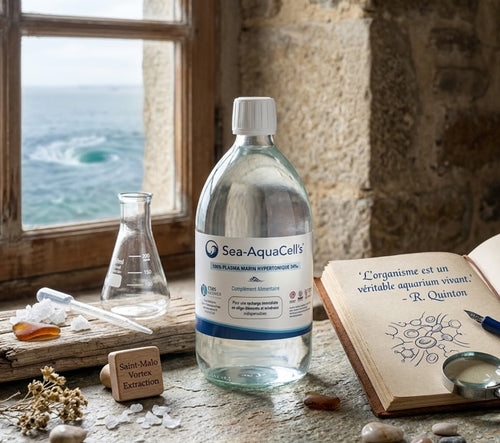
Marine plasma: for maximum effectiveness, using Quinton serum (isotonic) is ideal. Its composition is almost identical to that of our blood plasma, allowing for an immediate mineral recharge.
Whether you have chosen a dry or water-based intermittent fast, managing your fluids is the key to avoiding residual fatigue.
The liver: the conductor of hepatic detoxification
Fasting triggers lipolysis, that is, the breakdown of fatty tissues to produce energy (ketone bodies). This is excellent news, but it hides a major challenge for your liver.
The toxin bottleneck
Our fats are the "trash cans" of our body: they store the toxins that the body could not process at the time (pesticides, endocrine disruptors, medication residues). When we draw on our reserves, some of these pollutants can pass back into the blood.
If your liver is already congested or lacks the cofactors to work, it becomes overwhelmed. This is when the signs of the healing crisis appear: a tongue coated in white in the morning, bad breath, nausea, or immense fatigue.
Supporting "Phase II" of detox
To transform these toxins into soluble waste and eliminate them for good, the liver needs protective and stimulating plants:
-
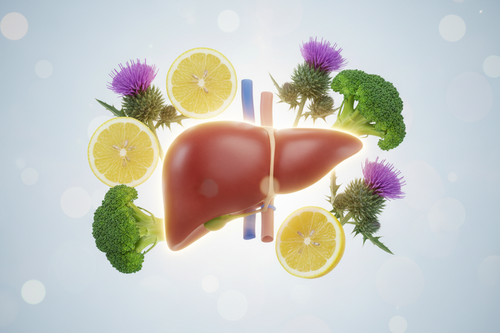
Desmodium adscendens: this is the great protector. It helps stabilize liver cells and promotes their regeneration in the face of toxic aggression.
-
Milk thistle: thanks to silymarin, it increases the liver's filtration capacity and stimulates the synthesis of hepatic proteins.
To learn more about hepatic detox, read our dedicated article here.
Tip: do not overload your liver with complex supplements during fasting. Favor quality herbal teas or liquid extracts, ideally taken just before your first breaking meal to support the metabolic work peak that will follow.
Cortisol vs. autophagy: the importance of the nervous system
Fasting is often perceived as a time of rest, but biologically, it is a metabolic stress (a positive stress, or "hormesis"). In response to the absence of food, the body increases the production of cortisol and adrenaline to mobilize energy reserves.
The invisible enemy of cellular cleaning
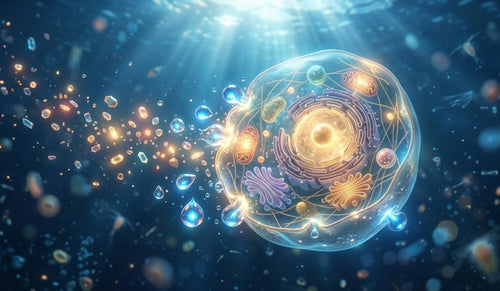
The ultimate goal of fasting is to activate autophagy. This process, which won a Nobel Prize in 2016, allows your cells to recycle their defective components and regenerate.
However, there is a major obstacle: chronic stress. If you fast while chasing your bus, dealing with stressful work, or doing intense exercise, your cortisol level remains at its peak. However, a stress level that is too high sends an alarm signal that can block deep repair mechanisms. In "survival" mode, the body does not repair the walls; it just tries not to collapse.
The nerve transition protocol
To maximize the benefits of your practice, you must consciously switch from the sympathetic nervous system (action/stress) to the parasympathetic system (rest/repair).
-
Heart coherence: practice 5 to 10 minutes of rhythmic breathing (5 seconds inhale, 5 seconds exhale) before your breaking meal. This instantly drops cortisol.
-
Digestive rest: if you are still unsure about which method to adopt, discover my comparative analysis: Intermittent fasting: dry or water-based, which is best for your health?.
Making fasting a way of life
Fasting is a tool of unparalleled power, provided you do not treat your body like an insensitive machine. By providing the minerals necessary for your cells, supporting your liver in its filtration work, and soothing your nervous system, you transform a tiring ordeal into a rejuvenating reset.
The body has a great capacity for adaptation: the idea is simply to offer it good conditions.
Want personalized support? Do not stay alone with your doubts or symptoms. Book your first naturopathy consultation here.
Want daily support? Le Terrier's personalized follow-up, at €10 per month, allows you to ask us questions in writing and move at your own pace.