

Salt-free diet: when less salt becomes too little
Salt is at the heart of one of the greatest misunderstandings in the history of modern nutrition. For nearly fifty years, public health recommendations have agreed on a simplistic message: to protect your heart and arteries, you absolutely must reduce, or even eliminate, salt from your diet. Yet, the most recent biological and clinical research tells a radically different story. While an excess of ultra-processed industrial products does indeed saturate the body with low-quality sodium, the obsessive avoidance of salt in a diet made of home-cooked whole foods represents a seriously underestimated metabolic risk. Today, we are going to deconstruct this fifty-year-old dogma with the scientific data that contradicts it.
The history of a dogma: why has salt been unfairly demonized?
The systematic demonization of salt has its roots in the 1960s and 1970s, following epidemiological and experimental studies whose methodologies are now strongly questioned. The first models that condemned sodium were based notably on animal experiments where rats genetically predisposed to hypertension received massive doses of sodium, equivalent to hundreds of grams daily relative to a human being. These studies did not take into account the fundamental distinction between refined industrial sodium, isolated from all its natural mineral matrix, and the complex sodium that the body has physiologically needed since the origin of the species.
The result of these decades of simplification: millions of people have adopted hyper-restrictive sodium diets by cooking fresh, whole foods, thinking they were thus protecting their cardiovascular health. They obtained the opposite effect. Sodium is a vital electrolyte that regulates osmotic pressure, maintains extracellular volume, allows the transmission of nerve impulses, and conditions the entry of nutrients into every cell. Wanting to eliminate it completely means compromising the very foundations of homeostasis.
The PURE study and the J-shaped curve: the scientific revolution

The real conceptual breakthrough came with the publication of the PURE study, Prospective Urban Rural Epidemiology, published in the medical journal The Lancet in 2018. Conducted on a cohort of over 90,000 people followed in 18 countries, this study analyzed urinary sodium excretion to assess the actual intakes of populations and correlate them with cardiovascular events over several years.
The results highlighted a J-shaped risk curve, and that is where everything changes. Contrary to the traditional linear model, in which less sodium is always better, the PURE study observed that intakes below 3 grams of sodium per day (about 7.5 grams of salt) were associated with a higher risk of heart attack, stroke, and death. This is an observational study: it shows an association, not cause and effect, and other researchers have questioned how sodium intake was measured. In these data, the risk linked to very low intakes appears comparable, in some groups, to that of excessive intakes, but this finding is still debated.
Key figure: in the PURE study, the lowest cardiovascular risk was observed between 3 and 5 grams of sodium per day, or about 7.5 to 12.5 grams of salt. The WHO, for its part, recommends no more than 5 g of salt per day (2 g of sodium), and most health authorities stand by this advice (in the US, the Dietary Guidelines recommend less than 2,300 mg of sodium per day). In practice, most adults already eat more than that.
The real issue: mastering the sodium/potassium ratio
At the cellular level, sodium never works alone. The key to our vitality lies in the harmony between sodium, located mainly outside our cells, and potassium, present inside. This balance is constantly maintained by an essential enzyme: the Na+/K+-ATPase pump. This pump consumes a considerable part of our total metabolic energy to bring potassium in and expel sodium, ensuring the electrical potential of the cell membrane, intracellular hydration, and the active transport of nutrients.
Modern Western diet poses a major and well-documented problem: it is saturated with ultra-processed products that provide a massive amount of pure sodium (refined sodium chloride), while being completely devoid of potassium. It is this profound imbalance of the sodium/potassium ratio that disrupts blood pressure, and not salt itself when consumed as part of a whole-food, home-cooked diet. The data published in the Archives of Internal Medicine confirm that the sodium/potassium ratio is a much more reliable predictor of cardiovascular risks than the simple measurement of isolated sodium intake.
| Characteristic | Refined white salt (industrial) | Gray sea / Celtic salt (natural) |
|---|---|---|
| Chemical composition | ~99.9% pure sodium chloride | ~85-90% NaCl + trace element matrix |
| Secondary minerals | Absent, removed during refining | Magnesium, potassium, calcium, sulfur, natural iodine |
| Effect on hydration | Aggressive extracellular water retention | Harmonious intracellular hydration |
| Additives | Frequent anti-caking agents (E535, E554) | None, raw product harvested and sun-dried |
| Impact on Na/K ratio | Worsens the sodium imbalance | Provides synergistic mineral cofactors |
Want an opinion on your situation? During a vitality assessment, we review together your diet, sleep, stress, and goals, then build a plan adapted to your pace.
The hidden consequences of severe sodium restriction
RAAS activation and cortisol rise
What happens in the body when you decide to radically cut out salt while cooking whole foods? The body immediately perceives the drop in sodium as a critical threat to its survival. To maintain blood pressure, the brain orders the activation of the renin-angiotensin-aldosterone system (RAAS) as well as the sympathetic nervous system. This chain reaction causes an increase in stress hormones: the production of cortisol and adrenaline accelerates, and the compensatory heart rate rises. What we were trying to protect, the heart, is actually put under constant strain by the restriction itself.
Insulin resistance and fat storage
The metabolic consequences do not stop there. A clinical study published in the journal Metabolism, Clinical and Experimental demonstrated that severe sodium restriction induces a measurable drop in insulin sensitivity in just a few days in initially healthy subjects. The mechanism is direct: the rise in cortisol and catecholamines following the activation of the sympathetic nervous system alters the signaling of insulin receptors at the cellular level. By trying to protect their arteries with a flavorless diet, many people unconsciously worsen their insulin resistance, promoting the storage of abdominal fat and opening the door to chronic glycemic disturbances. To understand the signs that indicate this imbalance is occurring, our article on the symptoms of excess sugar in the body precisely describes this metabolic picture.
Natural solutions to rebalance your minerals

1. Change your salt, don't eliminate salt
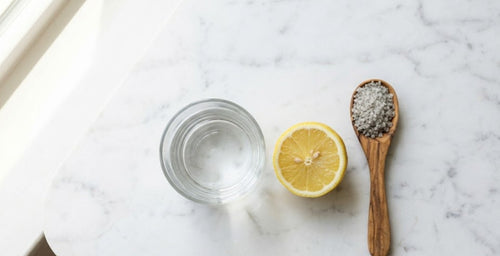
The first concrete decision is to ban table white salt, this bleached, ultra-refined product, loaded with chemical anti-caking agents (E535, E554) that no longer have much to do with the mineral our biology requires. Favor unrefined gray sea salt, Celtic salt, or fleur de sel. These manually harvested salts retain their natural moisture and contain dozens of micronutrients and trace elements that act synergistically with sodium to bring water into the heart of your cells. The difference in composition is not anecdotal: it fundamentally changes the way your body uses these minerals.
2. Quinton water: deep cellular remineralization
To restore mineral homeostasis quickly and in a bioavailable way, Quinton water, cold-filtered sea plasma, is an exceptional tool that we appreciate and use regularly at Le Terrier du Bien-Être. Its ionic mineral composition presents an almost perfect analogy with the human internal environment, allowing deep cellular recharge without straining the kidneys. You can find Quinton water of impeccable purity directly in our supplement store.
3. Increase potassium intake in a targeted way
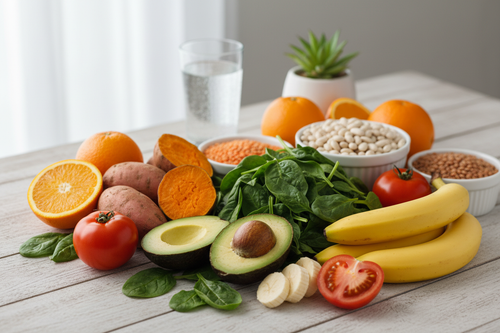
Since everything is played out in the ratio, you do not have to be afraid to salt your home-cooked dishes, provided you daily incorporate foods rich in organic potassium. Avocados (approx. 700 mg of potassium per 100 g), steamed sweet potatoes (~540 mg/100 g), spinach (~558 mg/100 g), pure coconut water (~250 mg/100 ml): these foods restore the favorable ratio that naturally protects blood pressure and heart function.
For a personalized remineralization protocol and support on your electrolyte balance, join Le Terrier's monthly follow-up for 10 euros: protocols adjusted every month to your biological terrain, based on naturopathy and recent clinical data.
Important precautions and educational limitations
What we share here is exclusively part of a nutritional education and preventive lifestyle approach. Two specific profiles must check with their doctor before changing their sodium intake.
People suffering from severe chronic kidney failure have a strongly compromised sodium elimination capacity. The accumulation of sodium can worsen water retention and hypertension in this specific context, which is to be distinguished from the general population. Likewise, if you are under heavy medication for severe arterial hypertension (ACE inhibitors, diuretics, calcium channel blockers), any change in your sodium intake can interfere with the action of these treatments and must be discussed with your cardiologist. The preventive logic described in this article does not apply to these specific pathological situations.
FAQ on salt and metabolic health
Why can a salt-free diet be dangerous?
Severe sodium restriction activates the renin-angiotensin-aldosterone system (RAAS) and the sympathetic nervous system to compensate for the drop in blood pressure. This reaction triggers a rise in cortisol and adrenaline which, over time, alters insulin sensitivity and fatigues the cardiovascular system. The PURE study (The Lancet, 2018) observed that intakes below 3 g of sodium per day were associated with a higher cardiovascular risk, an observational finding that is still debated.
What is the J-shaped curve observed in the PURE study?
Published in The Lancet (2018) on over 90,000 people in 18 countries, the PURE study showed that the relationship between sodium consumption and cardiovascular risk is not linear but J-shaped. Too low a consumption (less than 3 g of sodium per day, i.e., about 7.5 g of salt) is associated with an increased risk of heart attack and mortality, just like very high consumption. The lowest risk zone is between 3 and 5 g of sodium per day.
What is the difference between refined salt and gray sea salt?
Refined white salt is composed of 99.9% pure sodium chloride, stripped of all its nutrients during the industrial process, and often enriched with chemical anti-caking agents. Unrefined gray sea or Celtic salt contains 85 to 90% NaCl accompanied by a natural matrix of magnesium, potassium, calcium, sulfur, and dozens of trace elements that act synergistically for harmonious intracellular hydration.
What is the role of the sodium/potassium ratio for blood pressure?
The Na+/K+-ATPase cellular pump maintains the electrical balance of each cell by bringing potassium in and taking sodium out. An excess of sodium combined with a potassium deficiency, typical of ultra-processed food, disrupts this pump and raises blood pressure. Data published in the Archives of Internal Medicine confirm that the sodium/potassium ratio is a more reliable cardiovascular predictor than sodium alone.
How does salt deficiency cause insulin resistance?
Severe sodium restriction activates the sympathetic nervous system to compensate for the drop in sodium. This activation raises cortisol and catecholamines (adrenaline, noradrenaline), which alter the signaling of insulin receptors at the cellular level. A study published in Metabolism, Clinical and Experimental measured a drop in insulin sensitivity in just a few days in subjects subjected to severe sodium restriction.
What are the benefits of Quinton water for hydration?
Quinton water (sea plasma) presents an ionic mineral composition analogous to the human extracellular environment. Its richness in bioavailable minerals (sodium, magnesium, potassium, calcium, trace elements) allows deep cellular remineralization and rehydration without straining the kidneys. It represents a quality complex sodium source, unlike industrial refined sodium chloride.
What foods to eat to naturally increase potassium?
The best food sources of potassium to rebalance the mineral ratio are: avocado (~700 mg/100 g), cooked sweet potato (~540 mg/100 g), spinach (~558 mg/100 g), pure coconut water (~250 mg/100 ml), banana (~360 mg/100 g), white beans (~561 mg/100 g), and cooked lentils (~369 mg/100 g). Incorporating 2 to 3 of these foods daily effectively compensates for a reasonable sodium intake from unrefined salt.
Who must strictly follow a low-salt diet?
People suffering from severe chronic kidney failure (whose kidneys cannot eliminate excess sodium) and those under heavy medical treatment for severe arterial hypertension must strictly follow the personalized recommendations of their cardiologist or primary care physician. The information in this article is addressed to the general population in a preventive approach, and does not constitute medical advice for these specific profiles.
Salt is not your enemy; refined salt is
Fifty years of simplistic demonization have produced a generation of people who are afraid to salt their steamed vegetables while unknowingly consuming ultra-salty processed foods. Contemporary science asks us to refine our perspective: the problem lies primarily with refined salt consumed without enough potassium or magnesium. Replace white salt with high-quality gray sea salt, build your plate around foods rich in potassium, and ditch anxious restriction in favor of nutritional intelligence based on actual clinical data.

8 comments
Merci pour ces recherches effectuées qui me fait du bien
Oui moi je souffre d’insuffisance rénale et dhiper tasion je voulais avovotre conseil
Bonjour.le sel de l’Himalaya contient -il du potassium ? Merci