

Walking, your second heart: what the studies say
The most effective remedy for your heart and brain is not found in a pharmacy. It is free, accessible to almost everyone, and it is precisely because it costs nothing that we neglect it. This remedy is walking.
We think it is ordinary, good at best for stretching our legs. Yet, every step sets a precise mechanism in motion: a pump in your calves that relieves the heart, muscles that capture sugar after a meal, and a brain that produces what is needed to maintain memory and mood. There is nothing esoteric about it, just well-documented physiology.
Here is what walking really does in your body, and how to get the most out of it without running a marathon.
Your calves, a second heart
We often overlook it, but you have a kind of second heart, located in your calves. Gravity pulls the blood downward, and the heart alone struggles to pump it back up from the feet to the chest. With every step, the contraction of the calf muscles compresses the deep veins and pushes the blood upward: this is the calf muscle pump, or sural pump, an essential relay for venous return (Recek, International Journal of Angiology, 2013).
When you sit for hours, this pump no longer works. The blood stagnates, the legs become heavy, and over time this contributes to poor circulation and varicose veins. Walking puts the pump back in motion and relieves the heart. A useful tip: roll your foot properly, from the heel to the toes, to fully engage the calf. If your legs are often heavy, our article on heavy legs complements the topic.
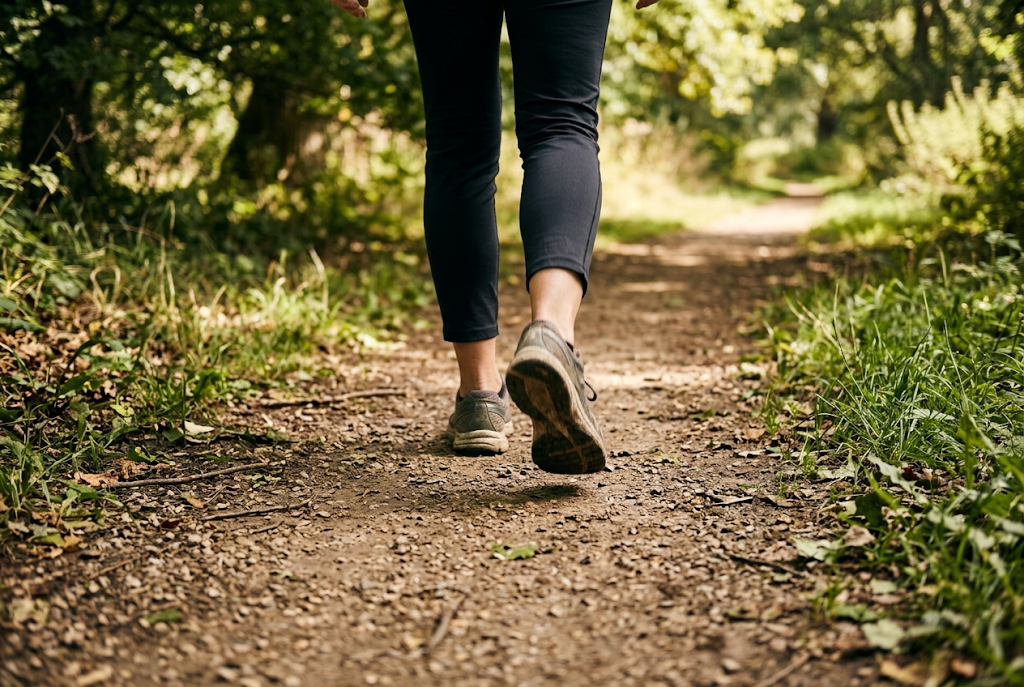
Walking after meals for blood sugar
The worst habit after a meal is to slump onto the couch. Walking for about ten minutes right after eating significantly reduces the subsequent blood sugar spike (Reynolds et al., Diabetologia, 2016; Buffey et al., Sports Medicine, 2022). The extent of the drop varies depending on the person and the study, but the effect is consistent and easy to achieve.
The mechanism is simple: muscles in action draw on the sugar in the blood to use as fuel, which relieves the work of the pancreas. This is the trick against the famous early afternoon slump. We detail it in our article on walking after a meal, and more broadly in our guide to stabilize your blood sugar naturally.

Want an opinion on your situation? During a vitality assessment, we review your diet, sleep, stress, and goals together, then build a plan tailored to your pace.
Walking nourishes the brain
Walking also works above the neck. Physical activity stimulates the production of BDNF, a molecule that can be thought of as fertilizer for neurons: it supports memory and learning (Szuhany et al., Journal of Psychiatric Research, 2015). A landmark trial showed that a regular walking program in seniors increased the volume of the hippocampus, the key area for memory (Erickson et al., Proceedings of the National Academy of Sciences, 2011). The effect is modest, but it goes against the shrinkage observed with age.
Walking also calms the mind, with well-established benefits for anxiety and mood. Some researchers even suggest an interesting, yet still to be confirmed, idea: seeing the landscape pass by while walking forward would send a soothing signal to the brain, a mechanism mentioned in some therapies. To learn more, see our articles on preventing cognitive decline and managing cortisol and stress.

How to benefit from it daily
Good news, there is no need to aim for performance. The World Health Organization recommends about 150 to 300 minutes of moderate activity per week, and walking fully contributes to this. What is most effective is often the simplest: move a little more every day, walk for about ten minutes after meals, prefer the stairs to the elevator, get off one stop earlier.
A short but regular walk is better than a long isolated outing. You can also break it up: three times ten minutes during the day count as much as a half-hour walk. The idea is not to change everything at once, but to anchor movement in your habits.
A word of common sense: walking is suitable for almost everyone, but in the event of heart, respiratory, or joint disease, or after a long period of inactivity, ask your doctor's advice before significantly increasing your activity. And if you have one swollen leg, calf pain, or painful varicose veins, consult a professional: these are venous signs that should be evaluated.
Want daily support? Le Terrier's personalized follow-up, at €10 per month, allows you to ask us questions in writing and progress at your own pace.
Frequently Asked Questions
How long should you walk every day?
There is no magic threshold, but the World Health Organization recommends about 150 to 300 minutes of moderate activity per week, which is approximately twenty to thirty minutes of walking per day. You can break it up into several short walks; it counts just as much. Consistency is what matters.
Why walk after a meal?
Because muscles in action capture part of the sugar in the blood to use as fuel, which reduces the blood sugar spike that follows the meal. Ten minutes is enough to achieve this effect. It is particularly useful for avoiding the early afternoon fatigue slump.
Is walking enough as physical activity?
For general health, regular walking already provides a lot: circulation, blood sugar, heart, mood, and memory. It benefits from being complemented by a little muscle strengthening once or twice a week, but it constitutes an excellent and accessible foundation for almost everyone.
What is the calf pump?
It is the pumping role played by the calf muscles during walking. By contracting, they compress the deep veins and push the blood toward the heart, against gravity. We call it the sural pump, an important relay for venous return, especially when you spend a lot of time standing or sitting.
Is walking good for mood and memory?
Yes. Regular walking supports the production of BDNF, useful for memory, and a walking program has even been associated with an increase in the volume of the hippocampus in seniors. Its benefits for anxiety and mood are also well established. It does not replace a treatment, but it is a valuable support.
When should you consult before walking more?
In the event of heart, respiratory, or joint disease, or after a long period without activity, ask your doctor's advice before significantly increasing your exertion. Also consult for one swollen leg, calf pain, or painful varicose veins, which may indicate a venous problem that needs to be evaluated.
This article is for informational purposes and does not replace medical advice.