How to Stabilize Your Blood Sugar Naturally: 7 Strategies
Reading time: 10 minutes
You wake up tired despite a full night's sleep. Around 11 a.m., an irresistible sugar craving hits you. After lunch, you feel drowsy, making it hard to concentrate. By late afternoon, you experience another energy slump.
Does this scenario sound familiar? It resembles what are known as glycemic rollercoasters: marked fluctuations in blood sugar levels, which can weigh on your energy and, repeated over years, promote insulin resistance.
The good news: blood sugar is one of the physiological parameters most sensitive to lifestyle changes. The first effects are often felt within a few days. And the main levers are in your plate and in your habits, even before supplements.
Here are 7 strategies backed by research and used in naturopathy. If you are diabetic or under treatment, talk to your doctor before changing your routine: some combinations can lower blood sugar too much.
Note: blood sugar is also linked to your intestinal health and your microbiota. If you recognize several symptoms described here, we invite you to read our complete guide on intestinal health for an overview.

Understanding blood sugar: what really happens in your blood
Blood sugar refers to the level of glucose circulating in the blood. Fasting, a normal blood sugar level is between 70 and 100 mg/dL (0.7 to 1.0 g/L). After a meal, it rises, which is normal and inevitable, then goes down thanks to insulin, the hormone secreted by the pancreas to get glucose into the cells.
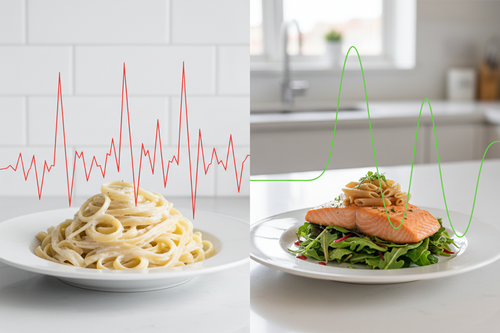
The problem is not the rise in blood sugar after a meal. The problem is the amplitude and speed of this rise.
When you eat a bowl of sugary cereal or a pastry on an empty stomach, glucose floods your circulation in a few minutes. The pancreas responds by secreting a large amount of insulin. This insulin causes blood sugar to drop sharply, sometimes below its initial level. This is reactive hypoglycemia, responsible for the 11 a.m. energy slump and the accompanying craving.
Repeated daily for years, this cycle can degrade the sensitivity of cells to insulin and promote insulin resistance, the step preceding prediabetes.
The goal is therefore not to eliminate carbohydrates. It is to flatten the curve.
Strategy 1, reorganize the order of your foods on the plate
It is one of the most surprising and accessible discoveries of recent research in nutrition.
The order in which you eat the foods of the same meal massively influences the resulting glycemic peak, regardless of the calories ingested. In a study published in Diabetes Care (Shukla et al., 2015), eating vegetables and proteins before carbohydrates reduced the post-meal blood sugar rise by about one third.
The practical rule:
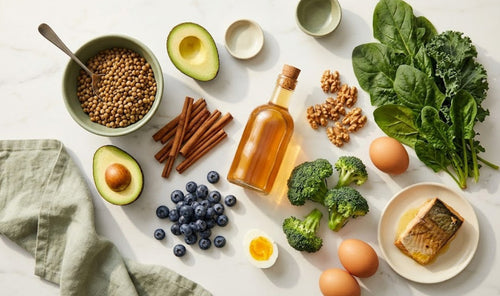
- Vegetables first, fibers form a "net" in the intestine that slows down the absorption of glucose
- Proteins and fats next, stimulate a gentler insulin response
- Carbohydrates last, starch, bread, rice, fruits
Concretely: always start your meal with a salad, raw vegetables, or cooked vegetables. Even a small portion counts.
Strategy 2, master the glycemic index and load

The glycemic index (GI) measures the speed at which a food makes blood sugar rise. The glycemic load (GL) refines this measurement by taking into account the amount of carbohydrates actually ingested.
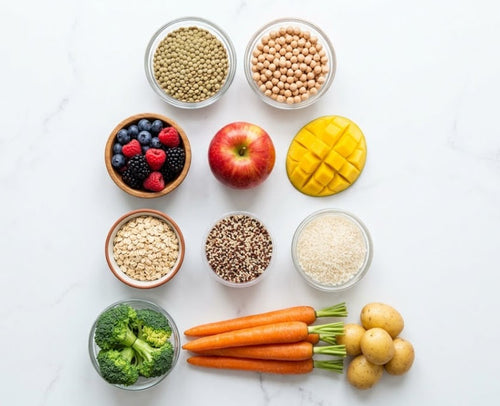
Low GI foods (< 55) to favor
| Category | Examples |
|---|---|
| Legumes | Lentils, chickpeas, red beans, flageolets |
| Vegetables | All green vegetables, zucchini, eggplant, peppers |
| Fruits | Berries, apple, pear, citrus, cherry |
| Whole grains | Oats, barley, quinoa, al dente cooked basmati rice |
| Nuts | Almonds, walnuts, hazelnuts, cashews |
The often ignored high GI traps
- White bread (GI 70 to 85), and often industrial "whole" bread
- Overcooked white rice (GI 72-85 vs 50 al dente)
- Peeled potatoes (GI 85-90)
- Fruit juice (GI 60-70, even "no added sugar")
- Dates, very ripe banana, raisins
Naturopathy tip: cooling rice or potatoes after cooking, then reheating them, transforms part of the starch into "resistant starch", which behaves like a fiber and slightly attenuates the blood sugar rise.
For a complete analysis, consult our practical guide to the glycemic index.
Strategy 3, apple cider vinegar before meals
It is one of the best documented and least expensive remedies to stabilize blood sugar. One tablespoon of unfiltered apple cider vinegar diluted in a large glass of water, consumed 10 to 15 minutes before a carbohydrate-rich meal, moderately reduces the post-meal blood sugar rise in several small studies (for example Johnston et al., Diabetes Care, 2004).
The mechanism is double: acetic acid partially inhibits the digestive enzymes that break down complex carbohydrates into glucose, and could improve the use of glucose by the muscles.
How to use it:
- 1 tablespoon (15 ml) in 250 ml of cold water
- Always diluted, never pure (risk of dental enamel erosion)
- Drink with a straw to protect the teeth
- Before high carbohydrate meals as a priority
Choose an unpasteurized apple cider vinegar, with the "mother" (visible natural sediment at the bottom of the bottle), it is what concentrates the active compounds.
Strategy 4, move after meals

Physical activity is the most powerful blood sugar regulator that exists, provided you use it at the right time.
A 10 to 20 minute walk in the hour following a meal significantly reduces the blood sugar rise. The mechanism is direct: muscle contraction allows the muscles to absorb blood glucose independently of insulin, via a specific transporter called GLUT-4.
You do not need to do intense sports. It is enough to walk. A meta-analysis published in Sports Medicine (Buffey et al., 2022) shows that even 2 to 5 minutes of light walking after the meal has a measurable effect on blood sugar.
- 10-20 min walk after the meal = most effective and accessible strategy
- Avoid lying down or staying seated immediately after eating
- Light muscle contractions (dishes, tidying up) already have a positive effect
Strategy 5, sleep and stress management: the invisible factors
Two massively underestimated factors in glycemic regulation.
Lack of sleep directly disrupts blood sugar. In a study by the University of Chicago (Broussard et al., 2012), four nights of 4.5 hours of sleep reduced insulin sensitivity by about 16%. After a bad night, the brain demands more energy-dense foods, it is a biological response, not a lack of willpower.
Chronic stress is just as deleterious. Cortisol stimulates the release of glucose into the blood to prepare the body to "flee or fight". Useful in the face of immediate danger, but unfavorable when stress becomes chronic.
The simplest ways to manage stress:
- Heart coherence (5 minutes of rhythmic breathing 3 times a day), simple, free and soothing
- Meditation or gentle yoga, 10 minutes a day are enough to start
- Magnesium: deficiency amplifies the stress response and degrades insulin sensitivity. According to the SU.VI.MAX study, a majority of French people do not reach the recommended intakes.
Strategy 6, the plants and supplements that make the difference

Berberine
Alkaloid extracted from plants like Berberis vulgaris, berberine is the natural active whose action on blood sugar is the best documented. It activates the AMPK enzyme, the same enzyme targeted by metformin. Meta-analyses, on trials of variable quality, find an effect on fasting blood sugar and HbA1c. It interacts with many medications, can lower blood sugar too much in case of anti-diabetic treatment and is contraindicated during pregnancy and breastfeeding: always ask the advice of your doctor or pharmacist. Our berberine 97% is reserved for adults.
Ceylon cinnamon
Be sure to choose Ceylon cinnamon (Cinnamomum verum) and not cassia cinnamon, the latter contains potentially toxic coumarin over the long term. Studies on cinnamon show a modest effect on fasting blood sugar, with variable results. In cooking, 1 to 3 g per day is a usual quantity.
Chromium
Trace element that participates in the action of insulin. Real deficiencies are rare and the results of supplements are inconsistent. Best absorbed forms: picolinate and nicotinate of chromium.
White mulberry
White mulberry leaves contain desoxynojirimycin (DNJ), an inhibitor of digestive enzymes that break down carbohydrates. Taken before a carbohydrate-rich meal, it attenuates the blood sugar rise in several small studies.
Fenugreek
Rich in soluble fibers (galactomannans), it slows down the absorption of carbohydrates and improves insulin sensitivity. Studies often use 5 to 10 g of ground seeds per day. Avoid during pregnancy.
Our natural dietary supplements offer several of these actives. Ask us for advice to choose the one that suits you.
Strategy 7, identify your underlying nutritional imbalances
A chronically unstable blood sugar is often the symptom of a deeper nutritional imbalance. Insufficient intakes of magnesium, zinc or vitamin D are associated with poorer blood sugar regulation.
The most effective approach is to pinpoint these deficiencies before supplementing, because untargeted supplementation is often not very effective and sometimes counterproductive.
Our nutrition and deficiency self-tests can help you take stock, for example of your magnesium and zinc levels, before supplementing.
Do you suspect insulin resistance? Our detailed article covers the signs, causes and natural approaches.
Summary protocol: the 7 strategies in 1 week
| Day | Action |
|---|---|
| Day 1-2 | Apply the order of foods (vegetables → proteins → carbohydrates) to each meal |
| Day 2-3 | Add apple cider vinegar before the main meal |
| Day 3-4 | 15 min walk after each main meal |
| Day 4-5 | Identify and replace 3 high GI foods in your usual diet |
| Day 5-6 | Establish a heart coherence routine (3 × 5 min/day) |
| Day 7 | Assessment and introduction of a targeted supplement if necessary |
Frequently asked questions
Does unstable blood sugar mean I am diabetic?
No. Variations after meals are normal, and energy slumps or cravings do not indicate diabetes. Only a blood test (fasting blood sugar, HbA1c) can tell you. If you are constantly thirsty, urinate a lot or lose weight without reason, see a doctor promptly.
How long does it take to see results?
Food order and walking after a meal work from that very meal. To feel steadier energy day to day, allow a few weeks of regular habits.
Can you combine several of these strategies?
Yes, they complement each other well: a plate rich in vegetables and fiber, food order, a walk after the meal and good sleep. For supplements like berberine, ask a professional first, especially if you take medication.
Can stress really disrupt my blood sugar even if I eat well?
Yes. Cortisol and adrenaline released during stress make blood sugar rise to provide energy to the muscles. Occasionally, it is normal. When stress lasts, this effect adds to the lack of sleep and the snacking that often accompanies it.
What is the most studied plant for blood sugar?
Berberine is the most studied natural active, with a real effect but studies of unequal quality. It is not without risks: drug interactions, digestive disorders, contraindication during pregnancy. It never replaces a prescribed treatment.
Do fruits make blood sugar rise?
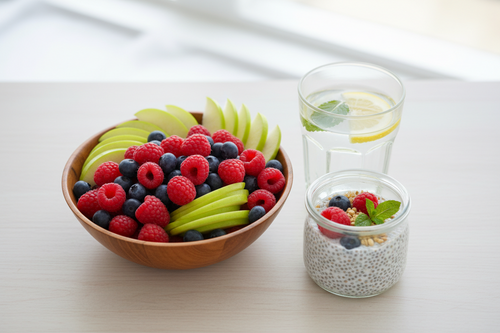
Whole fruits generally have a moderate impact thanks to their fibers. Prefer them whole rather than in juice, ideally at the end of a meal or with a handful of nuts. There is no reason to remove them.
Should you remove starches to stabilize your blood sugar?
No. The idea is rather to choose whole-grain starches or legumes, cook them al dente, pair them with vegetables and protein, and adjust the amounts to your activity level. Strict restriction is rarely useful and often hard to stick to.
Is apple cider vinegar risk-free?
Diluted (one tablespoon in a large glass of water), it is well tolerated by most people. Undiluted, it damages tooth enamel and irritates the esophagus. Avoid it in case of reflux, ulcers, or treatment that lowers potassium, and talk to your doctor if you are diabetic and on medication.
Key Takeaways
Stabilizing your blood sugar naturally is not a matter of restriction or deprivation. It is a matter of organization: on your plate, over time, and in your lifestyle.
The 7 strategies presented here are complementary, progressive, and require no special equipment. Start with food order and walking after meals; these are the two interventions with the fastest and best-documented impact.
And if you wish to go further with personalized support and a protocol tailored to your specific situation, our naturopaths are available to guide you step by step.
Want step-by-step guidance to stabilize your energy without a strict diet? Le Terrier's personalized follow-up for ten euros a month helps you put these strategies into practice. You can also discover our e-books and protocols.
This article is for informational purposes and does not replace medical advice.