Breathe better: how modern air purifiers are transforming our quality of life
Did you know that we spend an average of 90% of our time indoors? Yet, according to the Environmental Protection Agency (EPA), the air we breathe in our homes and offices can be 2 to 5 times more polluted than outdoor air. This invisible reality silently affects our health, well-being, and daily quality of life.
In our modern world, sources of indoor pollution are multiplying: household products, building materials, furniture, electronic devices, not to mention natural allergens such as pollen, mold, and dust mites. This accumulation of particles and chemical compounds creates an invisible but potentially harmful cocktail that we breathe day after day.
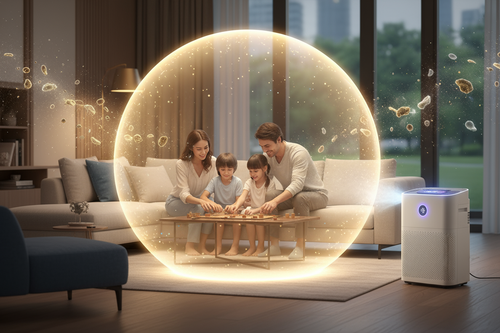
Faced with this challenge, technology offers us an increasingly sophisticated solution: air purifiers. These devices, once considered luxury gadgets, have become essential allies for many health-conscious households. Among the most effective technologies, the combination of HEPA filters, activated carbon, and negative ionization represents today's state-of-the-art in air purification.
But what can these devices really do to improve our daily lives? How do these complementary technologies work? And above all, what concrete benefits can you expect for your health and comfort?
Here is an overview of the world of modern air purification. We will break down the mechanisms that effectively remove fine particles, allergens, odors, and even certain pathogens from your indoor environment. You will discover how investing in a quality air purifier can become an asset for your daily well-being and that of your loved ones.
Whether you are concerned about seasonal allergies, sensitive to urban pollution, or simply want to provide your family with the cleanest air possible, this exploration of modern air purifiers will provide you with the knowledge needed to make an informed choice.
Understanding indoor air pollution: a little-known health issue
When we talk about air pollution, our minds naturally turn to images of factory chimneys or urban traffic jams. Yet, it is often in our own homes that insidious pollution hides, all the more concerning since we are constantly exposed to it.
The invisible pollutants in our homes
Our home environment is full of various sources of pollution. Among the most common are:
- Fine particles (PM2.5 and PM10): invisible to the naked eye, they come from cooking, candles, but also from outdoor air that seeps in. These particles can penetrate deep into our lungs and even, for the finest ones, into our bloodstream.
- Allergens: pollen, pet dander, dust mites, and mold constitute a major source of discomfort for the roughly 1 in 4 U.S. adults who have seasonal allergies, according to the CDC.
- Volatile organic compounds (VOCs): emitted by paints, furniture, cleaning products, or cosmetics, these chemical compounds can cause irritation, headaches, and, in the long term, more serious health problems.
- Bacteria and viruses: suspended in the air, these microorganisms can promote the spread of diseases, particularly during the winter season or in poorly ventilated spaces.
- Odors and smoke: whether they come from the kitchen, tobacco, or other sources, they often contain harmful substances and impair our daily comfort.
The impacts on our health and well-being
Prolonged exposure to these indoor pollutants is not without consequences. According to the World Health Organization, indoor air pollution is responsible for many health problems:
- Worsening of asthma and allergy symptoms
- Irritation of the respiratory tract and eyes
- Headaches and chronic fatigue
- Sleep disorders
- Decreased cognitive abilities
Some studies even suggest that better indoor air quality may support better cognitive performance. It is therefore not only our physical health that is at stake, but also our productivity and mental well-being.
The triple technology of modern air purifiers: HEPA, activated carbon, and ionization
Faced with this diversity of pollutants, a multi-technology approach is essential. This is precisely what the latest generation of air purifiers offers, combining three complementary technologies for maximum efficiency.

The HEPA filter: the standard of excellence against particles
The HEPA (High-Efficiency Particulate Air) filter represents the global standard in particulate filtration. To earn this designation, a filter must capture at least 99.97% of particles 0.3 microns in diameter, which is about 300 times finer than a human hair.
This technology, initially developed for medical environments and industrial cleanrooms, works like a microscopic labyrinth. The filter's tangled fibers trap particles through three physical mechanisms:
- Direct interception
- Inertial impact
- Diffusion for ultrafine particles
The result: pollen, dust, pet dander, mold spores, and even certain bacteria are effectively removed from the air you breathe.
The activated carbon filter: the expert on odors and gases
Where the HEPA filter excels against particles, it remains powerless against gases and odors. This is where activated carbon comes in, a material with interesting properties.
Heat-treated to develop an extremely porous structure, a single gram of activated carbon can have an adsorption surface area equivalent to more than 500 m². This characteristic allows it to effectively capture:
- Volatile organic compounds (VOCs)
- Kitchen, tobacco, or pet odors
- Various smoke and gases
- Certain chemical pollutants such as formaldehyde
The adsorption process fixes these molecules to the surface of the carbon, permanently removing them from the circulating air.
Negative ionization: a complementary approach
Ionization technology completes this system by emitting negatively charged ions into the ambient air. These ions attach to suspended particles, giving them an electrical charge that attracts them either to the surrounding surfaces or to a collector built into the purifier.
This technology offers several advantages:
- It works throughout the entire room, even far from the device
- It can capture extremely fine particles
- Some studies suggest that negative ions themselves may have beneficial effects on our well-being
The combination of these three technologies creates an almost impenetrable barrier against all indoor pollutants, offering a complete solution to transform the quality of your air.

The concrete benefits of air purifiers in your daily life
Investing in an air purifier is not just about acquiring a simple household appliance. It is a decision that can profoundly transform your quality of life. Let's discover together the tangible benefits you could notice after a few weeks of use.
Better quality sleep
Did you know that the quality of the air you breathe while you sleep directly influences your rest? A few studies suggest that cleaner air in the bedroom may improve sleep quality.
By eliminating allergens and irritating particles, your respiratory system works less during the night, allowing for a deeper and more restorative sleep. Many users report waking up with less nasal congestion and an increased feeling of freshness.
Significant relief for allergy sufferers
For people suffering from seasonal or perennial allergies, an air purifier equipped with a HEPA filter often represents a liberation. By effectively capturing pollen, pet dander, and dust mites, these devices can considerably reduce allergy symptoms:
- Decrease in sneezing fits
- Reduction in eye itching
- Improved nasal breathing
- Fewer skin irritations related to airborne allergens
In people allergic to dust mites, studies mostly show a modest improvement in symptoms when the purifier is used regularly in the bedroom, alongside other measures.
Enhanced protection against respiratory illnesses
In a context where health concerns are at the forefront, air purifiers offer an additional line of defense against the spread of certain pathogens. High-quality HEPA filters can capture some of the viruses and bacteria suspended in the air.
While an air purifier cannot guarantee total protection, it nevertheless helps reduce the viral and bacterial load in indoor air, which is particularly beneficial during epidemic periods or for immunocompromised people.
Want an opinion on your situation? During a vitality assessment, we review your diet, sleep, stress, and goals together, then build a plan tailored to your pace.
A healthier environment for the whole family
Children, whose respiratory and immune systems are still developing, are particularly vulnerable to the effects of indoor pollution. Purified air can help to:
- Reduce the risk of childhood asthma
- Decrease respiratory infections
- Promote optimal lung development
Similarly, older people, who are often more sensitive to respiratory irritants, frequently experience an improvement in their daily comfort thanks to cleaner air.
A fresher and more pleasant home
Beyond the health benefits, the elimination of odors thanks to the activated carbon filter transforms the atmosphere of your home. No more lingering cooking smells, tobacco odors, or overpowering scents from household products.
Ionized air also provides that characteristic sensation of freshness felt after a thunderstorm or near a waterfall, a natural phenomenon due to the high concentration of negative ions in these environments.
Peace of mind in the face of outdoor pollution
On days with peak pollution or during exceptional events (nearby fires, construction in the neighborhood), your air purifier becomes an effective shield. By closing your windows and activating your device, you create a protected zone where you can breathe peacefully despite unfavorable outdoor conditions.

How to choose the air purifier suited to your needs
Faced with the multitude of models available on the market, it is essential to understand the criteria that will make the difference between a wise investment and a costly disappointment.
CADR: the key performance indicator
CADR (Clean Air Delivery Rate) is undoubtedly the most important criterion to consider. Expressed in m³/h, it indicates the volume of purified air the device can provide per hour. The higher this value, the more effective the device will be, especially in large spaces.
For optimal efficiency, look for a purifier whose CADR allows it to filter the entire volume of air in your room at least 2 to 3 times per hour. For example, for a 20m² room with a ceiling height of 2.5m (i.e., 50m³), a minimum CADR of 150m³/h is recommended.
Coverage area and placement
Manufacturers generally indicate the maximum area their device can effectively treat. Choose a model slightly oversized for your space to guarantee optimal performance, even at medium speed (thus quieter).
Regarding placement, favor:
- A central position in the room
- Clear space around the device (at least 30cm (12 in))
- A suitable height (often on the floor for some models)
Noise level: an essential comfort criterion
Since an air purifier is intended to run for several hours a day, or even continuously, the noise level becomes a determining factor for your comfort. The best models offer:
- An ultra-quiet night mode (less than 30 dB)
- Several ventilation speeds
- Quality soundproofing
Before making a purchase, check the decibels emitted at different speeds, especially if you plan to use the device in a bedroom.

Energy consumption: a long-term cost
Since an air purifier is designed to run continuously, its electricity consumption will directly impact your energy bill. Recent models often incorporate DC (direct current) motors that are more economical than their AC (alternating current) predecessors.
Look for devices displaying:
- A favorable energy rating
- A reasonable power rating (generally between 30W and 80W)
- Smart energy-saving modes
A good purifier typically consumes between 50 and 200 kWh per year depending on its use, which represents an annual cost of about €10 to €40, a modest investment compared to the benefits for your health.
Maintenance cost: think about replacement filters
The initial purchase is only part of the economic equation. HEPA and activated carbon filters must be replaced periodically to maintain the device's efficiency:
- HEPA filters: generally every 6 to 12 months
- Activated carbon filters: every 3 to 6 months depending on use
Before your purchase, find out about:
- The price of replacement filters
- Their long-term availability
- Ease of replacement
Some manufacturers offer subscriptions or discounts on filters, which can significantly reduce the maintenance cost over the life of the device.
Smart features: comfort and efficiency
Modern air purifiers are increasingly incorporating advanced features that improve the user experience:
- Air quality sensors: they analyze pollution in real time and automatically adjust the filtration power
- Filter saturation indicators: they alert you precisely when a replacement becomes necessary
- Wi-Fi connectivity: it allows remote control via smartphone and integration into your smart home ecosystem
- Scheduling: it improves operation according to your habits (increased power during cooking, silent mode at night)
- Specific modes: anti-allergen, anti-odor, or boost for quick purification
These features, although not essential, can significantly improve the efficiency of your purifier and simplify its daily use.
What the studies say
Beyond marketing promises, here is what research can say about air purifiers equipped with a HEPA filter:
They significantly reduce the amount of fine particles (PM2.5), pollen, and allergens suspended in a room, provided they are properly sized and run continuously.
In people with allergies or asthma, several trials show a modest improvement in symptoms, especially when the device is used in the bedroom and combined with other measures (ventilation, washing bedding, reducing pollution sources).
Studies conducted during high pollution episodes observed a decrease in indoor PM2.5 and small beneficial effects on blood pressure and certain inflammation markers.
A purifier does not replace medical treatment or daily ventilation: it is a complement. If you or your children suffer from asthma, talk to your doctor.
An investment in your health capital
In our collective quest for well-being and optimal health, we often pay meticulous attention to our diet, physical activity, or sleep. Yet, the air we breathe, a vital element if ever there was one, paradoxically remains neglected.
Modern air purifiers, combining HEPA filtration, activated carbon, and ionization, offer an affordable and effective solution for improving the quality of our indoor environment. They are not an unnecessary expense, but rather an investment in our health and daily comfort.
Whether you are motivated by protecting your family from allergens, reducing unpleasant odors, or simply wanting to breathe cleaner air, these devices offer a technological solution to the challenges of our time.
As with any equipment designed to improve your quality of life, take the time to compare the available options, assess your specific needs, and choose a model that will serve you effectively for many years.
After all, can we really put a price on the simple yet essential pleasure of breathing clean air in our own home?
Frequently asked questions about air purifiers
Can an air purifier replace ventilation?
No. It filters particles, but does not bring in fresh air or remove moisture and CO2. Ventilate for at least 10 minutes twice a day.
Do ionizers produce ozone?
Some models can produce ozone. Choose a device certified as ozone-free, or disable the ionization function.
How do you maintain an air purifier?
Replace the HEPA filter according to the manufacturer's recommendations, generally every 6 to 12 months, and clean the pre-filter regularly. A saturated filter no longer filters much.
Would you like daily support? Le Terrier's personalized support, at €10 per month, allows you to ask us questions in writing and move at your own pace.