The truth about dust: protect yourself from dust mites naturally
Share
Reading time: 10 minutes
Have you ever noticed a beam of morning light streaming through your bedroom, revealing thousands of particles suspended in the air? This silent ballet of dust dancing before your eyes when you wake up?
Our first instinct is often to think of a lack of cleanliness, of "dirt" coming from outside. Yet, in naturopathy and environmental biology, the reality of household dust is far more interesting... and a little unsettling.
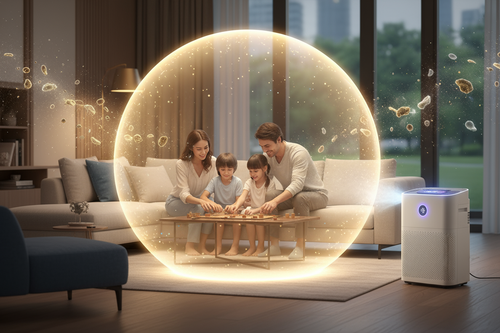
This cloud floating in your home is not just outside dirt. It is largely an organic extension of yourself.
Understanding the exact composition of our indoor environment is the first step toward regaining control of our respiratory health. For behind these seemingly harmless particles lies an invisible ecosystem that can be the source of your unexplained fatigue, morning stuffy nose, and chronic allergies.
Discover the fascinating biology of dust, why it feeds the mites responsible for your symptoms, and how to sanitize your home with 100% natural solutions.
What is really in the dust in your home? (Spoiler: it's you)
To effectively sanitize your environment, you must first understand it. Household dust is a complex ecosystem, a biological archive of your home and its inhabitants.
The biology of desquamation: 4 kilos of skin per year
The human body is a wonderful regeneration machine. The superficial layer of our epidermis (the stratum corneum) is continuously renewed without us even realizing it.
According to data from the American Academy of Dermatology (AAD), an adult human loses between 30,000 and 40,000 skin cells per minute. The total surface of our skin renews itself approximately every 28 to 30 days.
Let's do the math:
On an annual scale, this represents nearly 4 kilos of dead cells (called squames) that detach from our bodies. Where do they go? They settle patiently:
- On our furniture
- In the fibers of our rugs and carpets
- On our curtains and upholstery
- And especially... in our sheets and mattresses
According to analyses published in the journal Environmental Science & Technology (ACS), human skin debris can account for up to 80% of the organic matter present in bedroom dust.
In other words: you live in a permanent cloud of your own cellular remains.
The illusion of outside dirt
We tend to use ultra-effective household chemicals to "sterilize" our interiors, thinking we are fighting an invasion from outside. This is a perceptual error.
Certainly, dust also contains:
- Textile fibers (clothes, sheets, rugs)
- Outside particles (pollen, air pollution)
- Pet hair
- Mold spores
But the majority component remains of human origin.
The problem with "sanitizing" sprays:
The use of industrial deodorizing and "anti-dust" sprays only makes the situation worse. These products add Volatile Organic Compounds (VOCs) and endocrine disruptors (phthalates in particular) to this already present "human cloud".
According to the Indoor Air Quality Observatory, the indoor air in our homes is often 5 to 10 times more polluted than outdoor air, largely due to these conventional household products.
The bedroom microbiome: mites and respiratory allergies
The major physiological problem is not living surrounded by your own dead skin; it is a natural and inevitable phenomenon. The danger comes from the invisible ecosystem that feeds on it.
Dermatophagoides: the tenants of your mattresses
House dust mites (mainly Dermatophagoides pteronyssinus and Dermatophagoides farinae) are blind microscopic arachnids, invisible to the naked eye (0.2 to 0.3 mm).
Their scientific name literally means "skin eaters". And for good reason: your squames are their daily feast.
Their ideal living conditions:
- Temperature: between 20°C (68°F) and 25°C (77°F)
- Relative humidity: above 60%
- Darkness (they flee light)
- Abundant food (dead skin)
Your bed is therefore their absolute paradise.
A standard mattress can house up to 2 million mites. A 2-year-old pillow can contain up to 10% of its weight in dead mites and droppings.
Essential point: contrary to popular belief, the mite itself does not bite and is not directly dangerous. It is their droppings and the fragments of their exoskeleton that pose a major immunological problem.
The biochemical cascade of allergy and chronic fatigue
Mite droppings contain specific enzymatic proteins, notably the protein Der p 1. According to the World Health Organization (WHO) and the World Allergy Organization, these proteins are the number one cause of perennial allergies (which last all year) and allergic asthma.
Here is what happens in your body, night after night:
-
Inhalation: you breathe in these microscopic proteins during your sleep (8 hours of continuous exposure)
-
Immune recognition: your immune system, if sensitized, mistakenly identifies these proteins as dangerous invaders
-
Mast cell reaction: mast cells release massive amounts of histamine
-
Inflammation: histamine causes inflammation of the mucous membranes:
- Stuffy nose (allergic rhinitis)
- Post-nasal drip
- Night cough
- Eye irritation
- Skin itching
-
Exhaustion: this nightly immune battle exhausts your body
Result upon waking:
This is why many people wake up with a feeling of inflammatory "hangover": brain fog, unexplained chronic fatigue, congested nose, swollen eyes, headache... even though they have "slept" for 8 hours.
Your sleep was not restorative: your body spent the night fighting an invisible enemy.
Take back control of your health. Do you suffer from chronic fatigue, a stuffy nose upon waking, or unexplained allergies? Get personalized lifestyle protocols to detoxify your environment and regain overflowing vitality with our support.
How to get rid of mites naturally? (The complete protocol)
There is no need to spend a fortune on chemical "anti-mite" bombs that will poison the air in your bedroom with equally harmful substances. Naturopathy offers a simple and effective environmental hygiene approach.
1. Mechanical actions: ventilation and humidity control
Mites are unable to drink like we do. They absorb water directly from the ambient air through their cuticle. This is their Achilles' heel.
The fundamental principle:
If the relative humidity of your bedroom drops below 50%, the mites dry out and die within a few days. They simply cannot survive in a dry environment.
The golden rule of ventilation:
Ventilate your bedroom for 15 minutes in the morning (upon waking) and 15 minutes in the evening, summer and winter alike, regardless of the weather.
Why it is essential:
- Evacuation of body moisture: we lose up to 0.5 liters of water per night through perspiration. This moisture is absorbed by the mattress and sheets, creating a perfect microclimate for mites.
- Dispersion of the organic cloud: air circulation evacuates skin particles and suspended allergens.
- Oxygen renewal: improves the overall quality of the air you breathe.
The "open" bed trick:
Do not make your bed immediately upon waking. Leave your sheets folded at the foot of the bed during the morning ventilation. This allows the mattress to dry and cool down, making the environment hostile to mites.
Humidity control:
Invest in a hygrometer (a few dollars at a hardware store) to monitor the humidity level of your bedroom. Goal: maintain the relative humidity between 40% and 55%.
In case of excessive humidity:
- Use a dehumidifier
- Avoid drying laundry in the bedroom
- Check for leaks or mold
2. Aromatherapy: acaricidal essential oils
Plants have developed natural defense mechanisms against parasites for millions of years. We can use these phytochemical compounds to our advantage.
The most effective anti-mite essential oils:
| Essential Oil | Properties | Mode of action |
|---|---|---|
| Tea Tree | Antiparasitic, antifungal | Destroys the environment favorable to mites |
| Eucalyptus radiata | Effective acaricide, decongestant | Kills mites + clears respiratory passages |
| Eucalyptus globulus | Effective acaricide | More concentrated in eucalyptol (caution with children) |
| Clove | Very powerful acaricide | Shock action (to be used sparingly) |
| True lavender | Gentle acaricide, soothing | Ideal for bedrooms, promotes sleep |
Natural sanitizing spray recipe:
Ingredients:
- 1 200 ml spray bottle
- 180 ml of water (ideally distilled)
- 1 tablespoon of 70% ethyl alcohol (to disperse the oils)
- 15 drops of Tea Tree essential oil
- 15 drops of Eucalyptus radiata essential oil
Directions for use:
- Mix all ingredients in the bottle
- Shake well before each use
- Spray on the bare mattress (sheets removed) once a week
- Let air dry for 30 minutes before putting the sheets back
- Ventilate the room during application
Atmospheric diffusion:
An ultrasonic diffuser of essential oils allows you to sanitize the air in the bedroom. Diffuse 15 minutes before going to bed, but never during sleep or in the presence of children under 6 years old or pets.
Want an opinion on your situation? During a vitality assessment, we review your diet, sleep, stress, and goals together, then build a plan tailored to your pace.
The worst mistakes to avoid for your air quality
Here is a quick comparison between the bad habits that promote the proliferation of mites and inflammation, and the good naturopathic reflexes for optimal respiratory health:
| Targeted Action | The Mistake (Pro-inflammatory) | The Natural Solution (Health) |
|---|---|---|
| Making the bed | Doing it immediately upon waking (traps heat and moisture) | Leaving it unmade for 1h to ventilate the mattress |
| Scenting the air | Industrial deodorizing sprays (Phthalates, VOCs) | Natural ventilation + Pure essential oil diffuser |
| Bedroom temperature | Heating above 20°C (68°F) (mite paradise) | Maintaining between 16°C (61°F) and 18°C (64°F) at night |
| Washing sheets | Quick wash at 30°C (86°F) or 40°C (104°F) | Weekly wash at 60°C (140°F) minimum |
| Pillows | Keeping them for years without treatment | Washing them every 3 months or putting them in the freezer for 48h |
| Mattress | Never vacuuming it | Regularly vacuuming with a HEPA filter |
| Children's stuffed animals | Leaving them on the bed permanently | Putting them in the freezer for 48h every month |
| Humidity | Not monitoring the humidity level | Maintaining between 40% and 55% relative humidity |
Other natural preventive measures
The power of cold
Mites do not survive extreme temperatures. The freezer becomes your ally:
- Children's stuffed animals: 48h in the freezer once a month
- Pillows: 48h in the freezer every 3 months
- Small decorative cushions: same treatment
Cold kills mites and inactivates allergens without using chemicals.
The choice of bedding
Some materials are naturally less welcoming to mites:
- Anti-mite covers: invest in certified anti-mite mattress and pillow covers (very tight weave that prevents their passage)
- Natural fiber duvets: wool and linen are naturally less prone to mites than synthetic fibers
- Avoid foam toppers: foam retains moisture
Smart vacuuming
The vacuum cleaner removes dust (their food) and some allergens. But beware:
- Always use a vacuum cleaner with a HEPA filter (High Efficiency Particulate Air)
- A vacuum cleaner without a HEPA filter releases microscopic allergens into the air
- Vacuum the mattress once a week
- Empty the bag or bin outside the home
Precautions: when naturopathy gives way to medicine
Although environmental hygiene is the fundamental pillar of respiratory health, it does not replace a medical diagnosis in case of severe pathology.
Consult an allergist if:
- Your symptoms (asthma, severe rhinitis, conjunctivitis) heavily impact your quality of life
- You suffer from respiratory distress (shortness of breath, wheezing)
- Your sleep is profoundly altered despite hygiene measures
- Symptoms persist or worsen despite a sanitized environment
Desensitization (specific immunotherapy) combined with strict lifestyle hygiene offers excellent results for severe mite allergies. It is a long-term treatment that "re-educates" the immune system.
Our naturopathic advice supports your natural terrain and provides an essential preventive foundation. However, managing acute crises and severe chronic conditions falls under the remit of conventional medicine.
Breathe better, live better
Dust is inevitable; it is a sign of life. Your cells are renewing, your body is functioning, and that is excellent news. The problem is not dust itself, but the ecosystem it nourishes and the quality of the air you breathe for eight hours every night.
Summary of actions to take:
- Ventilate for 15 minutes morning and evening: non-negotiable, regardless of the season
- Leave your bed unmade for at least one hour in the morning
- Maintain the bedroom temperature between 16°C (61°F) and 18°C (64°F)
- Control humidity: target 40-55% relative humidity
- Wash your sheets at 60°C (140°F) minimum every week
- Use essential oils (Tea Tree, Eucalyptus) in a spray or diffuser
- Vacuum regularly with a HEPA filter
- Eliminate industrial chemical "sanitizing" sprays
Your bedroom should be a sanctuary for regeneration, not an immunological battlefield. By applying these simple principles of environmental hygiene, you transform your sleeping space into a true oasis of health.
Learn to breathe cleaner air to help your body regenerate.
Would you like daily support? Le Terrier's personalized follow-up, at €10 per month, allows you to ask us questions in writing and progress at your own pace.