What to eat when it’s hot? The nutrition and hydration guide for heatwaves
When the thermometer rises, our bodies work hard to maintain a temperature around 37°C (98.6°F). And in this battle, what we put on our plates matters almost as much as what we put in our water bottles. Beyond the perennial "drink water," there are simple, well-documented nutritional strategies to better cope with extreme heat: foods packed with water and minerals, truly refreshing drinks, and a few mistakes to avoid. Let's explore them together, backed by science, clearly distinguishing what is established from what amounts to a summer myth.
The top priority, above all else During extreme heat, the real major danger is dehydration, not drinking too much water. Drink regularly throughout the day, even if you're not thirsty: the sensation of thirst is a late signal, and it can become less pronounced with age. Everything that follows is aimed at helping you hydrate better, never at making you drink less.
Physiology: what heat does to your body

Sweating: you lose more than just water
Sweating is our internal air conditioning: as sweat evaporates from the skin's surface, it carries away heat. But sweat is not pure water: it contains electrolytes, mainly sodium, but also potassium and smaller amounts of magnesium. During heavy, prolonged sweating (intense heat, physical exercise, outdoor work), these losses become significant, and simply replenishing water is not enough: you also need to think about minerals (Sawka et al., ACSM, 2007).
Dilutional hyponatremia: real, but rare
Drinking huge volumes of pure water very quickly while losing a lot of salt through sweat can dilute the sodium in your blood: this is hyponatremia, which causes nausea, headaches, dizziness, and in severe cases, neurological disorders (Hew-Butler et al., 2015).
Let's keep things in perspective: dilutional hyponatremia is primarily described in endurance athletes who drink enormous quantities of pure water over several hours. In everyday life, even during heatwaves, it remains rare, while dehydration is common and far more dangerous, especially among older people. The message is therefore not "drink less," but "drink regularly, and also think about minerals when you sweat a lot."
Smart hydration: the golden rule
A pinch of salt: useful, but not for everyone
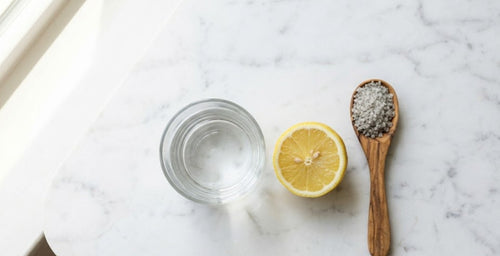
In cases of truly heavy sweating (prolonged extreme heat, exercise, physical work), adding a small pinch of unrefined salt to your daily water bottle helps compensate for sodium losses. It's a common-sense strategy, consistent with what we explain about the importance of sodium in our article on the dangers of a salt-free diet and in the one on lemon water with sea salt.
Be careful with added salt if you are affected This tip is not for everyone. If you suffer from high blood pressure, heart failure, or kidney failure, or if you follow a low-salt diet or take certain medications (diuretics, antihypertensives, lithium), do not add salt without first consulting your doctor. In these situations, the balance is medically adjusted, and taking personal initiative can do more harm than good.
Natural sources of electrolytes
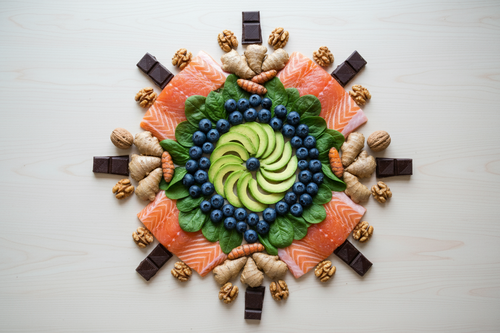
The simplest and safest way remains food. Aim for two to three servings a day of foods naturally rich in minerals: bananas and avocados (potassium), spinach and almonds (magnesium), natural coconut water (potassium), yogurt, and legumes. These foods gently replenish the body, without the risk of overdosing, and also provide fiber and vitamins. A nice mixed salad often does better than a sugary industrial "electrolyte" drink.
The 5 best foods for hydration
| Food | Water content | Key micronutrient |
|---|---|---|
| Cucumber | ~96% | Silica, potassium |
| Lettuce | ~95% | Vitamin K, folates |
| Tomato | ~94% | Lycopene, potassium |
| Watermelon | ~91% | Citrulline, lycopene |
| Melon | ~90% | Potassium, beta-carotene |
Watermelon and tomato: two summer allies
Watermelon is rich in citrulline, an amino acid involved in vasodilation and therefore circulation (Figueroa et al., 2017): interesting, although its main benefit during a heatwave remains its excellent water content. Tomato, meanwhile, provides lycopene, an antioxidant that one study showed reduced the skin's sensitivity to sunburn when tomato paste was consumed regularly (Stahl et al., 2001).
Be careful not to overinterpret: lycopene provides modest internal support; it is by no means a substitute for sunscreen, shade, and clothing. You don't protect yourself from the sun with tomatoes. For more information, see our articles on preparing your skin for the sun naturally and on choosing sunscreen.
Cucumber, melon, and lettuce: the refreshing trio
Cucumber sets records with around 96% water and provides silica. Melon is an excellent source of potassium, essential for fluid balance. Lettuce, often underestimated, combines 95% water, vitamin K, and folates. Together, these bases make perfect meals for summer: hydrating, light, rich in minerals, and easy to digest.
Want to adapt your diet to your metabolism, constitution, and pace of life, season after season? Join Le Terrier's personalized follow-up for 10 euros a month: practical, realistic, and personalized advice to get through summer (and the rest of the year) in great shape.
Want an opinion on your situation? During a vitality assessment, we review your diet, sleep, stress, and goals together, then build a plan tailored to your pace.
The mistakes that dehydrate you (and common myths)
Alcohol: the real mistake
This is the strongest point in this section. Alcohol inhibits the antidiuretic hormone (ADH), which increases urine production and promotes dehydration (Hobson & Maughan, 2010). It also causes vasodilation, which disrupts thermoregulation and gives a deceptive sensation of coolness. In extreme heat, it is the drink to limit first, alternating systematically with water if you drink it.
Coffee: let's honestly clarify this myth
Coffee does not dehydrate you: contrary to a very widespread belief, data show that at usual doses (up to 3 to 4 cups a day), caffeine does not cause significant dehydration in regular consumers. Coffee even counts toward your daily fluid intake. A mild diuretic effect exists mainly among people who are not accustomed to it or at very high doses. There is therefore no need to deprive yourself of your coffee for fear of dehydration: it is alcohol, not coffee, that really poses a problem.
Heavy meals: digestion heats you up
Digestion consumes energy and produces heat: this is dietary thermogenesis (Westerterp, 2004). A very rich, fatty, and large meal mobilizes this machinery more and increases the sensation of heat. Hence the benefit, in summer, of lighter and more frequent meals: favor raw and steamed foods over fried foods and heavy sauces, and fish and legumes over very fatty dishes. Let's be moderate: the effect remains modest, but digestive comfort is immediate.
Iced drinks: real but modest effect
An old study showed that a very cold drink slows gastric emptying compared to a room-temperature drink (Sun et al., 1988). In practice, a cool drink (rather than iced) is often more comfortable and can be drunk in larger quantities. Let's be honest, however: the idea that your body would produce a significant amount of heat to "warm up" the drink is thermally negligible. And above all, between drinking iced and not drinking at all, you drink. Comfort comes first; the main thing is the total volume.
Refreshing cold infusions

Peppermint: sensory freshness The menthol in mint activates the cold receptors in our mucous membranes: it does not actually lower the body temperature, but provides a genuine sensation of freshness, which is very pleasant and makes you want to drink more. Prepare a large infusion the day before, leave it in the fridge, and you will have a thirst-quenching, sugar-free drink at your disposal.
Hibiscus (hibiscus sabdariffa): tart bissap Rich in antioxidants and naturally tart, hibiscus makes a superb cold infusion. A meta-analysis has also shown a modest effect in lowering blood pressure (Serban et al., 2015). Be careful, however: if you suffer from low blood pressure or are treated for your blood pressure, talk to your doctor before consuming a lot of it. And remember not to sweeten it, or you will lose its benefits.
Heatwaves: the people who need priority protection
Vigilance that can save lives Some people are much more vulnerable to heat: older people (who feel thirst less), infants and young children, pregnant or breastfeeding women, people with chronic diseases (cardiovascular, kidney, diabetes, neurological disorders), isolated people, and those on certain medications (diuretics, antihypertensives, lithium, psychotropic drugs). These people should drink regularly even if they are not thirsty, stay cool, and be monitored daily. Warning signs requiring action: extreme fatigue, confusion, headaches, infrequent urination or very dark urine, lack of sweating with hot skin, fever. In case of suspected heatstroke, call 911 (15 in France). During an official heatwave episode, follow the recommendations of Santé publique France (Canicule Info Service: 0800 06 66 66 in France, free) or your local health department.
And above all: check in Food and good drinks are useful, but the gesture that matters most during a heatwave remains terribly simple: call or visit an isolated loved one, an elderly parent, a neighbor. A glass of water offered in time is worth all the superfoods in the world.
FAQ: food and extreme heat
Should you eat salty foods when it's hot?
When you sweat a lot, you lose sodium, and compensating for it makes sense: a normally salted diet is generally sufficient, and a small pinch of salt in a water bottle can help in cases of heavy, prolonged sweating. Be careful, however: if you have high blood pressure, heart failure, or kidney failure, or are on medication (diuretics, antihypertensives), do not add salt without medical advice. For most people, foods rich in minerals are the simplest way.
Does eating spicy food really cool the body?
In part, yes, and it's clever. The capsaicin in chili peppers triggers a sensation of heat that stimulates sweating: as this sweat evaporates, it cools the skin. This is the principle behind the spicy cuisines of hot countries. The effect is real but modest, and it assumes that sweat can evaporate (so not in a very humid atmosphere). It should be reserved for stomachs that tolerate it well, without making it a main strategy.
Does coffee dehydrate you when it's hot?
It is largely a myth. At usual doses (up to 3 to 4 cups a day) and among regular consumers, coffee does not cause significant dehydration: it even counts toward your fluid intake. A mild diuretic effect exists mainly at very high doses or among people who are not accustomed to it. There is therefore no need to deprive yourself of it for fear of dehydration. On the other hand, alcohol really does dehydrate: that is where you need to be careful.
Can you drink too much water during a heatwave?
In theory, yes: drinking huge volumes of pure water very quickly can dilute the sodium in your blood (hyponatremia). But let's keep things in perspective: this phenomenon is rare, primarily described in endurance athletes, while dehydration is common and far more dangerous, especially among older people. The best practice is to drink regularly, in reasonable quantities throughout the day, rather than gulping down liters at once.
Are iced drinks bad when it's hot?
They are not "bad," but a cool drink is often more comfortable than an iced drink, which slows gastric emptying a little and can cause digestive discomfort. The idea that the body would heat up significantly to compensate is, on the other hand, thermally negligible. The main thing remains the volume drunk: between an iced drink and no drink at all, drink. Simply choose the temperature that makes you drink the most.
Is coconut water a good rehydration drink?
It is a pleasant option: natural coconut water is rich in potassium and contains sugars and minerals, making it an interesting thirst-quenching drink after heavy sweating. Be careful, however, it is relatively low in sodium compared to sweat losses, and some commercial versions are sweetened. It complements water rather than replacing it: favor unsweetened versions.
Do tomatoes really protect against the sun?
One study showed that regular consumption of tomato paste, rich in lycopene, reduced the skin's sensitivity to sunburn. But let's not overinterpret: it is modest internal support, by no means sun protection. Lycopene is not a substitute for sunscreen, shade, or covering clothing. Eat tomatoes with pleasure for their nutritional qualities, but protect yourself from the sun as you should.
What are the signs of dehydration to watch for?
Watch for: infrequent urination and very dark urine, a dry mouth, unusual fatigue, headaches, dizziness, reduced alertness, or confusion. In older people, confusion can be the first sign, even before thirst. More serious signs (hot and dry skin without sweating, fever, malaise, significant confusion) suggest heatstroke: it is an emergency, call 911 (15 in France). In case of doubt, it is better to call.
Freshness on the plate, common sense in the glass
To sum up simply: in extreme heat, the absolute priority is to drink regularly, even if you don't feel thirsty. Next, add cooling foods to your plate: cucumber, lettuce, tomato, watermelon, and melon are packed with water and minerals, making them perfect for summer meals. Think about electrolytes from food (banana, avocado, spinach, almonds, coconut water), and add a pinch of salt to your water bottle if you're sweating heavily, unless medically advised otherwise. Eat lighter meals, really limit alcohol (the only proven dehydrator on the list), and enjoy cold mint or hibiscus infusions. Let's clear up two common misconceptions: coffee doesn't dehydrate you in normal amounts, and iced drinks aren't dangerous - just slightly less comfortable. Finally, think of the most vulnerable people around you: that's what matters most. Remember: this content is for educational purposes and does not replace medical advice; if you notice signs of heatstroke, call 911 (15 in France).