How to naturally prepare your skin for the sun? The complete science-based guide
As the warmer weather approaches, the first aesthetic and health reflex is often to buy a bottle of protective sunscreen. Yet, imagining that applying a topical filter at the last minute is enough to preserve the integrity of our skin barrier is a biological illusion. While sunscreens are essential during direct exposure, they only act as a surface barrier, without equipping the cells against deep-seated damage.
A true protection strategy is based on a concept of metabolic engineering: the dual-action sun shield, combining internal and external improvement. The goal is not to erect a passive artificial barrier, but to stimulate the body's intrinsic defenses. Drawing on the principles of metabolic naturopathy validated by clinical science, this guide details how to saturate our tissues with photoprotective molecules to approach summer with a resilient physiology and a long-lasting natural tan.
Understanding the impact of UV rays: oxidative stress in the skin
What happens under the epidermis?
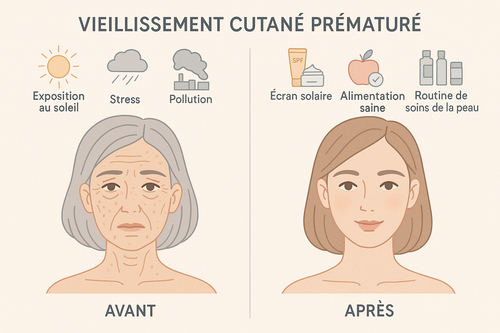
When ultraviolet rays (especially UVA and UVB) penetrate the upper layers of the skin, they trigger a cascade of invisible but destructive biochemical reactions. UVA rays penetrate deep into the dermis, where they collide with our cellular components. This thermal and energetic shock generates a massive production of free radicals, unstable oxygen molecules characterized by an unpaired electron.
This phenomenon, called UV oxidative stress, causes severe collateral damage: alteration of cellular DNA, peroxidation of membrane lipids and, above all, enzymatic degradation of collagen and elastin. This is the central mechanism of premature photoaging (wrinkles, loss of firmness) and long-term skin alterations.
Melanin: our innate cellular shield
To counter this aggression, evolution has equipped our epidermis with a highly effective defense mechanism: melanogenesis. Stimulated by UVB rays, melanocytes synthesize melanin, a natural pigment capable of absorbing energetic radiation and dissipating the energy in the form of mild heat. A tan is therefore nothing more than an adaptive cellular survival reaction.
However, this adaptation process takes time. Melanin synthesis takes between 48 and 72 hours to get started effectively, leaving the skin vulnerable during the first exposures. Preparing your skin for the sun naturally consists precisely in providing the body with the necessary precursors and antioxidants to get ahead of this critical phase and improve the production of this innate shield.
Phase 1: the internal shield (solar micronutrition)
Carotenoids for prepared skin
Carotenoids make up the first line of defense in our nutritional strategy. Among them, natural beta-carotene and lycopene act as free radical scavengers within the skin's lipid matrix. Dense sources such as sweet potato and carrot should become staples on the plate starting in spring.
The benefit of this approach was masterfully highlighted by a pivotal German scientific study led by Dr. Wilhelm Stahl (Dietary tomato paste protects against ultraviolet light-induced erythema in humans, Journal of Nutrition, 2001). Researchers demonstrated that daily consumption of 40 grams of tomato paste (highly concentrated in bioavailable lycopene) over a period of 10 to 12 weeks led to a notable reduction of 30% to 40% in the intensity of solar erythema (sunburn) induced by a controlled UV source. Tissue saturation with carotenoids thus significantly increases the skin's tolerance threshold to radiation.
Omega-3: modulating skin inflammation
Sun exposure triggers an immediate inflammatory response at the level of keratinocytes, clinically manifesting as redness, heat, and tightness. To modulate this biological cascade, the intake of polyunsaturated fatty acids from the omega-3 family (EPA and DHA) proves essential. By incorporating into the skin cell membrane, omega-3s from small oily fish (sardines, mackerel) or plant oils such as flaxseed and camelina replace pro-inflammatory fatty acids (omega-6). They thus limit the production of chemical mediators of inflammation, acting as an internal thermal regulator that prevents post-exposure skin inflammation.
Polyphenols: the little-known protective action
Less publicized than carotenoids, polyphenols nevertheless exert a highly synergistic action on cellular resistance. Green tea, through its richness in epigallocatechin gallate (EGCG), neutralizes water-soluble free radicals before they reach the cell nucleus. At the same time, pure cocoa, extremely rich in flavanols, has been the subject of rigorous clinical studies (Heinrich et al., Long-term ingestion of high flavanol cocoa provides photoprotection, Journal of Nutrition, 2006) demonstrating that prolonged ingestion of cocoa flavanols significantly improves skin microcirculation, increases skin density, and reduces sensitivity to erythema by nearly 25%.
Top 5 foods for sun preparation
The table below summarizes the best nutritional options validated by clinical research to saturate your biological reserves with antioxidants before the summer season.
| Food | Active molecule | Documented skin benefit |
|---|---|---|
| Cooked tomato paste | Lycopene | A 30 to 40% reduction in sunburn sensitivity, observed in small studies after several weeks. Not a substitute for sun protection. |
| Sweet potato & Carrot | Natural beta-carotene | Melanin stimulation, glowing effect, and lipid protection. |
| Green tea (Matcha) | Epigallocatechin gallate (EGCG) | Protection of cellular DNA and neutralization of water-soluble free radicals. |
| Dark chocolate (>85%) or cocoa | Cocoa flavanols | Improvement of dermal microcirculation and skin density. |
| Small oily fish (Sardines) | Omega-3 fatty acids (EPA/DHA) | Modulation of the inflammatory response and cell membrane flexibility. |
Phase 2: the external shield (topical plant oils)

Carrot macerate: the validated tradition
Topically, preparing the skin barrier involves the strategic use of eudermic plant lipids. Carrot macerate stands out here as an empirical tradition perfectly validated by plant chemistry. Obtained by macerating Daucus carota roots in a carrier plant oil, it is exceptionally concentrated in provitamin A (carotenoids).
Applied locally with a daily massage in the weeks preceding exposure, it infuses the stratum corneum with lipophilic antioxidants, neutralizing free radicals directly at the site of UV impact. Moreover, its natural orange tint provides an immediate glowing effect, initiating a harmonious coloring of the epidermis without pathological activation of melanocytes.
Apricot kernel and sesame oils
To consolidate the intercellular cement and preserve the integrity of the hydrolipidic film (often battered by wind, salt, and heat), apricot kernel oil proves remarkable. Its richness in oleic acid and vitamin E (alpha-tocopherol) restores elasticity to the skin and limits insensible water loss. Sesame oil, meanwhile, stands out for its content of sesamin and sesamolin, effective antioxidants.
Crucial scientific demystification regarding the SPF of plant oils:
A frequently cited Indian study (Kaur & Saraf, 2010) evaluated in vitro the sun protection factor (SPF) of various plant oils, attributing, for example, a theoretical SPF of around 4 to sesame oil. It is scientifically irresponsible to use this data to substitute your plant oils for sunscreen. An SPF of 4 means that the oil blocks a tiny amount of direct radiation, which is strictly insufficient to prevent cellular mutations induced by high-intensity UV rays. Plant oils prepare, nourish, and repair the skin barrier; they do not protect against prolonged direct exposure.
Want an opinion on your situation? During a vitality assessment, we review your diet, sleep, stress, and goals together, then build a plan adapted to your pace.
Phase 3: supplements to consider for vulnerable skin

Astaxanthin: the king of antioxidants
For people with a fair phototype or increased sensitivity, targeted supplements may add a little extra protection from the inside, but they never replace sunscreen. Astaxanthin is a red pigment from the xanthophyll family, produced by the single-celled alga Haematococcus pluvialis to protect itself from intense radiation when it is deprived of water.
Its unique molecular structure allows it to cross the double lipid layer of cell membranes completely, offering a complete protection (internal and external to the cell) unique in the plant world. Complete clinical reviews (Davinelli et al., Astaxanthin in Skin Health, Repair, and Disease, Nutrients, 2018) confirm that its singlet oxygen trapping capacity is statistically superior to that of vitamin E and beta-carotene, measurably increasing the time required before a sunburn appears.
Polypodium leucotomos: the dermatological fern
Polypodium leucotomos is a tropical fern originating from Central America whose aqueous extract (often marketed under the name Fernblock) has been the subject of impressive scientific documentation in clinical dermatology for over thirty years. The initial work led by Middelkamp-Hup et al. (Oral Polypodium leucotomos extract decreases ultraviolet-induced damage of human skin, JAAD, 2004) demonstrated its pleiotropic mechanisms of action.
Studies suggest this supplement may help protect Langerhans cells (the skin's immune cells, which UV rays weaken), limit phototoxicity, and reduce flare-ups of benign summer sun allergy in some people, a sun allergy that affects many women from their first exposures. It can be a useful ally for vulnerable or atopic skin, with advice from a healthcare professional.
The 3 golden rules for smart sun exposure
Reasoned exposure protocol
Applying the best molecules does not exempt you from adapted behavior. Here are the three fundamental rules to apply mechanically for a healthy approach to the sun.
1. Hormetic and progressive exposure
Hormesis is the biological law according to which exposure to a moderate stressful dose allows the body to strengthen its adaptation capacities. Practice short and regular exposures (10 to 15 minutes per day without sunscreen, only in the morning before 11 a.m. or in the late afternoon after 5 p.m.) two to three weeks before summer. This progressive stimulus allows melanocytes to synthesize quality melanin without triggering an inflammatory cascade or a sunburn.
2. Intracellular hydration and excretory support
Sun exposure accelerates systemic dehydration through sweating and increases the metabolic load (elimination of cellular debris via the lymph and the kidneys). Consume a minimum of 1.5 to 2 liters of low-mineralization water per day. A skin tissue properly hydrated from the inside maintains optimal cellular cohesion and resists thermal stress generated by infrared and ultraviolet rays much better.
3. Strategic use of mineral cream (Zinc Oxide)
As soon as the UV index exceeds 5 and exposure lengthens during peak hours (between 12 p.m. and 4 p.m.), the use of a certified external protection becomes imperative. Favor certified organic sunscreens based on mineral filters such as non-nano zinc oxide. Unlike chemical filters, which absorb UV energy, can sometimes cause allergic reactions, and in some cases are being studied for possible hormonal effects, zinc oxide works mainly at the skin's surface: it absorbs part of the UV rays and reflects some of them.
What to remember
In short, preparing your skin for the sun naturally is not something you improvise the day before leaving for vacation. It is a terrain-based, logical, and rigorous approach that starts on the plate at least one month in advance. By combining internal micronutritional saturation (carotenoids, omega-3s, polyphenols), the intake of targeted plant oils, and a behavioral hygiene based on progressivity, you offer your epidermis the biological means to defend itself autonomously. This is how you preserve your skin all summer.
Go further in your natural health strategy:
For a completely individualized approach, join our personalized naturopathic follow-up at €10 per month and adapt this unique protocol to the specificities of your own metabolism.
Frequently asked questions: preparing your skin for the sun
1. Should you use UV lamps to prepare your skin for the sun?
No, that is a dangerous misconception. Tanning beds mainly deliver UVA rays that penetrate deeply, destroy collagen, and create major oxidative stress without effectively stimulating melanin production (which requires UVB). Favor natural and progressive exposure.
2. How long before summer should I start my carotenoid course?
Clinical studies show that supplementation or a dietary change rich in antioxidants and carotenoids (such as lycopene) should start at least 3 to 4 weeks before prolonged exposure to saturate skin tissues.
3. Does carrot oil replace sunscreen?
Absolutely not. Carrot macerate prepares the skin, provides topical antioxidants, and gives a tanned complexion, but it does not filter UV rays. A mineral sunscreen remains essential during direct exposure.
4. Is astaxanthin effective against sunburn?
Astaxanthin is one of the most powerful antioxidants discovered. It helps neutralize free radicals generated by UV rays and increases the skin's resistance to erythema, acting as an internal shield.
5. What foods should you avoid before going out in the sun?
It is recommended to limit highly oxidizable omega-6 rich plant oils (sunflower, soy), refined sugar that promotes collagen glycation, and alcohol that massively dehydrates the body.
6. Can fair skin be prepared for the sun?
Yes, fair skin has an even greater need for antioxidants (such as Polypodium leucotomos) to limit cellular damage. Exposure must be extremely gradual and occur during the coolest hours of the day.
7. What is the best time of day to synthesize vitamin D without burning?
To synthesize vitamin D while minimizing the risk of sunburn, 15 to 20 minutes of exposure in the late morning or mid-afternoon (when the UV index is moderate) is ideal, exposing large areas of the body without protection for a very short time.
8. Do omega-3s really help protect the skin?
Yes, omega-3 fatty acids (from small oily fish or flaxseeds) are incorporated into the skin's cell membranes. They have a strong anti-inflammatory effect, helping to soothe skin heated by UV rays.
Disclaimer and clinical safety:
This content is shared for informational and educational purposes only. Nutritional improvements, antioxidant supplementation, or the topical application of plant oils should in no way replace standard photoprotection measures (avoiding peak UV index hours, wearing covering clothing and hats, and using a suitable mineral sunscreen). People with a very fair phototype (I or II), a history of skin carcinomas or melanomas, taking photosensitizing medications, or who are pregnant must consult their dermatologist before changing their exposure habits or starting a course of dietary supplements.