

Protein bioavailability: the scientific truth about absorption (DIAAS)
You are often told that a protein is a protein. That 30 grams of protein on the back of a lentil label is worth 30 grams of protein in a steak. This is false, and this confusion comes at a high cost in terms of muscle recovery, cellular energy, and long-term digestive health. What your body actually absorbs after a meal is not what is printed on the packaging: it is the result of a complex biochemical process involving gastric acidity, pancreatic enzymes, intestinal permeability, and the presence or absence of molecules that block hydrolysis. We are talking here about protein bioavailability, the FAO's DIAAS score, the role of leucine and anti-nutrients, to properly meet your needs, whatever your dietary approach.
Want to get straight to the point? Find our health guides and protocols to structure your diet around the principles of naturopathy.
The Label Lie: Understanding Bioavailability
What is protein assimilation?
Protein digestion begins in the stomach, where hydrochloric acid denatures its three-dimensional structure and activates pepsin, the first proteolytic enzyme that begins to cut the amino acid chains. The bolus then passes into the small intestine, where the pancreas releases its own enzymes (trypsin, chymotrypsin, elastase) to continue hydrolysis. The released amino acids are then absorbed by the small intestine mucosa and pass into the bloodstream via the hepatic portal vein, before being distributed to the tissues that need them.
The bioavailability of a protein is therefore the percentage of its amino acids that actually reach the systemic circulation and become usable by the body. This figure is never 100%, and it varies considerably depending on the protein source, its preparation method, and the state of the intestinal mucosa of the person consuming it. An inflamed or hyperpermeable intestine, as in the case of intestinal hyperpermeability syndrome, assimilates proteins from any source even less efficiently.
The DIAAS score explained
For decades, the quality of dietary proteins was evaluated by the PDCAAS score (Protein Digestibility Corrected Amino Acid Score). In 2013, the FAO (Food and Agriculture Organization of the United Nations) recommended its replacement by a more precise method: the DIAAS, Digestible Indispensable Amino Acid Score, which can be translated as the "digestible indispensable amino acid score".
The fundamental difference is in the measurement method. PDCAAS measured protein digestibility at the fecal level, which overestimated actual absorption by counting amino acids released in the colon by the microbial flora, but never absorbed. DIAAS measures ileal digestibility, that is, what is actually absorbed before the colon, at the end of the small intestine. This figure is lower, more honest, and biologically much more relevant. In addition, DIAAS is calculated amino acid by amino acid: a score below 100 means that one or more indispensable amino acids are limiting in this protein source.
Animal vs Plant Proteins: The Biochemical Matchup

| Protein source | DIAAS score (in adults) | Amino acid profile | Leucine (g/100g protein) |
|---|---|---|---|
| Whole egg | 113 | Complete, all indispensable amino acids | 8.8 g |
| Whey | 109 | Complete, very rich in BCAA | 10.9 g |
| Beef (muscle) | 92 | Complete | 8.1 g |
| Soy (isolate) | 84 | Complete, but methionine limiting | 7.8 g |
| Pea (isolate) | 82 | Incomplete, methionine deficient | 6.9 g |
| Lentils (cooked) | 52 | Incomplete, methionine and cysteine limiting | 5.9 g |
| Whole wheat | 40 | Incomplete, lysine very limiting | 6.8 g |
The amino acid profile and the mTORC1 pathway
Understanding why leucine occupies an entire column in this table requires a detour into muscle cell biology. Muscle protein synthesis, the process that allows recovery and hypertrophy after exercise, is mainly regulated by an intracellular signaling pathway called mTORC1 (mechanistic Target Of Rapamycin Complex 1). This protein kinase acts as a central switch: when activated, it triggers the translation of messenger RNAs encoding contractile muscle proteins.
Leucine, in turn, is the main trigger of mTORC1 among amino acids. Studies published in the Journal of Nutrition have established a leucine threshold of about 2.5 to 3 grams per meal to effectively activate this pathway in a sports context. Direct consequence: to reach this threshold with lentils (5.9 g of leucine per 100 g of protein), you would need to consume about 50 g of lentil protein per meal, or about 550 g (19 oz) of cooked lentils (which provide about 9 g of protein per 100 g). With whey (10.9 g of leucine per 100 g of protein), 27 g of protein is enough to exceed the threshold. The difference in the required food volume is considerable, and it has direct practical implications on digestive saturation and postprandial blood sugar regulation.
The trap of plant anti-nutrients
The DIAAS score of legumes is penalized by two categories of molecules that plants have developed over the course of evolution to protect themselves from predators. The first, phytic acid or phytate, is particularly problematic. Present in large quantities in the husks of legumes, cereals, and oilseeds, phytic acid not only chelates minerals (zinc, iron, magnesium, calcium) but also binds to proteins and digestive enzymes, reducing their hydrolysis in the small intestine.
The second category, trypsin inhibitors, directly interferes with the main pancreatic enzyme responsible for breaking down proteins into free amino acids. When these inhibitors are not neutralized by proper preparation, a significant portion of the ingested proteins passes through the small intestine without being hydrolyzed and ends up in the colon, where it is fermented by bacteria, which explains the bloating and digestive discomforts frequent after a meal of poorly prepared legumes.
Want an opinion on your situation? During a vitality assessment, we review together your diet, your sleep, your stress, and your goals, then we build a plan adapted to your pace.
The naturopathic approach: improving your daily digestion

Neutralizing phytic acid
Three ancestral techniques, since validated by modern biochemistry, make it possible to drastically reduce the phytate content of legumes and cereals. They all work by activating phytase, an enzyme naturally present in the seed itself that breaks down phytic acid into absorbable inositol and phosphate.
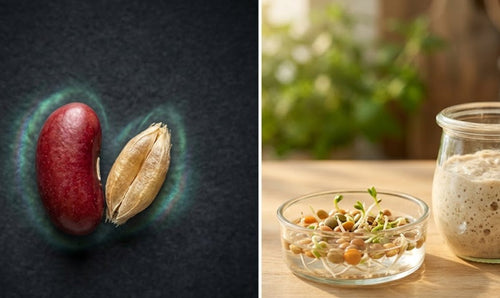
Prolonged soaking (12 to 24 hours in slightly acidified water with vinegar or lemon juice) activates endogenous phytase and reduces phytates by 30 to 60% according to studies. Germination goes even further: by triggering germination, phytates are hydrolyzed by 50 to 70% to feed the young shoot. Fermentation, as in sourdough bread or tempeh, is the most effective technique, reducing phytates by 70 to 95% thanks to microbial phytases from lactic acid bacteria. Cooking alone reduces trypsin inhibitors but degrades phytates very little: it is therefore not sufficient on its own.
Practical protocol: soak for at least 12 hours, rinse then cook for everyday legumes. To maximize bioavailability: favor sprouted legumes (sprouted lentils, fenugreek) or fermented preparations (tempeh, miso) as main plant protein sources.
Smart protein combining
A plant-based diet can cover all indispensable amino acid needs provided that sources are intelligently combined. The principle of protein complementarity is based on a simple fact: legumes are deficient in methionine but rich in lysine, while cereals are deficient in lysine but rich in methionine. The rice-beans, bread-lentils, or couscous-chickpeas combination therefore provides a complete profile of indispensable amino acids, without the need for the combination to be in the same meal, but in the same day of eating.
However, beware: the correct combination of sources does not solve the leucine problem nor the absolute DIAAS score problem. A vegan diet aiming to support a significant sports practice must include high leucine density sources: soy isolate (the closest to animal ones among plants), isolated pea protein, spirulina, or combination with free leucine supplements.
Supporting the liver and pancreas
Optimal protein digestion depends on two organs that modern diet often challenges beyond their capacities. The exocrine pancreas must secrete a sufficient quantity of proteolytic enzymes (trypsin, chymotrypsin, elastase) to hydrolyze dietary proteins. A pancreas tired by an ultra-processed diet, rich in refined sugars and oxidized fats, produces fewer enzymes and digests proteins less efficiently, whatever their source. Similarly, the liver plays a role in bile which activates lipases and indirectly conditions the intestinal environment in which amino acid absorption takes place.
Naturopathy offers several levers to support these organs: choleretic plants (artichoke, black radish, dandelion) to stimulate bile production and flow; magnesium as an essential enzymatic cofactor, whose chronic deficiency is one of the factors of chronic mitochondrial fatigue; and the management of chronic stress, a major disruptor of motility and digestive enzyme secretion.
Practical recommendations based on your lifestyle
The protein question is not decided ideologically, it is calculated metabolically. Here are the practical guidelines to structure your intake according to your goals and dietary choices.
| Profile | Leucine goal / meal | Priority sources | Point of vigilance |
|---|---|---|---|
| Active omnivore (sports 3-5x/week) | 2.5-3 g of leucine | Egg, meat, fish, dairy products | Quality of sources (organic, pasture) |
| Sedentary omnivore | 1.5-2 g of leucine | Egg, poultry, soaked legumes | Digestive overload if animal excess |
| Active vegetarian | 2.5-3 g of leucine | Egg + soy + pea isolate + sprouted legumes | Large food volume |
| Active vegan | 3 g of leucine minimum | Soy isolate + pea isolate + cereal/legume combination + spirulina | Additional leucine sometimes necessary |
In all cases, postprandial blood sugar regulation is a parameter not to be overlooked in a high plant protein density plate. Legumes, even well prepared, have a higher glycemic index than isolated animal proteins, and their combination with cereals can create a significant carbohydrate load. Our article on the symptoms of excess sugar gives useful guidelines to identify if your plant protein plate generates an excessive glycemic load.
For a personalized nutritional protocol that improves your protein intake according to your terrain, your goals, and your lifestyle, join Le Terrier's monthly follow-up for €10: concrete protocols, reviewed every month with you, based on naturopathy and nutritional biochemistry.
FAQ on protein assimilation
What is protein bioavailability and why is it important?
Protein bioavailability is the percentage of its amino acids that actually reach the bloodstream after digestion and intestinal absorption. This figure is always lower than the protein content displayed on the label, and varies according to the food source, its preparation, and the state of the intestinal mucosa. A high bioavailability protein is used more effectively for muscle synthesis, cellular repair, and the production of enzymes and hormones.
What is the DIAAS score and how to calculate it?
DIAAS (Digestible Indispensable Amino Acid Score) is the FAO reference method to evaluate the quality of dietary proteins. It measures the ileal digestibility of each indispensable amino acid, that is, what is actually absorbed before the colon, and identifies the most limiting amino acid. A score above 100 indicates a high quality protein (egg, whey); between 75 and 99, correct quality; below 75, a protein with one or more clearly deficient amino acids.
What is phytic acid and how to reduce it?
Phytic acid (or phytate) is a molecule present in the husks of legumes, cereals, and oilseeds. It chelates minerals and binds to proteins and digestive enzymes, significantly reducing their absorption. To neutralize it: soak 12 to 24 hours in slightly acidified water (reduction of 30 to 60%), germination (50 to 70%) or fermentation with sourdough or tempeh (70 to 95%). Cooking alone is insufficient.
Why is leucine so important for bodybuilding?
Leucine is the main activator of the mTORC1 pathway, which regulates muscle protein synthesis. Studies published in the Journal of Nutrition have established a threshold of about 2.5 to 3 grams of leucine per meal to effectively trigger this pathway in an active adult. Below this threshold, postprandial muscle protein synthesis is suboptimal. Animal proteins reach this threshold with food quantities much lower than those required with most plant sources.
Can a vegan have enough protein to exercise?
Yes, but this requires more planning and a higher food volume. The keys are: combining legumes and grains to cover all essential amino acids; choosing high leucine-density sources such as soy isolate, pea isolate, or spirulina; properly preparing legumes (soaking, sprouting, fermenting) to maximize their actual DIAAS score; and considering free leucine supplementation if intake remains insufficient despite already high food volume.
What is the best source of protein for muscle mass?
For muscle hypertrophy, the sources with the highest DIAAS scores and highest leucine content are, in order: whey (DIAAS 109, leucine 10.9 g/100g protein), whole egg (DIAAS 113, leucine 8.8 g), lean beef (DIAAS 92), and soy isolate among plant sources (DIAAS 84). Effectiveness also depends on the distribution of intake throughout the day: several servings of 25 to 35 g of high-quality protein are more effective than a single high-protein meal.
How to naturally support protein digestion?
Several naturopathic levers support protein digestion: maintaining sufficient gastric acidity (avoiding proton pump inhibitors unless medically necessary, but never stopping them without medical advice); supporting the exocrine pancreas with unprocessed foods, cholagogue plants, and good magnesium status; chewing sufficiently to begin mechanical denaturation; consuming protein without excessive refined sugars in the same meal (which disrupts motility); and correcting any potential intestinal hyperpermeability syndrome that compromises absorption regardless of the source.
How many grams of protein should an active adult consume per day?
Recommendations for an active adult practicing weightlifting or intense endurance sports generally range between 1.6 and 2.2 grams of protein per kilogram of body weight per day, according to recent meta-analyses (including Morton et al., British Journal of Sports Medicine, 2018). These figures apply to highly bioavailable proteins (DIAAS above 90). With plant sources having a DIAAS of 50 to 60, the gross intake must be increased by 20 to 40% to compensate for the unabsorbed fraction, which significantly increases the total food volume.
Effective protein is the protein you actually absorb
The effectiveness of a protein-based diet is not found on a label; it is built on the plate, in the kitchen (soaking, fermenting, cooking), and in the digestive tract. Whether you are an omnivore or a vegan, the question is not which dietary ideology you claim: it is whether your muscle cells, mitochondria, and enzymes receive the amino acids they need, in the proportions and at the frequency that allow for optimal recovery and protein synthesis. Bioavailability, the DIAAS score, the leucine threshold, and anti-nutrient management are the four parameters that transform nutritional intent into concrete metabolic results.


4 comments
Bonjour. Merci pour cet article intéressant. Une question demeure pour moi après lecture, qu’en est-il des oléagineux ?
Ont-ils un profil d’acides aminés complets ? Peuvent-ils être combinés pour maximiser l’assimilation de leurs protéines ? Et en bonus, Pourriez-vous nous parler de la meilleure façon de les consommer pour profiter de leur richesse nutritionnelle (trempage, etc…) ? Merci à vous
Merci beaucoup pour tout les conseils que vous donnez
Merci beaucoup pour cet article très intéressant.
Merci vraiment.