

Toxic load and exposome: how to purify your daily life and protect your liver?
Share
Reading time: 13 minutes
The figure that should concern us all
In 1910, a human being was born with around 10 synthetic chemical molecules detectable in their body.
Today? 250.
This figure is not an alarmist estimate. It is the result of rigorous analyses conducted on the umbilical cord blood of newborns, babies who have not yet breathed the open air, not yet eaten, not yet touched an object from their environment.
How is this possible?
This is what toxicologists call the “body burden”: the accumulation of chemical substances in our body, transmitted from generation to generation, amplified by our modern lifestyle.
This reality may seem frightening. But here is the good news that no one tells you: your body is an extraordinary detoxification machine. Your liver, your kidneys, your lymphatic system work 24 hours a day to eliminate these toxins.
The problem: we overload them. Daily. Without even knowing it.
On the agenda:
- Understand what toxic burden really is and why it concerns the scientific community
- Identify the main sources of exposure in your daily life
- Act with simple, concrete, and scientifically validated steps
- Support your natural detoxification organs
Without panic. Without eco-anxiety. With common sense and science.
What is “body burden” (and why is science concerned about it)?
250 molecules in umbilical cord blood: the alarming finding
In 2005, the Environmental Working Group (EWG), an American environmental research organization, published a study that had the effect of a bombshell in the scientific community.
Titled “Body Burden: The Pollution in Newborns”, this research analyzed the umbilical cord blood of 10 American newborns.
The results are striking:
- 287 chemicals detected in total
- On average, 200 substances per newborn
- Among them: 180 known or suspected carcinogens
- 217 toxic to the brain and nervous system
- 208 substances causing developmental abnormalities in animals
They found pesticides banned for decades (such as DDT), flame retardants (PBDE), perfluorinated compounds (PFAS), mercury, dioxins, and dozens of industrial molecules.
Reference: Environmental Working Group (2005). “Body Burden: The Pollution in Newborns”. ewg.org
What this means: even before birth, a child already carries within them the “chemical balance sheet” of their mother, and, by extension, of our industrial civilization.
Understanding the concept of the exposome
In 2005, British researcher Christopher Wild introduced an innovative concept: the exposome.
The exposome represents the totality of environmental exposures to which an individual is subjected, from conception until death.
Reference: Wild, C.P. (2005). “Complementing the genome with an 'exposome': the outstanding challenge of environmental exposure measurement in molecular epidemiology”. Cancer Epidemiology, Biomarkers & Prevention, 14(8), 1847-1850.
The exposome includes:
- The general external environment: air pollution, climate, urbanization
- The specific external environment: food, cosmetic products, medications, physical activity, tobacco, alcohol
- The internal environment: metabolism, microbiota, hormones, oxidative stress, inflammation
Why is this essential?
For decades, we believed that our genes determined our health. The exposome teaches us that the interaction between our genes and our environment is far more determining.
You may inherit a genetic predisposition to a disease, but it is your exposome that will decide whether this predisposition is expressed or not.
Practical translation: you have immense power over your health by changing your daily environment.
The placental barrier: a vulnerable filter against endocrine disruptors
The role of the placenta and its limits
For a long time, it was believed that the placenta formed an impermeable protective barrier between the mother and the fetus. This reassuring belief collapsed in the face of scientific data.
The placenta is a remarkable organ that:
- Supplies oxygen and nutrients to the fetus
- Eliminates metabolic waste
- Produces essential hormones
- Filters certain substances... but not all
The problem: modern synthetic molecules did not exist 100 years ago. Our placenta simply did not evolve to recognize and block them.
Many substances pass the placental barrier:
- Alcohol
- Nicotine
- Certain medications
- Bisphenol A (BPA)
- Phthalates
- Perfluorinated compounds (PFAS)
- Pesticides
- Heavy metals (mercury, lead)
The invisible danger of phthalates and BPA
Endocrine disruptors are molecules capable of interfering with the hormonal system, even at minute doses.
Bisphenol A (BPA):
Long used in food plastics, cash register tapes, and can coatings, BPA mimics the action of estrogens in the body.
Phthalates:
Present in flexible plastics, cosmetics (perfumes, nail polish), and many everyday consumer products, they disrupt the production of testosterone and other hormones.
What science says:
The Endocrine Society's scientific statement published in Endocrine Reviews (2015) concluded that:
Prenatal exposure to BPA and phthalates is associated with changes in male genital development, reproductive disorders, and metabolic disruptions that may manifest years later.
Reference: Gore, A.C. et al. (2015). “EDC-2: The Endocrine Society's Second Scientific Statement on Endocrine-Disrupting Chemicals”. Endocrine Reviews, 36(6), E1-E150.
The key point: these effects can occur at doses far below established regulatory thresholds, because the hormonal system is extremely sensitive, particularly during fetal life.
3 essential steps to reduce your toxic burden at home
Here are the priority actions to reduce your daily exposure to environmental toxins:
1. Ban heated plastic in favor of glass
Why is this essential:
When you heat a plastic container (microwave, dishwasher, contact with hot food), the plastic molecules migrate into your food. This phenomenon, called “migration,” is amplified by:
- Heat
- Fats
- Acidity of foods
- Wear of the container
The substances that migrate:
- Phthalates (plasticizers)
- Bisphenol A and its substitutes (BPS, BPF)
- Antimony (in PET)
- Perfluorinated compounds (non-stick coatings)
The solution:
- Replace your plastic containers with glass (ideally borosilicate)
- Use stainless steel or ceramic for cooking
- If you keep plastic, never heat it
- Avoid plastic bottles left in the sun or in a hot car
Glass is a totally inert material: it releases no substances into your food, regardless of the temperature.
2. Cosmetic minimalism: returning to basics
The problem with conventional cosmetics:
An industrial cosmetic contains on average 15 to 50 ingredients. Multiply by the number of products you use daily (shampoo, shower gel, moisturizer, deodorant, makeup...) and you get exposure to hundreds of molecules every day.
Among them:
- Parabens: preservatives, suspected endocrine disruptors
- Phthalates: fragrance fixatives
- Synthetic fragrances: cocktail of undisclosed VOCs
- Silicones: occlusives that suffocate the skin
- SLS/SLES: irritating surfactants
The solution: radically simplify
For the body:
- Raw plant oils (jojoba, sweet almond, coconut) as moisturizer
- Cold-process soaps (superfatted, fragrance-free) for cleansing
- Raw shea butter for very dry areas
For hair:
- Solid shampoos with minimalist composition
- Rinse with diluted apple cider vinegar (natural clarifier)
For the face:
- Jojoba oil (close to natural sebum)
- Hydrosols (floral water) as a toner
The golden rule: if you cannot pronounce or understand an ingredient, question its presence in your routine.
3. Strategic ventilation to chase out VOCs
VOCs in your home:
Volatile Organic Compounds are substances that evaporate at room temperature and that you inhale constantly:
| Source | Released VOCs |
|---|---|
| New furniture (particleboard) | Formaldehyde |
| Paints | Toluene, xylene |
| Household products | Limonene, benzene |
| Home fragrances | Multiple VOCs |
| Scented candles | Formaldehyde, benzene |
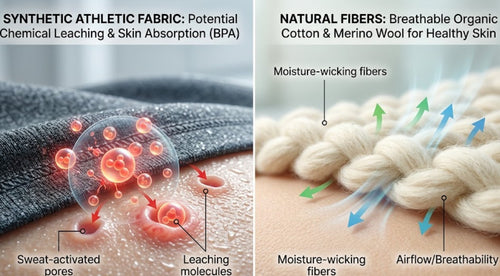
| New textiles | Formaldehyde |
Let's remember: indoor air is 5 to 10 times more polluted than outdoor air according to ANSES.
Official recommendations:
ANSES (National Agency for Food, Environmental and Occupational Health & Safety) recommends:
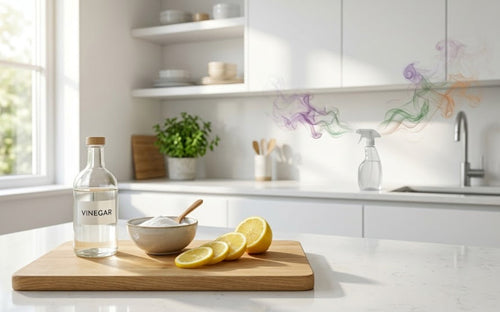
Ventilate your home at least 10 minutes a day, summer and winter, by creating a draft (opening windows on opposite sides).
The optimal protocol:
- Morning: 10 minutes of ventilation upon waking (evacuation of nighttime CO2)
- Evening: 10 minutes before bedtime
- During and after: any VOC-emitting activity (cooking, cleaning, DIY)
- After purchase: of new furniture or textiles, ventilate intensively for several days
The vital role of the liver and lymphatic system in detoxification
The phases of hepatic detoxification
Your liver is the detoxification center of your body. It processes toxins in two main phases:
Phase I: biotransformation (Oxidation)
The enzymes of the cytochrome P450 transform fat-soluble toxins (soluble in fats) into intermediate metabolites.
Key point: these intermediate metabolites are sometimes more reactive than the original toxin. This is why Phase II must imperatively follow.
Phase II: conjugation
Phase I metabolites are linked to molecules (glutathione, glucuronic acid, sulfate, glycine) to become water-soluble (soluble in water) and eliminable by urine or bile.
Phase III: elimination
The conjugated substances are evacuated via the kidneys (urine), the liver (bile → intestines → stool), the skin (sweat), and the lungs (expiration).
What overloads vs what supports the liver
| What overloads the liver | What supports the liver |
|---|---|
| Regular alcohol | Warm lemon water upon waking |
| Ultra-processed foods | Cruciferous vegetables (broccoli, cabbage, black radish) |
| Excess refined sugars | Sulfur-rich foods (garlic, onion, leek) |
| Chronic medications (if avoidable) | Milk thistle (silymarin) |
| Pesticides (non-organic food) | Artichoke (cynarine) |
| Cooking at very high temperature | Turmeric (curcumin) |
| Chronic stress | Desmodium (hepatoprotective plant) |
| Lack of sleep | Intermittent fasting (digestive rest) |
| Exposure to VOCs | Moderate physical activity |
The lymphatic system: the great forgotten
Lymph transports cellular waste and toxins to elimination organs. Unlike blood, it has no pump (like the heart). It circulates thanks to:
- Muscle contraction (movement)
- Deep breathing
- Massage and dry brushing
- The hot/cold alternation
A stagnant lymphatic system = slowed detoxification.
The precautionary principle without eco-anxiety
Having reached the end of this article, you may feel a form of anxiety. It is natural. But allow me to reassure you with a few important truths.
First truth: your body is extraordinarily resilient.
Millions of years of evolution have equipped your body with sophisticated detoxification systems. Your liver processes hundreds of substances every day. Your kidneys filter about 180 liters (48 gallons) of plasma, the liquid part of the blood, every day. Your skin, your lungs, your lymphatic system work constantly to protect you.
Second truth: you do not need to live in a bubble.
The goal is not to eliminate all exposure, that is impossible and probably counterproductive (our immune system needs stimulation). The goal is to reduce the chronic burden that overloads your natural systems.
Third truth: small steps add up.
Replace your plastic containers with glass. Simplify your cosmetic routine. Ventilate 10 minutes a day. Eat more cruciferous vegetables. Each step reduces your exposure. The cumulative effect is significant.
The message of naturopathy:
Your body knows exactly what to do. Your role is simply to give it the right conditions to do its work.
Fewer incoming toxins + better support of detoxification organs = a body that regains its natural balance.
No panic. No pursuit of perfection. Just common sense, gradual progress, and kindness toward yourself and your environment.
Want to go further?
Download our comprehensive guide to natural liver support or join our community for guidance in your transition to a less toxin-laden daily life.
Scientific Sources and References
Body Burden and Prenatal Pollution
1. Study on Pollution in Newborns
- Environmental Working Group (EWG) (2005)
- “Body Burden: The Pollution in Newborns”
- 287 chemicals detected in umbilical cord blood
- Website: ewg.org/research/body-burden-pollution-newborns
The Exposome Concept
2. Foundational Article on the Exposome
- Wild, C.P. (2005)
- “Complementing the Genome with an ‘Exposome’: The Outstanding Challenge of Measuring Environmental Exposure in Molecular Epidemiology”
- Cancer Epidemiology, Biomarkers & Prevention, 14(8), 1847-1850
- DOI: 10.1158/1055-9965.EPI-05-0456
Endocrine Disruptors
3. Scientific Statement on Endocrine Disruptors
- Gore, A.C. et al. (2015)
- “EDC-2: The Endocrine Society’s Second Scientific Statement on Endocrine-Disrupting Chemicals”
- Endocrine Reviews, 36(6), E1-E150
- DOI: 10.1210/er.2015-1010
4. Impact of BPA on Fetal Development
- Rochester, J.R. (2013)
- “Bisphenol A and Human Health: A Review of the Literature”
- Reproductive Toxicology, 42, 132-155
- DOI: 10.1016/j.reprotox.2013.08.008
5. Phthalates and Reproductive Health
- Swan, S.H. et al. (2015)
- “First-Trimester Phthalate Exposure and Anogenital Distance in Newborns”
- Human Reproduction, 30(4), 963-972
Indoor Pollution and VOCs
6. Recommendations on Indoor Air Quality
- ANSES (French National Agency for Food, Environmental and Occupational Health & Safety)
- Reports on Indoor Air Quality
- Recommendation to ventilate for at least 10 minutes per day
- Website: anses.fr
7. VOCs and Health
- U.S. Environmental Protection Agency (EPA)
- “Introduction to Indoor Air Quality: Volatile Organic Compounds”
- Website: epa.gov/indoor-air-quality-iaq
Liver Detoxification
8. Phases of Liver Detoxification
- Liska, D.J. (1998)
- “The Detoxification Enzyme Systems”
- Alternative Medicine Review, 3(3), 187-198
9. Milk Thistle and Liver Protection
- Abenavoli, L. et al. (2018)
- “Milk Thistle in Liver Diseases: Past, Present, Future”
- Phytotherapy Research, 32(11), 2202-2213
- DOI: 10.1002/ptr.6171
10. Cruciferous Vegetables and Detoxification
- Higdon, J.V. et al. (2007)
- “Cruciferous Vegetables and Human Cancer Risk: Epidemiologic Evidence and Mechanistic Basis”
- Pharmacological Research, 55(3), 224-236
Disclaimer
Transparency Note: This article is written for educational and informational purposes. It does not constitute personalized medical advice. If you are pregnant, always follow the recommendations of your doctor or midwife. The information presented here is part of a preventive and lifestyle approach, complementary to conventional medical follow-up.
Would you like daily guidance? Le Terrier’s personalized follow-up, at €10 per month, allows you to ask us questions in writing and progress at your own pace.
FAQ: Your Questions About Detoxification and the Exposome
What is toxic body burden?
Toxic body burden refers to the accumulation of synthetic chemicals in the body. These substances come from our environment: air, food, water, cosmetic products, and plastics. They accumulate in fatty tissues, the blood, and organs, and can be transmitted from mother to child during pregnancy via the placenta.
How does heated plastic release toxins?
When a plastic container is heated (microwave, dishwasher, contact with hot food), the chemical bonds of the plastic weaken, and molecules migrate into the food. This phenomenon is amplified by heat, fats, and acidity. The migrating substances include phthalates (plasticizers), bisphenol A, and its substitutes. Glass, an inert material, does not have this problem.
What is the exposome?
The exposome is a concept introduced by researcher Christopher Wild in 2005. It represents the totality of environmental exposures to which an individual is subjected from conception until death: air pollution, diet, cosmetics, stress, medications, physical activity, etc. The exposome complements the study of the genome by showing that our health depends as much on our environment as on our genes.
Can toxins really pass to the baby during pregnancy?
Yes, contrary to what was long believed, the placental barrier allows many modern chemicals to pass through. Studies have detected up to 287 chemicals in the umbilical cord blood of newborns. Phthalates, bisphenol A, pesticides, heavy metals, and perfluorinated compounds cross the placenta and can affect fetal development, particularly the hormonal system.
How can you naturally support liver detoxification?
To naturally support your liver: eat cruciferous vegetables (broccoli, cabbage, black radish) rich in sulforaphane; include sulfur-rich foods (garlic, onion, leek); use hepatoprotective plants such as milk thistle, artichoke, or desmodium; drink enough water; practice intermittent fasting to give your digestive system a rest; limit alcohol, refined sugars, and ultra-processed foods.
How long should you ventilate your home to eliminate VOCs?
ANSES recommends ventilating your home for at least 10 minutes per day, in summer and winter, by creating a cross-breeze (opening windows on opposite sides). Ideally, ventilate in the morning and evening, as well as during and after any activity that emits VOCs (cooking, cleaning, DIY). After purchasing new furniture or textiles, intensive ventilation for several days is recommended because these products release large amounts of VOCs initially.
What natural cosmetics should you use to reduce your toxic burden?
To reduce your exposure to cosmetic toxins, choose products with a short, understandable ingredients list: raw plant oils (jojoba, sweet almond, coconut) for hydration; cold-process soaps for cleansing; raw shea butter for dry areas; minimalist solid shampoos. Avoid products containing synthetic fragrances, parabens, silicones, SLS/SLES, and phthalates.
Can you really eliminate all toxins from your body?
It is impossible and probably pointless to aim for the complete elimination of toxins. The realistic goal is to reduce the chronic burden to allow your natural detoxification organs (liver, kidneys, lymph, skin, lungs) to function effectively. Your body is designed to handle toxins; the problem arises when it is overloaded. By reducing exposure and supporting your organs, you restore a natural balance.



1 comment
Bonjour, que faut-il faire avec les bougies “normales” càd non parfumées (mais qui ne sont pas confectionnées avec de la cire d’abeille) et l’encens. Y a-t-il des encens meilleurs que d’autres ? Merci, vos contributions sont excellentes et pleines de bon sens !