Iron: deficiency, fatigue and the risks of excess, the complete guide
Do you constantly feel exhausted, even after a full night's sleep? Is your brain foggy, and does the smallest task seem like a mountain? You're not alone.
More than 1.6 billion people worldwide suffer from the most common nutritional deficiency on the planet: iron deficiency.
This metal, which flows through our blood, is one of the pillars of our energy, cognition, and vitality. But iron is a double-edged sword. Essential for life, it becomes a deadly poison if poorly managed.
On the agenda: the role of iron in fatigue, at-risk individuals, the truth about spinach, and why you should never supplement without testing.
What is iron and why is it vital?
Iron is an essential mineral. "Essential" means your body cannot make it; it must come from your diet. Its role is not secondary, it is central.
1. The oxygen carrier
This is iron's most famous role. It is the main component of hemoglobin, a protein contained in your red blood cells.
- Think of it as a taxi: your lungs breathe in oxygen. Iron (in hemoglobin) "catches" this oxygen and transports it through the blood to deliver it to the door of every cell in your body: your muscles, your skin, and, above all, your brain.
- Without iron, no taxi. You can breathe, but your cells suffocate from the inside.
2. The energy producer
Iron is an indispensable gear in your mitochondria, the "powerhouses" of your cells. It is essential for the production of ATP, your body's pure energy molecule.
3. The brain supporter
Your brain consumes 20% of the oxygen you breathe. Inefficient oxygen transport (due to iron deficiency) puts your brain in "power-saving mode".
Iron deficiency (anemia): the ailment of the century
When your iron stores are depleted, we talk about iron deficiency. If this deficiency worsens to the point of reducing your hemoglobin level, we talk about iron-deficiency anemia.
The 10 signs that you lack iron
- Overwhelming chronic fatigue: symptom #1. It is a fatigue that does not improve with rest.
- Shortness of breath at the slightest effort: your muscles do not have enough oxygen.
- Brain fog and difficulty concentrating: your brain is underfed.
- Paleness: less hemoglobin means less pink color under the skin (visible under the eye or nails).
- Hair loss and brittle nails: the body cuts off supplies to "non-essential" functions.
- Hands and feet constantly cold.
- Heart palpitations: your heart races to try to compensate for the lack of oxygen.
- Headaches and dizziness.
- Restless legs syndrome.
- "Pica": a strange craving to eat non-food substances (ice, dirt, chalk).
Who is most at risk?
- Women of childbearing age: menstruation is the main cause of iron loss. A woman can lose between 30 and 80 mg of iron with each cycle.
- Pregnant women: iron needs triple to support fetal growth and increased blood volume.
- Vegetarians and vegans: plant-based iron is absorbed much less effectively (we'll get to that).
- Athletes (especially endurance athletes): iron is lost through sweat and micro-trauma (running).
- People suffering from digestive disorders (Crohn's, celiac disease) that impair absorption.
The truth about diet (heme vs non-heme)
This is where the Popeye myth falls apart. Not all irons are equal.
Heme iron (animal) or non-heme iron (plant)?
Iron exists in two forms in the diet, and the difference is essential.
1. Heme iron (the king of absorption)
It is found exclusively in animal products (meat, fish, poultry). Your body loves it.
- Absorption rate: high (about 15% to 35%).
- Stability: its absorption is not greatly affected by the other foods you eat.
2. Non-heme iron (the complicated one)
It is found in plants (legumes, cereals, green vegetables), eggs, and dairy products.
- Absorption rate: very low (about 2% to 10%).
- Instability: its absorption is extremely affected by what you eat at the same time.
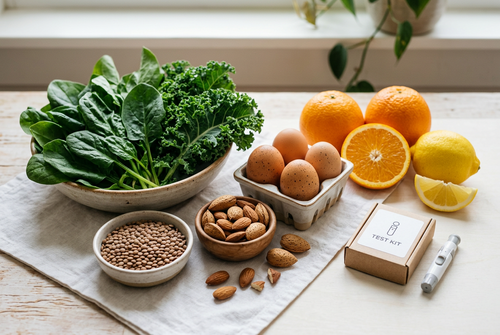
The best foods rich in iron


The spinach myth: Yes, spinach contains 2.1 mg of iron, but it is non-heme iron. What's more, it is rich in oxalates, compounds that block iron absorption even more. You will absorb very little of it.
How to improve iron absorption (especially plant-based)
Do: absorption multipliers
- Vitamin C: the superstar. It can multiply non-heme iron absorption by 3 or 4.
- Action: eat your lentils with red pepper. Drink orange juice with your cereal. Add lemon to your spinach.
Avoid: absorption blockers
- Tannins (coffee and tea): do not drink them during your meal. They can reduce iron absorption by up to 60%. Wait at least 1 hour before or after.
- Calcium (dairy products): calcium competes with iron. Avoid taking a yogurt or a large glass of milk at the same time as your steak or lentils.
- Phytates: present in whole grains and legumes. (Soaking and germination reduce them).
The deadly danger of excess iron
Here is the other side of the coin. Iron is the only mineral our body cannot actively eliminate.
Women eliminate it through menstruation, but men and postmenopausal women have no way to get rid of it. Iron accumulates.
Hemochromatosis: your organs "rust"
When iron accumulates in excess, it deposits in your organs (heart, liver, pancreas) and creates intense oxidative stress. It is as if your organs were "rusting" from the inside.
- Risks: liver cirrhosis, heart failure, diabetes, arthritis.
- Warning: hemochromatosis is a common genetic disease. If you are a man or a postmenopausal woman, supplementing with iron without a diagnosis is a very bad idea.
Golden rule: never, ever supplement with iron "just in case" without having had a blood test.
The supplementation guide (test before anything)
Do you think you are deficient? The only way to know is with a blood test.
The blood tests to ask for
A simple "iron level" (serum iron) is useless. It fluctuates too much. You need the complete panel:
- Ferritin: this is the most important test. It measures your iron stores. It is your savings account. A low level (even if it is "within the lab's normal range") indicates empty stores and an imminent deficiency.
- Transferrin saturation (TSAT): it measures circulating iron, ready to be used (your taxis). A low level indicates a deficiency, a very high level (> 45%) can indicate hemochromatosis.
- Hemoglobin (CBC): to see if you are anemic (the consequence of deficiency).
Which form of iron to choose?
If your doctor confirms the deficiency, they will prescribe supplements.
- Iron sulfate: the most common, the cheapest, but often very poorly tolerated (constipation, stomach pain).
- Iron bisglycinate: the most "modern" form. The iron is "chelated" (protected) by two amino acids (glycine).
- Benefits: much better tolerated, does not irritate the intestine, and its absorption is excellent. It is often the best choice.
How to take your iron supplement
- With vitamin C: take your capsule with a glass of orange juice or a vitamin C capsule to support absorption.
- Away from meals: ideally on an empty stomach in the morning, 30 minutes before breakfast.
- Away from coffee, tea, and milk: wait at least 2 hours apart.
Iron is a matter of balance
Iron is the perfect symbol of balance in health. Too little, and you suffocate from fatigue. Too much, and you rust from the inside.
Chronic fatigue is not inevitable, but blind supplementation is not the solution. If this article speaks to you, if you check the boxes of the symptoms, the first reflex is not to buy iron, but to make an appointment for a blood test.
Managing your iron may be the key to regaining the energy you thought you had lost forever.
(Disclaimer: this article is for informational purposes and does not replace medical advice. Always consult a healthcare professional.)
Want daily support? Le Terrier's personalized follow-up, at €10 per month, allows you to ask us questions in writing and move at your own pace.