

Italian pasta: why it is better digested
Share
The figure is staggering: the average Italian consumes 23 kilos of pasta per year. Yet, Italy has one of the lowest obesity rates in Europe and enviable metabolic health. In contrast, in our countries, a simple plate of spaghetti often results in a bloated stomach, overwhelming postprandial fatigue, and persistent guilt over carbohydrates.
Is it a matter of genetics? Absolutely not. The problem is not the carbohydrate, it's the factory.
As a functional nutrition expert, I see patients demonizing starches every day when they are actually victims of harmful industrial marketing. The difference between robust health and chronic inflammation does not lie in the quantity of pasta consumed, but in two precise biochemical factors: the drying method and the cooking kinetics.
In this comprehensive guide, we will break down the science behind the "Italian Paradox" to transform your next plate of pasta into an ally for your microbiota and blood sugar.
The industrial omerta: high-temperature drying
If you look at the shelves of your supermarket, most pasta packages display an amber, almost neon yellow color, with a perfectly smooth and shiny texture. For the uninformed consumer, this is a sign of quality. For the biochemist, it is a red flag.
1. Starch vitrification: an enzymatic barrier
To meet mass demand, the food industry has replaced traditional drying (38-45°C (100-113°F) for 2 to 3 days) with an ultra-fast high-temperature (UHT) process, often exceeding 100°C (212°F).
The problem: this extreme heat causes starch vitrification. This process may alter the structure of the pasta, creating a kind of "shell" around the starch granules. In some people, this harder structure may be less well tolerated and contribute to bloating, although research on the subject remains limited.
2. Maillard reaction and protein denaturation
Intensive drying triggers the famous Maillard reaction (protein glycation). Wheat proteins, especially gluten, are denatured. They lose their natural elasticity and become much more inflammatory to the intestinal barrier. A study published in the Journal of Agricultural and Food Chemistry highlights that these pasta varieties "burned" by industrial drying have significantly lower protein bioavailability than artisanal pasta.
3. The visual test: how to identify quality in 2 seconds?
Before filling your cart, rely on these simple criteria:
| Criterion | Industrial Pasta (Avoid) | Artisanal Pasta (Healthy) |
| Color | Bright yellow, translucent, shiny. | Pale, matte, leaning toward off-white. |
| Texture | Smooth and uniform. | Rough, porous (bronze-die extruded). |
| Drying | Fast (> 100°C (212°F)), "Vitrification". | Slow (< 45°C (113°F)), Respects the grain. |
| Digestion | Heavy, rapid insulin spike. | Stable energy, light digestion. |
Expert tip: look for the mention "Bronze-die extruded" (Trafilata al bronzo). This artisanal method creates a rough surface that not only holds the sauce better but also preserves the biochemical integrity of the grain.
The science of cooking: why "al dente" is a metabolic imperative
Even with the best pasta in the world, poor cooking can ruin your health efforts. In France, the trend is toward overcooking, transforming a complex food into simple sugar.
1. Amylase and absorption kinetics
Cooking pasta is a starch gelatinization reaction. The more you cook your pasta, the more the starch absorbs water and becomes "open" to the action of enzymes. Overcooked pasta is pre-digested by the pot. When you ingest it, it passes almost instantly into the blood in the form of pure glucose.
2. The glycemic index (GI) verdict
The figures reported by the Diabetes Care journal are clear:
-
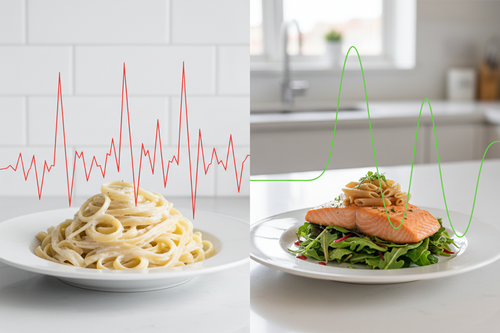
Overcooked spaghetti: Glycemic Index of about 60-65. This guarantees an insulin spike, followed by reactive hypoglycemia (the famous 2 PM "slump") and facilitated fat storage.
-
"Al dente" spaghetti: Glycemic Index of 40-45. At this level, we are talking about a high-quality slow sugar. The gluten network traps the starch, forcing your body to work to release the energy.
3. The naturopath's trick: the white dot
To check the cooking, break a piece of pasta in half. You should see a tiny white dot in the center: that is the starch still protected. This is the exact moment you must stop cooking. This preserved structure helps keep blood sugar steadier.
Resistant starch: transform your starches into super-fibers
This is where science meets culinary magic. Did you know that letting your pasta cool can radically change its impact on your waistline? This phenomenon has a name: starch retrogradation.
1. The retrogradation phenomenon
When pasta cools (ideally 24 hours in the refrigerator at 4°C (39°F)), the amylose and amylopectin molecules reorganize to form a tight crystalline structure. This process transforms part of the digestible starch into resistant starch.
According to a major study published in the European Journal of Clinical Nutrition, cooling starches can reduce the glycemic response by 30 to 50%. Even if you reheat your pasta the next day, this new structure remains stable.
2. A feast for your microbiota
Resistant starch lives up to its name: it resists digestion in the small intestine and arrives intact in the colon. There, it does not feed your cells, but your beneficial gut bacteria.
-
Butyrate production: by fermenting this starch, your microbiota produces butyrate, a short-chain fatty acid essential for the integrity of the intestinal wall and the prevention of inflammatory diseases.
-
Satiety effect: by slowing gastric emptying, resistant starch regulates the hunger hormone (ghrelin).
Practical guide: how to read labels at the supermarket?
Don't let yourself be fooled again by artisanal packaging in the colors of Italy. Here is the reading guide for an uncompromising choice.
The 3 commandments of the informed consumer:
-
The mention "Trafilata al bronzo": it is the guarantee of ideal porosity and an unaltered structure.
-
Protein content: aim for a minimum of 13g to 14g of protein per 100g. A high content often indicates better quality durum wheat.
-
Drying time (if indicated): if the brand boasts drying from "24h to 72h", you have a nutritional gem.
Comparison table: making the right choice
| Characteristic | "Standard" Industrial Pasta | "Premium" Artisanal Pasta |
| Price per kilo | €1.50 to €2.50 | €5.00 to €8.00 |
| Ingredients | Often unsourced wheat blend | Single-variety durum wheat (e.g., Senatore Cappelli) |
| Process | Teflon mold (smooth) | Bronze mold (rough) |
| Health Impact | Insulin spike, inflammation | Sustainable energy, healthy microbiota |
| Taste | Neutral, requires a lot of sauce | Grain taste, firm texture |
Reconciling pleasure and metabolic health
Pasta is not the enemy of your figure. It was a collateral victim of industrial acceleration. By choosing pale, rough pasta, cooking it al dente, and sometimes using the cooling trick, you transform a guilty pleasure into a metabolic health tool.
Your body deserves ingredients that respect its biology. The "Italian Paradox" is nothing more than respect for time: that of growth, drying, and digestion.
Want daily support? Le Terrier's personalized follow-up, at €10 per month, allows you to ask us questions in writing and move at your own pace.
Frequently asked questions about pasta and health
Why is industrial pasta so yellow?
This "neon yellow" color is the result of ultra-high temperature drying (>100°C (212°F)). This process "burns" the natural sugars of the wheat and may alter the structure of the starch: a faster process that may make the pasta less well tolerated in some people, although research remains limited.
What is starch "vitrification"?
It is a name sometimes given to the change in starch structure caused by high heat. In some people, this harder structure may contribute to bloating, although research remains limited.
Why is "al dente" cooking better for health?
Short cooking time keeps the starch in a semi-crystalline form. This slows its transformation into glucose in the blood, offering a low Glycemic Index (about 45) and avoiding the insulin spike.
How does resistant starch help with weight loss?
By cooling, starch becomes a prebiotic fiber. It is no longer absorbed as a sugar but feeds your microbiota, increases satiety, and reduces the net caloric intake of the dish.
Should you ban pasta if you are sensitive to gluten?
Not necessarily. Many sensitivities come from the denaturation of gluten by industrial processes. Slowly dried artisanal pasta is often much better tolerated (except for celiac disease).
How to recognize bronze-die extruded pasta?
It is matte, pale (almost white), and rough to the touch. This roughness allows the sauce to stick better, but above all testifies to a respect for the grain structure.
What is the glycemic index of al dente pasta?
The GI of al dente pasta is around 40-45. In contrast, overcooked pasta can go up to 65, a glycemic index close to that of white sugar.
Can you reheat cooled pasta without losing the benefits?
Yes. Once the starch has "retrograded" in the fridge, its resistant structure is stable. You can reheat it the next day while retaining the benefits for your blood sugar.

1 comment
Tres interessant… merci bcp …👍