

Supplements or foods: which food for which nutrient
Before filling your cupboard with capsules, one simple habit often makes the difference: look at your plate. Many of the nutrients we seek in supplements are found in abundance in common foods, often for less and in a form that the body absorbs better.
The reason boils down to one word: the matrix. In a whole food, a nutrient comes accompanied by fibers, antioxidants, and cofactors that help with its absorption and action. An isolated capsule does not have this entourage. This does not mean that supplements are useless - quite the opposite - but that the first source to target is the meal.
Here, nutrient by nutrient, is which food to choose, how to absorb it properly, and in which cases a supplement still has its place.
Why food first
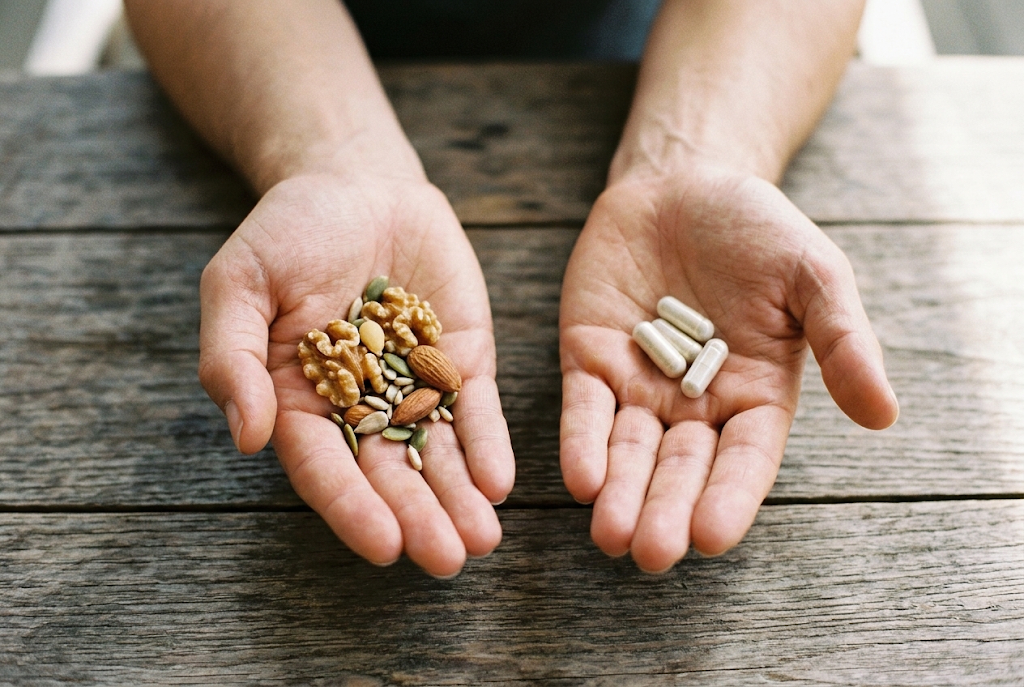
A nutrient never works alone. In a handful of seeds or a serving of fish, it comes with fibers, polyphenols, vitamins, and minerals that complement each other. This matrix effect explains why a whole food often better supports health than an isolated nutrient in a capsule. Added to this are two practical advantages: price, which is often lower, and the pleasure of eating, which also counts.
The goal is not to pit the plate against the supplement, but to put things in order. We start by covering our needs with real, varied, and minimally processed foods, and we reserve supplements for situations where they are truly justified, which we discuss below.
Which food for which nutrient
Here are some simple equivalencies to keep in mind when grocery shopping. The content levels are based on the Ciqual composition table from Anses.
| Nutrient | Rich foods | Good to know |
|---|---|---|
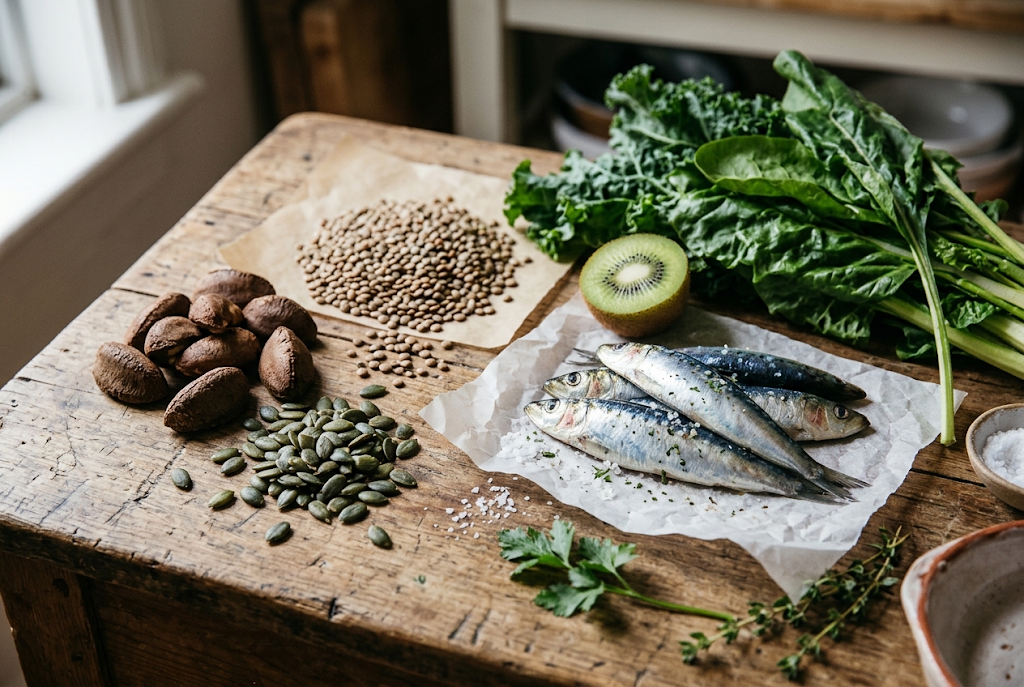
| Selenium | Brazil nuts | One to two per day are enough, without overdoing it |
| Magnesium | Pumpkin seeds, almonds, 85% dark chocolate | A handful as a snack |
| Omega-3 | Sardines, mackerel, ground flaxseeds | Small oily fish, two to three times a week |
| Vitamin C | Kiwi, raw bell pepper, blackcurrant, parsley | Often more than in oranges |
| Iron | Lentils, blood sausage, clams | With a little vitamin C for plant-based iron |
| Potassium | Banana, avocado, spinach, sweet potato | Easy to incorporate into daily life |
| Provitamin A | Carrot, sweet potato, squash | Orange vegetables, with a little fat |
| Zinc | Oysters, pumpkin seeds, chickpeas | Better absorbed through animal sources |
| Probiotics | Kefir, raw sauerkraut, miso, yogurt | Live ferments, unpasteurized |
| Vitamin K2 | Natto, aged cheeses, egg yolk | Natto is the most concentrated source |
A few useful clarifications. For selenium, the Brazil nut is so rich that one is often enough for the day, but its content varies depending on the soil of origin and a prolonged excess is not desirable. For provitamin A, orange vegetables provide beta-carotene that the body converts into vitamin A, with a yield that varies from person to person. On the mineral side, our detailed articles complete this picture for potassium, iron and zinc. For healthy fats, see our article on the omega-3 and omega-6 ratio.
Want an opinion on your situation? During a vitality assessment, we review your diet, sleep, stress, and goals together, then build a plan tailored to your pace.
Properly absorb what is on your plate
Having the right food is not always enough; you also need to absorb it properly. Plant-based iron, such as that in lentils, is absorbed significantly better in the presence of vitamin C: a squeeze of lemon or a few raw vegetables at the same meal is enough (Hallberg and Hulthén, American Journal of Clinical Nutrition, 2000). Conversely, tea or coffee right after the meal slows this absorption.
Vitamins A, D, E, and K are fat-soluble: they need a little fat to pass through, hence the benefit of a drizzle of oil on grated carrots. Finally, gentle cooking better preserves fragile vitamins like vitamin C. To learn more about flora and ferments, our article on natural probiotics in the diet complements the subject well.
When supplements still have their place
Starting with the plate does not mean rejecting supplements, which are valuable in several well-identified situations. Vitamin D is often recommended in winter at our latitudes, because the sun is no longer enough to synthesize it (Anses opinion). Vitamin B12 is necessary as a supplement for vegans, because it comes almost exclusively from animal products. Pregnancy requires an intake of folates, and any confirmed deficiency can be corrected under medical advice.

The right order is therefore not to supplement blindly. Before taking a long-term supplement, it is better to check for a real need, through a blood test or assessment. If you observe suggestive signs, our article on common nutritional deficiencies helps to clarify, and a mineral and vitamin assessment allows you to target before acting. Finally, you never stop a supplement or prescribed medication without your doctor's advice.
Want daily support? Le Terrier's personalized follow-up, at €10 per month, allows you to ask us questions in writing and move at your own pace.
Frequently Asked Questions
Is it better to take supplements or eat the foods?
When possible, food first. In a whole food, the nutrient comes with fibers, antioxidants, and cofactors that help with its absorption, which an isolated capsule does not provide. Supplements remain useful in certain specific situations, but they come after the plate, not in its place.
Is one Brazil nut enough for selenium?
Often yes, because the Brazil nut is very rich in selenium, to the point that one to two per day generally cover the needs. Its content varies however depending on the soil of origin. You should not overdo it, because a prolonged excess of selenium is not desirable.
How to better absorb plant-based iron?
Plant-based iron is absorbed better in the presence of vitamin C. A squeeze of lemon on lentils or a few raw vegetables at the same meal is enough to improve absorption. Conversely, tea and coffee taken right after the meal reduce it, it is better to delay them.
Which foods contain the most vitamin C?
Kiwi, raw bell pepper, blackcurrant, and parsley often contain more than the orange, which we spontaneously think of. Since vitamin C is sensitive to heat, raw or lightly cooked sources preserve its content better.
When are dietary supplements really useful?
In well-identified situations: vitamin D in winter, vitamin B12 in case of a vegan diet, folates during pregnancy, and any deficiency confirmed by a blood test. In these cases, supplementation is done under medical advice, and you never stop a prescribed treatment without this advice.
Do fermented foods replace probiotics?
Live fermented foods, such as kefir, raw sauerkraut, or miso, provide interesting ferments for the flora. For this, they must be unpasteurized, because heat destroys the microorganisms. They do not replace a specific probiotic prescribed for a given indication, but they help support your terrain on a daily basis.
This article is informative and does not replace medical advice.