Medicinal Herbs: The Guide to Using the Plants in Your Kitchen
Share
Long before pharmacies, we treated minor ailments with whatever we had on hand: thyme for a sore throat, mint after a heavy meal, ginger for nausea. Many of these plants are still in our cupboards. Used properly, they are truly useful in everyday life. Used improperly, some can also cause problems.
This guide reviews the most useful culinary plants, what research says, and the precautions to know. It is not a substitute for medical advice: if you are undergoing treatment, are pregnant, or have a chronic illness, always seek advice before taking an unusual amount of any plant.
For digestion
Peppermint
A peppermint infusion after a meal helps relieve bloating and minor cramps. In the form of an essential oil in gastro-resistant capsules, peppermint is one of the few natural remedies that have shown an effect on irritable bowel syndrome.
Precaution: it can worsen acid reflux because it relaxes the stomach sphincter. Avoid it if you suffer from reflux.
Ginger
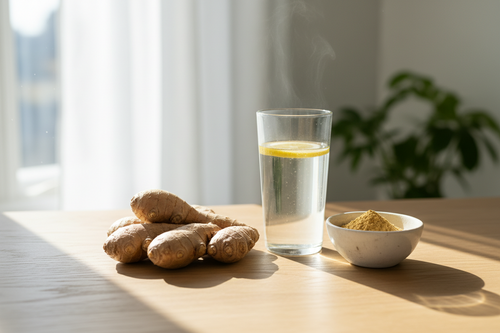
It is the best-studied plant for nausea, including morning sickness and motion sickness. A fresh ginger tea (a few slices steeped for ten minutes) is often enough. It also helps empty the stomach faster after a large meal.
Precaution: in high doses, it can slightly thin the blood. Use caution if you are taking anticoagulants.
Fennel and caraway
Chewed after a meal or steeped, fennel and caraway seeds reduce gas. This is a very ancient traditional use, found in many cuisines around the world.
For the throat and respiratory tract
Thyme
Rich in thymol, thyme has antiseptic properties. As an infusion, with a spoonful of honey, it soothes an irritated throat and cough. Honey, meanwhile, has shown in several studies that it relieves coughs in children over one year old as effectively as some syrups.
Eucalyptus and rosemary
When inhaled (a few leaves or sprigs in a bowl of hot water), they help clear the nose. Essential oils are much more concentrated and should not be used in young children or during pregnancy without advice.
For stress and sleep
Chamomile and lemon balm
These two gentle plants are ideal as an evening herbal tea. They do not make you sleep like a sedative, but they help you relax and fit well into a bedtime routine.
Lavender
Its scent has a recognized soothing effect. A few dried flowers in a sachet near the pillow, or a light infusion, can help. In capsules, lavender essential oil has been studied for mild anxiety, but it should not be used without advice.
Would you like an opinion on your situation? During a vitality assessment, we review your diet, sleep, stress, and goals together, then build a plan tailored to your pace.
For the heart and metabolism
Garlic
When consumed regularly, raw garlic can slightly lower blood pressure and cholesterol, according to several meta-analyses. Crush it and wait a few minutes before cooking or eating it: this is when allicin, its most active compound, forms.
Cinnamon
It is studied for its modest effect on blood sugar. Choose Ceylon cinnamon: Cassia cinnamon, the most common in supermarkets, contains a lot of coumarin, a substance toxic to the liver in high doses. We detail all this in our article on Ceylon or Cassia cinnamon.
Turmeric
Curcumin has a well-documented anti-inflammatory effect in laboratory studies. It is poorly absorbed on its own: combine turmeric with a pinch of black pepper and a fat. In cooking, there is no risk. In high-dose supplements, there are rare cases of liver damage, and it can interact with anticoagulants.
For the skin and minor wounds
Aloe vera
Pure gel, applied to a mild sunburn or irritation, soothes and hydrates. Aloe vera juice to drink is another story: the plant's laxative part can irritate the intestine.
Honey and calendula
Honey has antibacterial properties and promotes the healing of minor wounds and mild burns. Calendula, in cream form, soothes irritated skin. For a deep wound that bleeds heavily or becomes infected, seek medical attention.
Precautions not to forget
- Natural does not mean risk-free: some plants interact with medications. St. John's wort, for example, reduces the effectiveness of the birth control pill and many treatments.
- Pregnancy and breastfeeding: sage, high doses of rosemary, and most essential oils should be avoided without advice.
- Children: doses are not the same, and many essential oils are prohibited before age 6.
- Duration: a plant taken as a course should only be used for a limited period. If a symptom persists, you should investigate the cause with a professional.
Would you like daily support? Le Terrier's personalized follow-up, at €10 per month, allows you to ask us questions in writing and progress at your own pace.
Frequently asked questions
Can you drink herbal teas every day?
Yes, for gentle plants like chamomile, lemon balm, thyme, or mint (unless you have reflux). Vary the plants and avoid prolonged courses of more active plants without advice.
Are fresh plants better than dried plants?
Not necessarily. A plant that is properly dried and stored away from light retains most of its active principles. Fresh plants are mainly more fragrant in cooking.
Can plants replace a medication?
No. They can help with minor everyday ailments, alongside a healthy lifestyle, but they do not replace a prescribed treatment. Never stop taking a medication without talking to your doctor.
How do I know if a plant interacts with my treatment?
Ask your pharmacist: they are the professional best placed to check interactions between plants and medications.
This article is for informational purposes and is not a substitute for medical advice.