Pesticides in organic farming: debunking a myth and examining the scientific realities
Let's ask the question frankly: are there pesticides in organic products? The honest answer is yes. Organic farming authorizes several dozen treatment substances, and some are far from harmless. This may go against what we often hear, including in the natural health community. Here, we do our best to give you accurate information, even when it's uncomfortable. But let's look at both sides of the scale: saying this does not mean that organic is worthless; quite the contrary. The data show that it remains, overall, a better choice for your plate, for farmers, for the soil, and for biodiversity. Here is the full picture, without marketing or idealism.
Pesticides authorized in organic farming

What the European regulations say
The European regulation on organic production (EU 2018/848) does not ban all treatments: it restricts authorized substances to a limited list, essentially of natural origin (mineral, plant, or microbial), excluding almost all molecules derived from chemical synthesis. An organic farmer therefore does have a phytosanitary toolbox, simply a much narrower one, and must first prioritize prevention (crop rotations, resistant varieties, beneficial insects).
Copper: organic farming's acknowledged weak point
The most emblematic case is copper, used in the form of Bordeaux mixture, a fungicide used against grapevine and potato blight or apple scab. Its problem is well identified: unlike organic molecules that break down, copper is a metal; it does not disappear. It therefore accumulates in the soil, where it becomes toxic to earthworms and disrupts microbial life (Ballabio et al., 2018). This is precisely why the European Union has tightened its use to an average of 4 kg (8.8 lb) per hectare per year over seven years.
A point of fairness, often forgotten: copper is not reserved for organic farming. It is also authorized and used in conventional agriculture. The debate on copper is therefore not a trial of organic farming; it is a shared agronomic problem, for which research is actively seeking alternatives. Let's also note that this copper poses above all an environmental issue (soil, aquatic organisms): copper residues in food remain low, and copper is also a trace element that our body needs in small quantities.
Pyrethrum, sulfur, spinosad, neem: natural, but active
Other authorized substances deserve to be known. Pyrethrum, an insecticide extracted from chrysanthemum flowers, is a neurotoxin for insects: it is highly toxic to bees and aquatic organisms, and cats are particularly sensitive to it. Sulfur is used against powdery mildew, spinosad is produced by a soil bacterium (and again, dangerous for bees if poorly applied), neem oil acts on insect development. None of these products are "harmless": they are treatment products, with precautions for use.
An important nuance to make, which is rarely read: do not confuse natural pyrethrins (extracted from the flower, authorized in organic farming) and synthetic pyrethroids (such as permethrin or deltamethrin, not authorized in organic farming). The former break down very quickly in light and air, which greatly limits persistent residues on the plate and in the environment. The latter were designed precisely to be more stable and persistent. Both are neurotoxic to insects, but their behavior in the environment differs markedly. Toxicity to bees and fish remains a real issue in both cases.
Natural does not mean harmless
Let's remember this principle, which runs through our entire approach to natural health: the origin of a substance says nothing about its danger. Hemlock is natural, arsenic is natural, and the death cap mushroom too. What matters is the molecule, the dose, and the exposure, never the "natural" label. A treatment product of plant origin can be more toxic than a synthetic molecule, and the reverse is also true.
The most telling example is that of rotenone, an insecticide extracted from the roots of tropical plants, authorized in organic farming until its European withdrawal (effective in France in 2011). Experimental work has shown that it could reproduce in animals lesions characteristic of Parkinson's disease (Betarbet et al., 2000), and an epidemiological study observed an increased risk of Parkinson's in farmers who had been exposed to it (Tanner et al., 2011). Let's remain rigorous: these data establish a probable and serious link, not formal proof of causality in humans, and they concern farmers heavily exposed during applications, not consumers. The withdrawal of this substance perfectly illustrates that organic regulations are evolving, and that they know how to exclude a natural product when the data require it. It is rather good news.
Want an opinion on your situation? During a vitality assessment, we review together your diet, your sleep, your stress, and your goals, then we build a plan adapted to your pace.
Why organic remains a better choice
Let's now look at the other side of the scale, which is significantly heavier than one might think after what preceded.
Far fewer residues on the plate
This is the strongest argument. Official European controls and the large meta-analysis by Barański et al. (British Journal of Nutrition, 2014) converge: products from organic farming show pesticide residues much less frequently than conventional products, detected about four times less often. Organic farming also excludes hundreds of synthetic molecules (glyphosate, neonicotinoids, chlorpyrifos, atrazine, and many others), several of which are suspected of having endocrine-disrupting effects. This same meta-analysis also found lower levels of cadmium, an undesirable heavy metal.
Let's be precise about what this means: it is above all a lower frequency of detection, and the vast majority of residues found in conventional foods are below regulatory limits. In other words, eating conventional food does not poison you. What worries researchers is rather chronic exposure to low doses and the "cocktail" effect of multiple residues, still poorly assessed, a subject we address in our article on pesticide cross-resistance. Choosing organic means reducing an exposure whose long-term effects are not yet fully known: it is a rational precautionary principle, not a response to a proven immediate danger.
A little more antioxidants, but let's remain measured
The same meta-analysis measured higher levels of antioxidant compounds (polyphenols) in organic crops. The proposed explanation is appealing: a plant less protected chemically mobilizes its own defenses more, and therefore produces more of these compounds.
Two honest reservations: first, this "beneficial stress" hypothesis is plausible but not formally established as a mechanism. Second and above all, to date, no study has shown that such a difference in antioxidant levels translates into a measurable clinical benefit for your health (Mie et al., 2017). This meta-analysis has also been debated in the scientific community. The real reason to choose organic remains the reduction of residues and the environmental impact, not a notable nutritional promise. For a critical reading of this type of work, see our article on the reliability of scientific studies.
And a benefit that is not up for debate: the environment and farmers
In this area, the finding is clear: organic farming is associated with significantly higher biodiversity on the plots (Tuck et al., 2014), less water contamination, and better soil health. It also protects the health of agricultural workers, who are, by far, the people most exposed to pesticides. This point is too often forgotten by the consumer: buying organic also means reducing the occupational exposure of those who produce our food.
| Criterion | Organic farming | Conventional agriculture |
|---|---|---|
| Synthetic pesticide residues | Much rarer | Frequent (often below limits) |
| Authorized synthetic substances | Almost excluded | Several hundred |
| Authorized treatments | Natural, including copper and pyrethrum | Synthetic and natural |
| Cadmium (heavy metal) | Lower levels | Higher levels |
| Biodiversity and soil health | Significantly favored | Often depleted |
| Proven nutritional benefit | Not clinically established | Not clinically established |
Beyond the label: organic, local and seasonal

The winning combination The real goal is not "organic or not organic", but organic and local and seasonal. A seasonal vegetable, harvested at maturity and sold through a short supply chain, combines the advantages: better freshness, less transport and storage, and very often a farming method that is more sober in inputs. Conversely, an organic product imported out of season loses a good part of its overall interest.
Look at the producer, not just the logo The organic label is a set of specifications, not a guarantee of absolute excellence: there is industrial organic, in supermarkets, that respects the rules without going further. Many small market gardeners in peasant farming or permaculture apply practices more demanding than the specifications, sometimes without being certified (certification is expensive). Markets, AMAPs, farm sales: talk to the producer, ask them how they work. It is often the best guarantee there is. This logic of reasoned reduction of exposure is the same as that we apply to everyday microplastics: act on what depends on us, without anxiety.
Want to learn how to decipher labels, compose seasonal baskets, and adapt all this to your situation and your budget? Join Le Terrier's personalized follow-up for ten euros a month: concrete, realistic guidelines, without dogmatism, to eat better without spending your days on it.
What if organic is not in my budget?
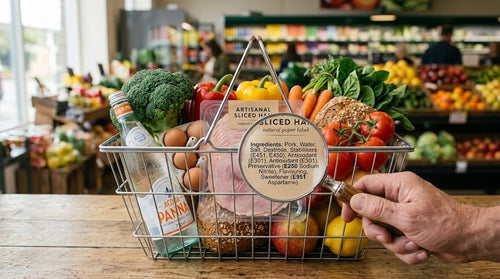
The most important message of this article Organic costs more, and it is not accessible to everyone: it is an economic reality, not a lack of willpower. So let's say it clearly, because it is essential: the health benefits of fruits and vegetables far outweigh the risk associated with pesticide residues. Eating five servings of conventional fruits and vegetables a day is infinitely better for you than avoiding them for lack of organic. Never let a discourse on pesticides turn you away from plants. If your budget is tight, here are a few simple ideas: prioritize organic for the products you consume the most, choose local and seasonal (often cheaper at the market at the end of the day), think about plain frozen foods and dried legumes, which are very economical. And remember that an organic cookie is still a cookie: the label does not transform an ultra-processed product into healthy food.
FAQ on pesticides and food
Are there really pesticides in organic products?
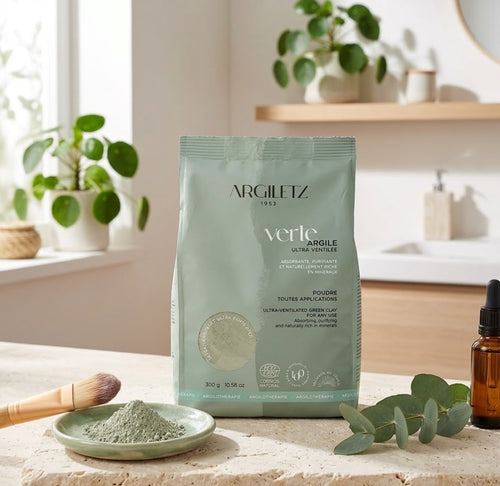
Yes. Organic farming authorizes several dozen treatment substances of natural origin, such as copper (Bordeaux mixture), sulfur, pyrethrum, spinosad, or neem oil. It excludes, however, almost all synthetic pesticides. Saying that organic is "pesticide-free" is therefore inaccurate, but this does not call into question its interest: the residues found in organic foods are much rarer than in conventional products.
Does washing fruits and vegetables remove pesticides?
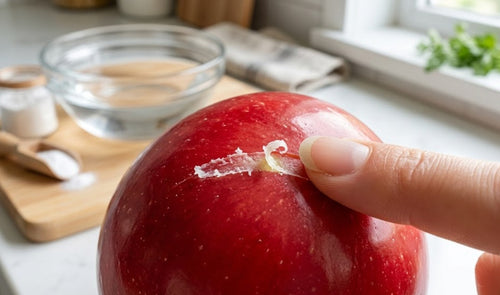
Only partially. A careful wash with clear water, by rubbing, removes a portion of the residues deposited on the surface, as well as dust and microorganisms: it is a useful gesture. But it does nothing against so-called systemic substances, absorbed by the plant and present in the flesh. Baking soda or vinegar do not bring any major demonstrated benefit. Peeling reduces residues even more, but also loses fibers and nutrients concentrated under the skin.
Is supermarket organic really worth it?
Yes, it retains its main interest: the European specifications apply in the same way, so the exclusion of synthetic pesticides is very real. Its limits are elsewhere: industrial organic, often imported, out of season, over-packaged, and sometimes coming from large farms that are not very diversified. If you can, prioritize local and seasonal organic, or a small producer through a short supply chain. But between supermarket organic and nothing at all, supermarket organic remains a good choice.
Is the copper in organic dangerous to my health?
For the consumer, the risk is low: copper residues in food remain modest, and copper is even a trace element necessary for our body in small quantities. The real problem with copper is environmental: it is a metal that does not break down, accumulates in the soil, and harms earthworms and microbial life. This is why its use is capped in Europe and alternatives are actively being sought.
Does "natural" mean harmless?
No, and it is a fundamental principle. The origin of a substance does not predict its toxicity: hemlock, arsenic, or the death cap mushroom are perfectly natural. What matters is the molecule, the dose, and the exposure. The example of rotenone, a plant insecticide withdrawn from organic farming after work suggesting a probable link with Parkinson's disease in exposed farmers, illustrates well that a natural product can be problematic.
Should I stop eating fruits and vegetables if I cannot buy organic?
Absolutely not, and this is the most important point. The health benefits of fruits and vegetables far outweigh the risk associated with pesticide residues. Reducing your consumption of plants for fear of pesticides would be a very bad calculation for your health. Eat fruits and vegetables every day, organic if you can, conventional otherwise, by washing them carefully. Local and seasonal, often more affordable at the market, is an excellent compromise.
Are organic foods more nutritious?
A little, but let's not overstate it. Meta-analyses have found higher levels of antioxidant compounds and lower levels of cadmium in organic crops. However, no study has shown to date that this difference translates into a measurable clinical health benefit. The real reasons to choose organic remain the reduction of pesticide residues, the protection of farmers, and the environmental impact, rather than a notable nutritional superiority.
Is a processed organic product necessarily healthy?
No, and this is a common trap. The organic label guarantees a method of production, not nutritional quality: organic cookies, organic sodas, or organic ready meals remain ultra-processed products, high in sugar, salt, or poor-quality fats. Always read the list of ingredients and favor whole foods. A conventionally grown vegetable cooked at home is nutritionally better than an industrial organic meal.
A clear view, without myths or judgment
Let's summarize honestly. Yes, organic farming uses treatment products, and some, like copper, pose real environmental problems that would be dishonest to ignore. No, "natural" never means "harmless," and the story of rotenone reminds us of this. But when you weigh everything up, the balance tips clearly: fewer residues on your plate, the exclusion of hundreds of synthetic molecules, less cadmium, more biodiversity, better soils, and better protection for farmers. The direct nutritional benefit, however, remains modest and has not been clinically proven: it's better to know. The most consistent approach is therefore not to look for the perfect label, but to aim for organic, local, and seasonal when possible, by looking at who produces it and how. And above all, whatever your budget, never give up on fruits and vegetables: they are what do the most for your health, before any label. Let's remind ourselves: this content is educational and does not replace medical advice.