

How to remineralize your teeth and stop cavities naturally: the biological approach
We have always been taught that a cavity means a drill, a burr, and a filling. This purely curative model has long obscured a fundamental biological reality: cavities are a dynamic process, reversible in their initial stages. Studies show that some early cavities limited to the enamel can remineralize, or at least stabilize, if the oral environment is rebalanced in time.
The question, therefore, is not "how to fill the hole" but "how to rebalance the biochemistry of my mouth so that my teeth can defend themselves?" This is exactly the subject of this article, and of the 5-step protocol that functional dentistry and naturopathy jointly offer.
Hygiene is not always to blame: the underlying health matters too. My personalized health follow-up helps you identify and correct the deep imbalances that weaken your enamel.
Start my personalized follow-upThe real science of cavities: beyond simple brushing
Brushing harder has never cured a cavity. And for good reason: cavities are not caused by a lack of mechanical friction. They are the result of a precise biochemical imbalance within your oral microbiome. Understanding this mechanism radically changes the preventive approach.
The oral microbiome and Streptococcus mutans
Your mouth hosts several hundred different bacterial species, an ecosystem as complex and delicately balanced as that of your gut. In a healthy environment, "protective" bacteria maintain a stable salivary pH and prevent pathogenic species from proliferating.
The problem arises when you regularly consume fermentable sugars (sucrose, glucose, fructose). The bacterium Streptococcus mutans, the main cariogenic species, feeds on these sugars and ferments them into lactic acid. This acid locally drops the salivary pH below the critical threshold of 5.5, the point at which tooth enamel begins to dissolve.
If you suffer from recurring cavities, it's not that you brush your teeth poorly. It's that your oral microbiome is in dysbiosis, a disruption of the balance between beneficial and pathogenic bacteria. Research on oral ecology also suggests that the absence of "good" protective bacteria may matter more than the mere presence of S. mutans.
Reference: Takahashi, N. & Nyvad, B. (2011). « The role of bacteria in the caries process: ecological perspectives. » Journal of Dental Research, 90(3), 294-303. This review establishes that cariogenesis is more related to the disruption of oral ecology (dysbiosis) than to the mere presence of Streptococcus mutans, paving the way for preventive approaches aimed at rebalancing the microbiome rather than solely mechanical plaque removal.
Salivary pH and the demineralization cascade
Here is the complete biochemical cascade, step by step:
- Consumption of fermentable sugars
- S. mutans produces lactic acid, the oral pH drops below 5.5
- The acid attacks the enamel: phosphate and calcium ions are stripped from the crystalline structure of hydroxyapatite
- The tooth loses its mineral density: it becomes porous, dull, sensitive
- Without intervention, demineralization progresses from the enamel to the dentin
The good news: in the enamel-only phase, this process is reversible. Saliva itself, when richly mineralized and at an alkaline pH, provides calcium and phosphate to constantly rebuild the crystalline structure of the enamel. This is the phenomenon of natural remineralization, and the entire protocol below rests on it.
Key to understanding: a cavity is not a static injury. It is a dynamic balance between demineralization (bacterial acid) and remineralization (saliva, mineral intake). Your goal: tip this balance to the right side.
The functional dentistry protocol in 5 steps
This protocol does not replace your dentist, it works in addition, on the biological terrain, to slow down demineralization, support natural remineralization, and reduce the cariogenic bacterial load.
1. Managing the emergency: clove eugenol
First of all: pain. A toothache on Sunday evening, far from any office, is one of the most difficult situations to manage. The clove, and more precisely its active principle, eugenol, is a valuable and perfectly documented resource here.
Eugenol has been used in professional dentistry since the 19th century as a local anesthetic, antiseptic, and anti-inflammatory. It acts by blocking the sodium channels of sensory nerve fibers, temporarily inhibiting the transmission of dental pain. Its complementary antibacterial power reduces the local microbial load.
Practical use: apply 1 drop of pure clove essential oil to a cotton ball and press gently against the painful tooth for 2 to 3 minutes. Do not swallow, do not use continuously for more than 3 days, not recommended for pregnant women and children under 12 years old.
Reference: Pramod, K. et al. (2010). « Efficacy of Eugenol containing dressings in reducing postoperative pain after pulpectomy. » Dental Research Journal, 7(2), 41-45. Eugenol is recognized by the ADA (American Dental Association) as a reference anesthetic and antiseptic agent in dental preparations. Its action is comparable to certain synthetic local anesthetics for the management of acute dental pain.
2. Coconut oil oil pulling: saponifying pathogens
The practice of oil pulling, a prolonged mouthwash with vegetable oil, originates from Ayurvedic medicine but today benefits from serious scientific insight, notably thanks to the antimicrobial properties of coconut oil.
The mechanism is precise: lauric acid, the majority fatty acid of coconut oil (about 50% of its composition), has documented antibacterial activity against Streptococcus mutans. It acts by destabilizing the lipid membrane of pathogenic bacteria through a mechanism of saponification, the bacterial lipids are "captured" by the oil during the gargle, mechanically reducing their adherence to dental surfaces.
Reference: Shanbhag, V.K.L. (2017). « Oil pulling for maintaining oral hygiene, A review. » Journal of Traditional and Complementary Medicine, 7(1), 106-109. This clinical review documents a significant reduction in salivary Streptococcus mutans and dental plaque after 2 weeks of coconut oil oil pulling, comparable to a 0.2% chlorhexidine mouthwash in certain parameters, without the side effects (taste alteration, dental stains) of the latter.
Oil pulling instructions
- Take 1 tablespoon of organic virgin coconut oil (solid or melted)
- Swish slowly throughout the mouth for 10 to 20 minutes (start with 5 min the first few days)
- Spit into the trash, never in the sink (risk of clogging) and never swallow
- Rinse the mouth with warm water
- Brush teeth normally afterwards
- Ideally in the morning on an empty stomach, 3 to 5 times a week
3. The hydroxyapatite revolution to remineralize enamel
This is where functional dentistry makes its most silent, and most effective, revolution. Hydroxyapatite is not an exotic ingredient: it is the molecule your teeth are made of. Tooth enamel is composed of 97% crystalline hydroxyapatite, and dentin of about 70%.
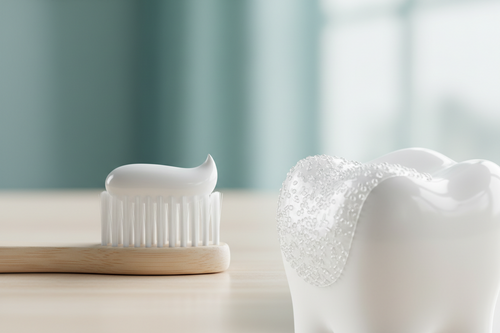
Used in toothpaste in the form of nanoparticles (nano-HAp), hydroxyapatite physically integrates into the micro-cracks and demineralized areas of the enamel, "filling" them in a biomimetic way, that is, identical to the natural structure of the tooth. This mechanism is fundamentally different from that of fluoride, which creates an external fluorapatite layer.
Reference: Gorseta, K. et al. (2021). « The influence of nano-hydroxyapatite toothpaste on enamel microhardness and roughness. » Acta Stomatologica Croatica, 55(1), 14-21. This clinical study shows that nano-hydroxyapatite toothpastes restore enamel microhardness in a manner equivalent to fluoride toothpastes, without associated systemic toxicity, an essential point in the fluorosis/accidental ingestion risk debate, particularly in children.
4. The D3 and K2 vitamin duo: remineralization from the inside
The dental protocol cannot be limited to the mouth. Dental mineralization depends on a sufficient systemic intake of calcium, and a precise hormonal mechanism to direct this calcium to the right tissues rather than to the arteries.
This is where the D3/K2 duo comes in, the most underestimated of dental health protocols:
- Vitamin D3: regulates intestinal absorption of calcium and phosphate. Without a sufficient level of D3, even a calcium-rich diet does little for dental and bone mineralization.
- Vitamin K2 (MK-7): activates osteocalcin, a protein that acts as a GPS for calcium, directing it precisely to the matrix of the dentin and bone, preventing it from depositing in soft tissues (arteries, kidneys). Without K2, D3 can paradoxically promote arterial calcification.
Reference: Knapen, M.H. et al. (2013). « Three-year low-dose menaquinone-7 supplementation helps decrease bone loss in healthy postmenopausal women. » Osteoporosis International, 24(9), 2499-2507. This study shows that K2-MK7 supplementation improves osteocalcin activation and slows bone loss; its direct effect on dentin has been little studied.
Recommended dosages in supplementation: 2,000 to 4,000 IU of D3 per day (depending on sun exposure), combined with 100-200 mcg of K2-MK7. Take with a meal containing fats (fat-soluble vitamins). Check your 25-OH-D3 level before starting prolonged supplementation.
5. Xylitol: starving pathogens at the source
The fifth step directly targets the metabolism of Streptococcus mutans. Xylitol is a polyol (sugar alcohol) extracted from birch bark, whose chemical structure is close to sucrose, enough to trick cariogenic bacteria, but not to be metabolized by them.
Streptococcus mutans ingests xylitol as if it were sugar, but cannot ferment it into acid. Worse for the bacterium: this absorption-blocking cycle consumes its energy without return, creating a state of metabolic exhaustion that inhibits its growth and its ability to form plaque. In the long term, regular exposure to xylitol changes the composition of the oral microbiome in favor of non-cariogenic species.
Reference: Nayak, P.A. et al. (2014). « The effect of xylitol on dental caries and oral flora. » Clinical, Cosmetic and Investigational Dentistry, 6, 89-94. This documented PubMed review synthesizes the clinical evidence of the anti-cariogenic effect of xylitol: reduction of the S. mutans load, inhibition of acid production, increase in salivary pH and decrease in dental plaque formation with a consumption of 5 to 10 g/day (chewing gums, lozenges, use as a sugar substitute).
Hydroxyapatite vs fluoride: what is the best choice?
| Criterion | Fluoride (sodium fluoride) | Nano-Hydroxyapatite (n-HAp) |
|---|---|---|
| Origin | Synthetic mineral (industrial derivative) | Biomineral identical to the natural composition of enamel (97%) |
| Mechanism of action | Forms an external fluorapatite layer, hardens the surface | Physically integrates into micro-cracks and demineralized areas, biomimetic remineralization |
| Efficacy on white spot lesions | Good, hardens the surface but does not fill deep lesions | Excellent, penetration into the micropores of demineralized enamel |
| Systemic toxicity | Risk of fluorosis (children), toxicity at high doses, bone accumulation | None at the doses used, total biocompatibility, used in bone surgery |
| Pediatric use | Not recommended before 6 years, risk of accidental ingestion | No age restriction, safe in case of accidental ingestion |
| Clinical evidence | Very well documented, 70 years of studies | Rapidly growing, efficacy demonstrated equal or superior to fluoride in several recent RCTs |
| Naturopathy recommendation | Acceptable if exposure is limited and cariogenic risk is high | Preferred, physiological alternative without compromise on efficacy |
Your homemade remineralizing toothpaste
To go further in the process and control 100% of the ingredients in your dental routine, here is the complete recipe for natural toothpaste developed by Le Terrier du Bien-Être, integrating the active principles of the protocol above.
Homemade remineralizing toothpaste
Ingredients:
- 3 tbsp organic coconut oil (antibacterial, lauric acid)
- 1 tbsp baking soda (neutralizes oral acidity)
- 1 tbsp hydroxyapatite (remineralizes and fills enamel micro-cracks)
- 1 tsp turmeric powder (gingival anti-inflammatory)
- 1/2 tsp fine sea salt (remineralizing, slightly abrasive)
- 5 drops of tea tree essential oil (antiseptic)
- 5 drops of peppermint essential oil (freshness, breath)
- 5 drops of clove essential oil (antiseptic, eugenol)
- 1 pinch of black pepper (activates curcumin)
Preparation:
- Melt the coconut oil (30 seconds in the microwave or in a water bath)
- Mix all dry ingredients in a bowl
- Incorporate the melted coconut oil to the dry ingredients
- Add the essential oils and mix well until homogeneous
- Pour into a small airtight glass jar
- Let harden at room temperature
Use:
- Take a small amount with a clean spatula (never dip the brush directly)
- Brush gently for 2 minutes
- Rinse well
- 2 times/day for 14 days, then 1 time/day for maintenance
- Storage: maximum 3 months
Precautions:
- Do not swallow
- Not recommended for pregnant women (essential oils)
- Test on a small area in case of allergy
- If irritation occurs, stop immediately
- This toothpaste complements but does not replace professional dental care
The limits of the natural approach: medical advice is essential
Intellectual honesty and medical responsibility require us to be clear on one fundamental point, which makes all the difference between useful prevention and dangerous misinformation.
If you experience pain when exposed to hot or cold, persistent localized sensitivity, or if a dark spot has developed into a visible cavity, consult your dentist without delay. The natural protocol protects what is healthy and slows degradation. It does not work magic on what is already structurally compromised.
We must also point out, without sugarcoating, a reality of the French healthcare system: the economic model of conventional dentistry is almost exclusively based on invasive and curative procedures. The time spent on preventive education, monitoring remineralization, or nutritional support is virtually not reimbursed by France's national health insurance (Assurance Maladie). This structural reality should not lead us to reject dental medicine, but to understand why biological prevention remains so poorly taught in dental offices.
The daily protocol in summary
Dental health is not a matter of vigorous brushing. It is a matter of the oral ecosystem, pH, microbiome, internal mineralization, and reduction of the cariogenic bacterial load. Each of the five tools in this protocol acts at a different level of this equation:
- Clove (eugenol): emergency pain management and local antibacterial action
- Oil pulling with coconut oil: reduction of the S. mutans load through bacterial saponification
- Nano-hydroxyapatite: biomimetic surface remineralization, fills enamel micro-cracks
- D3/K2 Duo: internal mineralization, directs blood calcium toward the dentin and bones
- Xylitol: inhibition of S. mutans metabolism, long-term rebalancing of the oral microbiome
Combined with homemade toothpaste, regular oil pulling, and a diet that limits glycemic spikes (and thus episodes of oral acidosis), this protocol constitutes a serious, documented, and accessible basis for dental prevention.
The "Le Terrier du Bien-Être" program helps you build a comprehensive health protocol - dental, metabolic, and intestinal - tailored to your unique constitution. Access to the best pure supplements, detailed protocols, and weekly Q&A.
Join the programWant daily support? Le Terrier's personalized follow-up, at €10 per month, allows you to ask us questions in writing and progress at your own pace.
FAQ: your questions about dental remineralization
Can a cavity repair itself without a dentist?
Only at its very beginning. An early enamel lesion (white spot, no hole) can remineralize with good oral hygiene, fluoride or hydroxyapatite, and an appropriate diet. Once a cavity appears, the dentin is affected, or you feel pain with cold or heat, the cavity can no longer repair itself: seeing a dentist is essential. Even at the white spot stage, have your dentist confirm the diagnosis. The natural approach protects and prevents; it does not rebuild what is destroyed.
Is hydroxyapatite really as effective as fluoride?
Yes, and several randomized controlled studies published over the last ten years confirm this. Nano-particle hydroxyapatite remineralizes enamel biomimetically; it integrates into the crystalline structure of the enamel exactly as natural remineralization does. Fluoride, on the other hand, creates an outer layer of fluorapatite (different from native enamel). The advantage of hydroxyapatite: zero systemic toxicity, no risk of fluorosis, usable at any age and without restriction on accidental ingestion, an essential point for children. It is for all these reasons that it has been the standard in Japan for several decades and is rapidly gaining ground in Europe.
How exactly does coconut oil oil pulling work?
Coconut oil is rich in lauric acid (about 50% of its composition), a medium-chain fatty acid with documented antibacterial activity against Streptococcus mutans. During the mouthwash, the mechanical agitation of the oil in the mouth creates an emulsion that "captures" oral bacteria and toxins. Lauric acid destabilizes the lipid membranes of pathogenic bacteria through saponification, neutralizing them before the oil is spat out along with them. Clinical studies (including one in the Journal of Traditional and Complementary Medicine) have documented a reduction in dental plaque and S. mutans comparable to certain chemical mouthwashes, without their side effects.
How long does it take for a tooth to remineralize?
Remineralization is a slow process. For white surface lesions limited to the enamel, a measurable change in density generally takes 3 to 6 months of a rigorous protocol combining nano-hydroxyapatite, D3/K2 supplementation, reduction of fermentable sugars, and regular oil pulling. A clinical examination by transillumination or a follow-up X-ray with your dentist can confirm the progress. Consistency takes precedence over intensity: a protocol applied daily for 3 months will always be more effective than an intense protocol abandoned after 3 weeks.
Is xylitol safe? Can you use it every day?
Yes, xylitol is recognized as safe for human consumption at therapeutic doses (5 to 10 g/day). Its anti-caries effects are well documented, notably in the form of chewing gums, lozenges, or as a direct sugar substitute in cooking and beverages. Major warning: xylitol is extremely toxic to dogs (even in small quantities); never leave it within their reach. In humans, high doses (beyond 40-50 g/day) can cause temporary digestive issues (osmotic laxative effect). At the doses recommended for dental health, no significant side effects are documented.
What is the most dangerous food for teeth?
It is not so much a particular food as the frequency of exposure to acids that is decisive. Continually snacking on cookies, drinking sodas (including "diet" or zero, as carbonic acid and organic acids remain present), or fruit juices throughout the day keeps the oral pH below the 5.5 threshold almost permanently, preventing any remineralization. Your saliva needs 20 to 30 minutes after each acid exposure to raise the pH and initiate the remineralization process. This is why 3 structured meals (without snacking between meals) protect enamel much better than vigorous brushing after every snack.
Is vitamin K2 really useful for teeth?
Yes, and it is remarkably little known in this context. Vitamin K2, in its MK-7 form (the most bioavailable), activates a protein called osteocalcin produced by odontoblasts (dentin cells). This activated protein fixes circulating calcium into the matrix of the dentin and bones, rather than letting it deposit in soft tissues. Without K2, D3/calcium supplementation can theoretically promote arterial calcification without improving dental mineralization. The D3/K2 duo is therefore inseparable: D3 increases calcium availability; K2 directs it precisely where you need it. Dietary sources: aged cheeses (Gouda, Brie), natto (Japanese fermented soy), offal, egg yolk.
Can homemade toothpaste be used on children?
The homemade toothpaste recipe contains essential oils (tea tree, peppermint, clove) that are not recommended before age 12 and formally contraindicated before age 6. For children, a suitable alternative would be a commercial nano-hydroxyapatite toothpaste without essential oils, specifically formulated for pediatrics (several brands are available in pharmacies and drugstores). Xylitol, on the other hand, is perfectly suited for children (lozenges, sugar-free pediatric chewing gums); it even represents a particularly recommended anti-caries strategy in preventive pediatric dentistry.



9 comments
Très intéressant où trouver l’hydroxyapatite en pharmacie ou…? Comment combattre le tartre ou le ramollir avant d’aller chez le dentiste merci
Très intéressant où trouver l’hydroxyapatite en pharmacie ou…? Comment combattre le tartre ou le ramollir avant d’aller chez le dentiste merci
Bonjour
Merci pour la recette où trouver de l’Ydroxyapatite s’il vous plaît
Merci
Continuez vous êtes d intérêt public merci pour tout le travail on apprécie