Intestinal dysbiosis: signs, causes and natural solutions to rebalance your flora
Share
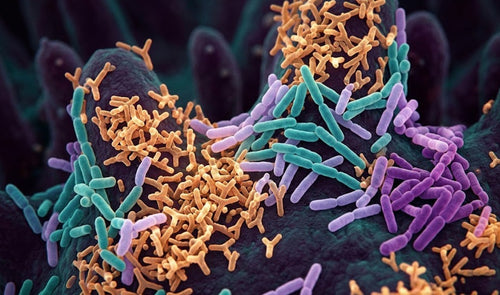
Bloating after every meal, unpredictable bowel movements, uncomfortable gas, a constant feeling of discomfort... When looking for an explanation, the word dysbiosis often comes up. It refers to an imbalance in the gut microbiota, those billions of bacteria that live in our intestines and contribute to our digestion, immunity, and even our mood.
The subject is fascinating, but it is also surrounded by a lot of misinformation. In this article, we take an honest look: what we know about dysbiosis, what remains unclear, how to recognize it, and above all, the simple steps that truly help your gut flora regain its balance. For an overview, our complete guide to gut health is the ideal starting point.
What is intestinal dysbiosis?
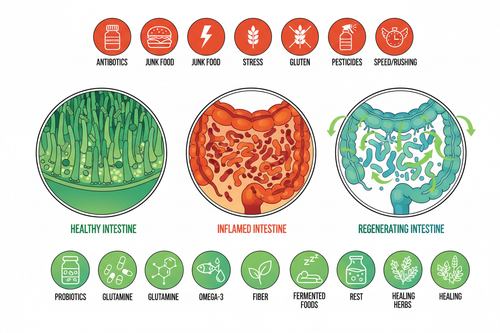
A healthy microbiota is primarily characterized by its diversity: many different species that complement and regulate each other. We speak of dysbiosis when this balance is disrupted. In practice, researchers often observe three things:
- a loss of diversity: fewer different species;
- a decrease in beneficial bacteria, especially those that produce butyrate, a fatty acid that nourishes the intestinal lining;
- a proliferation of bacteria that are usually present in small numbers, sometimes capable of promoting inflammation.
Let's be honest: there is no official, quantified definition of dysbiosis, nor a "perfect" microbiota to compare it to. Every microbiota is unique, like a fingerprint. Dysbiosis is a useful concept for understanding, but it is not a medical diagnosis that can be made with a simple test.
One particular case deserves to be known: small intestinal bacterial overgrowth (SIBO). Here, it is not the composition of the colon that is the problem, but an excess of bacteria in the small intestine, which normally contains very few. It causes bloating, gas, and diarrhea, is detected by a breath test, and requires medical management.
Signs that may indicate dysbiosis
No symptom is unique to dysbiosis. But certain signs, especially when they occur together and persist, may point to an imbalance in the gut flora:
Digestive issues
- frequent bloating and gas, especially after meals rich in fermentable fiber;
- irregular bowel movements: constipation, loose stools, or alternating between the two;
- diffuse abdominal discomfort or pain;
- slow and heavy digestion.
Beyond the gut
Studies associate an unbalanced microbiota with many conditions: irritable bowel syndrome, inflammatory bowel diseases, overweight, type 2 diabetes, certain skin conditions, or mood disorders. But association does not mean causation: in most cases, we do not yet know whether dysbiosis triggers the problem, accompanies it, or results from it.
Consult a doctor first if: you see blood in your stool, lose weight for no reason, have a fever, experience pain that wakes you up at night, have anemia, if the problems appear after age 50, or if there is a history of colorectal cancer or inflammatory bowel disease in your family. These signs should never be attributed to simple dysbiosis.
The main causes of imbalance
Dysbiosis rarely develops overnight. It is often the result of several factors:
1. A low-fiber dietFiber is food for your good bacteria. A diet rich in ultra-processed foods and low in vegetables, legumes, and whole grains literally starves them. Some additives, such as emulsifiers, also disrupt the microbiota in animals, which we detail in our article on food additives to avoid.
2. AntibioticsThey are sometimes essential, but they also affect good bacteria. After a course, most species return within one to two months, but some may be missing for longer (Palleja et al., 2018). Do not refuse them when they are necessary: instead, support your gut flora during and after treatment.
3. Certain medicationsProton pump inhibitors (antacids), metformin, laxatives, or anti-inflammatory drugs also alter the gut flora (Vich Vila et al., 2020). They are often still necessary: never change them without consulting your doctor.
4. Stress and lack of sleepThe gut and brain communicate constantly. Prolonged stress affects transit, digestive sensitivity, and the composition of the microbiota.
5. Gastroenteritis or food poisoningA digestive infection can leave behind problems that last for months. In fact, some cases of irritable bowel syndrome begin this way.
Excess alcohol, a sedentary lifestyle, tobacco, and age also play a role. The good news is that most of these factors can be modified.
How to tell if your gut flora is out of balance?
This is the question everyone asks, and the answer is somewhat frustrating: there is currently no simple, reliable test to diagnose dysbiosis.
- Stool tests sold online provide a snapshot of your bacteria, but they are not standardized, and interpreting them remains difficult. They cannot be used to make a diagnosis.
- A breath test (using glucose or lactulose) may be prescribed by a doctor if small intestinal bacterial overgrowth is suspected.
- A medical assessment can rule out other causes: celiac disease, lactose intolerance, infection, inflammatory disease, or thyroid disorder.
In naturopathy, we rely primarily on listening to your symptoms, your history (antibiotics, stress, diet), and how your body reacts to changes. Keeping a small journal for two weeks (meals, bowel movements, bloating, stress, sleep) is often very revealing.
Would you like guidance to help make sense of your digestive issues? During a first naturopathy consultation, we review your digestion, habits, and priorities.
Rebalancing your gut flora: the steps that matter
Your microbiota is highly responsive: it changes within a few days when your diet changes (David et al., Nature, 2014). Here are the best-supported strategies, to be implemented gradually.
Vary your plant foodsThis is the number one strategy. In the American Gut Project (McDonald et al., 2018), people who ate more than 30 different plant foods per week had a more diverse microbiota. Vegetables, fruits, legumes, whole grains, nuts, herbs, and spices all count.
Increase fiber graduallyIf you experience bloating, do not increase fiber all at once. Start with gentle fibers (cooked vegetables, oatmeal, psyllium) and introduce legumes in small, well-cooked portions. Psyllium is also recommended for people with irritable bowel syndrome.
Add fermented foodsIn a Stanford study (Wastyk et al., Cell, 2021), gradually increasing fermented foods increased microbiota diversity over 10 weeks. Kefir, yogurt, raw sauerkraut, kimchi, miso: we detail them in our article on natural probiotics.
Manage stress and sleepBreathing exercises, walking, turning off screens in the evening, and regular schedules: these simple steps act on the gut-brain axis.
Exercise regularlyActive people have a more diverse microbiota on average. There is no need for intense exercise: 30 minutes of walking per day is an excellent start.
What about supplements?
Probioticscan help in certain situations, for example during and after a course of antibiotics, where they reduce the risk of diarrhea. Their effect depends heavily on the strains: there is no universal probiotic. L-glutamine is being studied for the intestinal lining, and certain soothing plants can relieve discomfort. Ask for advice if you are pregnant, immunocompromised, or taking medication.
What about the low-FODMAP diet? In cases of irritable bowel syndrome, this diet, which limits certain fermentable sugars, often relieves bloating. But it also depletes the microbiota if continued for too long: it should only be followed for a few weeks, ideally with a professional, before reintroducing foods one by one.
Candida, parasites: beware of shortcuts
Online, dysbiosis is often associated with "Candida" or parasites, with very strict diets as a result. Candida albicans is part of the normal flora of many people: its presence in a test does not mean there is an infection. True intestinal candidiasis primarily affects people with weakened immunity and is diagnosed medically.
Intestinal parasites do exist, and they can explain persistent problems: we discuss them in our article on irritable bowel syndrome and parasites. But testing for them requires a prescribed stool examination, not a list of symptoms.
Frequently asked questions
What is intestinal dysbiosis?
It is an imbalance in the gut microbiota: less diversity, fewer beneficial bacteria, and sometimes a proliferation of species that are usually present in small numbers. It is a useful concept for understanding certain digestive problems, but there is no quantified medical definition.
What are the symptoms of dysbiosis?
Bloating, gas, irregular bowel movements, and discomfort after meals are often mentioned. These signs are not specific and may have other causes, which should be ruled out by a doctor if they persist or are accompanied by warning signs.
How long does it take to rebalance your gut flora?
The microbiota changes within a few days when the diet changes, but lasting improvements require several weeks to a few months of regular habits: plant diversity, fiber, fermented foods, sleep, and stress management.
Can you take a test to find out if you have dysbiosis?
There is no simple, reliable test. Stool tests sold online provide a snapshot of bacteria, but they are not standardized. A doctor may prescribe a breath test if small intestinal bacterial overgrowth is suspected.
Are probiotics enough to correct dysbiosis?
Rarely on their own. They can help in certain situations, but diet remains the main strategy, as fiber feeds your bacteria every day. Their effect also depends heavily on the strains chosen.
Dysbiosis and irritable bowel syndrome: are they the same thing?
No. Irritable bowel syndrome is a medical diagnosis based on specific criteria. Dysbiosis is often observed in people affected by it, but it does not explain everything: intestinal sensitivity, stress, and transit also play a role.
What foods should you avoid if you have dysbiosis?
There are no foods that are forbidden for everyone. It is generally recommended to limit ultra-processed foods, alcohol, and sugary drinks, and to gradually increase fiber and fermented foods. If certain foods cause you bloating, make a note of them and talk to a professional rather than cutting out entire food groups.
Can dysbiosis cause fatigue?
A link is possible, especially through inflammation or poorer absorption of certain nutrients, but it has not been proven. Persistent fatigue should first be investigated by a doctor: iron, thyroid, vitamin D, sleep, mood.
Nourishing your gut flora, without pressure
Dysbiosis is not a mysterious disease to fight, but an imbalance that is most often corrected with simple, regular steps. Varying your plant foods, gradually increasing fiber, adding a few fermented foods, sleeping better, and moving: these are the habits, repeated day after day, that make the difference. There is no need for an extreme diet or expensive tests to get started. And if your problems persist or are accompanied by unusual signs, seek guidance: a doctor to rule out a specific cause, a naturopath to help you build a tailored approach.
Would you like a simple plan to get your gut flora back on track, step by step? Le Terrier's personalized follow-up for 10 euros a month supports you by email, at your own pace.
This article is for informational purposes and does not replace medical advice.
To learn more
- Gut health: the complete guide to naturally balancing your microbiota
- Natural probiotics: the best food sources
- Leaky gut: symptoms and natural protocol
- Anti-inflammatory diet: the practical guide to soothing inflammation daily
- Irritable bowel syndrome: what if a parasite is to blame?