

Iodine: role in thyroid function and metabolism, and dietary sources
Share
Do you feel constantly tired? Are you struggling to lose weight despite your efforts? Do you suffer from brain fog or feel constantly cold? We tend to blame stress, lack of sleep, or age. But what if the culprit were much smaller? What if it were a simple mineral, forgotten on our plates, but revered in cultures renowned for their longevity?
Welcome to the world of iodine.
People in Japan consume much more of it than we do, and their life expectancy is among the highest in the world, although many other factors explain it. Iodine is the guardian of your metabolism and the architect of your intelligence. Here is why this marine mineral deserves your full attention.
Iodine, the non-negotiable mineral
Iodine is not an "optional" mineral. It is vital. Its main role is at the heart of your neck: in your thyroid.
1. The fuel of the thyroid
Think of your thyroid as the central factory of your body. It is what produces the T3 (triiodothyronine) and T4 (thyroxine) hormones. The main component of these hormones? Iodine.
- No iodine = Factory shut down.
- Consequence: your thyroid desperately tries to capture the little iodine available and swells. This is goiter, a problem affecting 200 million people worldwide.
2. The thermostat of metabolism
T3 and T4 hormones are the thermostat of your body. They dictate the speed at which each cell burns energy (your basal metabolism).
- Iodine deficiency = Hypothyroidism.
- Possible symptoms: slower metabolism, a tendency to gain weight, ongoing fatigue, feeling cold, very dry skin, constipation, thinning at the outer edge of the eyebrows. These signs can have many other causes; only a medical checkup can confirm hypothyroidism.
3. The architect of the brain (IQ)
This is the most tragic and least known aspect. Iodine is essential for the development of the fetus's and young child's brain.
- The WHO is clear: iodine deficiency is the leading cause of preventable intellectual disability in the world.
- A deficiency, even mild, in the mother can lead to a loss of 10 to 13 IQ points in the child.
The perfect dose (the Japanese paradox)
Official recommendations (Recommended Daily Allowances) are set to prevent deficiency (goiter), not to improve health.
- RDA Adults: 150 micrograms (mcg) per day.
- RDA Pregnant Women: 200 to 250 mcg per day.
- RDA Breastfeeding Women: 250 to 300 mcg per day.
Now, let's look at the Japanese paradox:
In Japan, a country known for the longevity of its people, average iodine intake is estimated at 1,000 to 3,000 mcg per day, mainly from seaweed. That is several times our usual intake.
How is this possible? Their diet is a complete ecosystem (rich in selenium, which protects the thyroid) and their genetics are adapted to it.
The lesson for us? Our 150 mcg is a vital minimum. Aiming for an optimal target of 150 to 300 mcg per day is the smartest and safest strategy for most Westerners.
Safety limit: excess is just as problematic as deficiency. The upper safety limit for adults, from all sources combined, is set at 600 mcg per day by EFSA in Europe and 1,100 mcg (1.1 mg) per day in the US. Do not exceed it with ongoing supplementation without strict medical advice, as this can trigger a thyroid disorder such as hyperthyroidism.
The champions of the ocean (where to find iodine?)
Iodine is a marine mineral. Terrestrial soils are often poor in it. The solution is therefore... in the sea.
1. Seaweed: the queens of iodine
They are 1000 times more concentrated than any vegetable.
- KOMBU (or Kelp): the Reactor
- Content: it is the most powerful. Just 1 gram of dried kombu can contain 1,500 to 3,000 mcg of iodine.
- Use: Use with extreme moderation. Do not eat it in a salad. Use a small piece (the size of a postage stamp) to infuse your broths, soups, or the cooking water of your legumes (which makes them more digestible). Remove it after cooking.
- WAKAME: the Perfect Balance
- Content: rich but manageable. About 150-250 mcg for 10g of rehydrated seaweed (a classic portion of seaweed salad).
- Use: perfect to start. Ideal in a salad (wakame salad) or in small pieces in a miso soup. 2 to 3 times a week is enough.
- NORI: the Safe Daily
- Content: the lowest, and therefore the safest for regular use.
- Use: about 15-30 mcg per sheet (the one from your sushi or makis). You can snack on 1 or 2 sheets a day or cut them into flakes on your dishes.
2. Fish and seafood
Marine animals concentrate the iodine from seawater. Favor wild fish.
- Cod (or haddock): the champion. About 100 to 150 mcg per 100g. One portion covers your daily needs.
- Shrimp: about 35-40 mcg per 100g.
- Tuna (canned): about 17 mcg per 100g.
- Oysters: about 60-70 mcg per 100g (and rich in Zinc, another ally of the thyroid).
Pitfalls and misconceptions
Knowing where to find iodine is one thing. Knowing how to absorb it and avoid mistakes is another.
1. The iodized salt myth
We think we are protected by buying "iodized" salt. It is often a false assurance.
- Problem 1: the added iodine (potassium iodide) is volatile. It evaporates with light, humidity, and heat. If you salt the pasta water at the beginning, 80% of the iodine is gone.
- Problem 2: "health" salts (Himalayan Pink Salt, Fleur de sel, Guérande Salt) are unrefined marine salts. They contain traces of iodine, but are not "iodized" and are often insufficient to cover needs.
- Advice: if you use iodized salt, keep it in an opaque jar and add it after cooking.
2. The "iodine thieves" (goitrogens)
Some foods, if consumed raw and in very large quantities, can interfere with iodine absorption.
- Which ones? Cruciferous vegetables (raw cabbage, raw broccoli, raw cauliflower, kale) and soy.
- The solution: cooking (steaming, boiling) deactivates 90% of these goitrogenic compounds.
- Lesson: your daily raw kale juice may not be a good idea if you lack iodine. Eat your cooked broccoli, everything will be fine.
Your action plan to meet your iodine needs
Concretely: Here is a simple routine.
- Goal: 150-300 mcg/day. This is your target.
- The easy action (2x/week): consume white fish (cod, haddock) twice a week.
- The Japanese action (2x/week): incorporate seaweed. The simplest: a small wakame salad as a starter, or nori sheets as a snack.
- The "support" action: consume eggs (the yolk is rich in iodine and selenium) and quality dairy products (if you consume them).
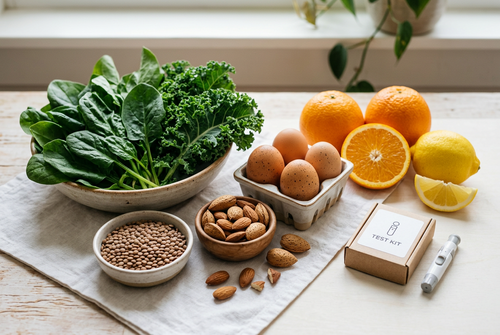
- The test (if you have doubts): ask your doctor for a complete thyroid panel. Do not settle for TSH. Ask for: TSH, free T3, free T4, and antibodies (anti-TPO and anti-TG) to rule out an autoimmune disease.
The sea holds the key
Iodine plays a central role in the functioning of the thyroid, and therefore in your daily energy.
Chronic fatigue and weight gain are not inevitable. By adding the treasures of the ocean to your diet in moderation, you can help your thyroid get the iodine it needs and support your everyday energy.
Warning: this article is for informational purposes. Iodine is an essential mineral, but too much can also disrupt the thyroid. Needs increase during pregnancy and breastfeeding, so talk to your doctor or midwife. Always consult a qualified healthcare professional before starting supplementation (especially Lugol's Solution) or drastically changing your diet, especially if you already suffer from a thyroid disorder.
Want daily support? Le Terrier's personalized follow-up, at €10 per month, allows you to ask us questions in writing and move at your own pace.


1 comment
Instructif et complet merci beaucoup