

Storing your fruit: the mistake that causes you to lose vitamins
Share
Reading time: 8 minutes
We all have this classic image in mind: a magnificent fruit bowl sitting in the center of the kitchen table, overflowing with juicy apples, bright bananas, and golden lemons. It's aesthetically pleasing, it exudes health, and yet... from a naturopathic and biochemical perspective, it's a disaster.
Our efforts to eat healthily are often undermined by poor food management at home. You buy quality products, organic if possible, hoping to get plenty of antioxidants, vitamin C and polyphenols to support your immunity. But did you know that by mixing certain fruits, you trigger an invisible chain reaction that destroys these micronutrients?
Do your lemons develop green mold in just a few days? Do your oranges become soft and bland? It's not the grocer's fault, but rather a lack of knowledge about a fundamental rule of post-harvest plant biology. Let's explore the science of food preservation together to preserve the vitality of your food and, by extension, your own.
Post-harvest physiology: understanding plant respiration
To understand why the famous "mixed fruit bowl" is a nutritional trap, we need to look at plant physiology. Once picked, a fruit is not an inert object. It continues to "breathe" and metabolize its energy reserves. Researchers at the Postharvest Technology Center at the University of California (UC Davis) formally classify fruits into two distinct categories with diametrically opposed behaviors.
Climacteric fruits: the ethylene factory
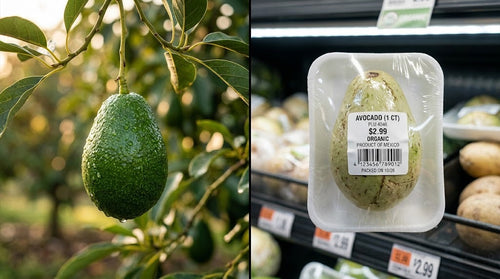
Some fruits have the extraordinary ability to continue to ripen even after being separated from their tree. This is the case with apples, bananas, avocados, kiwis, pears, peaches, and tomatoes.
How do they do it? They experience a post-harvest peak in cellular respiration and synthesize a volatile plant hormone (a gas) called ethylene (C₂H₄). This gas acts as an effective chemical messenger that orchestrates the ripening process.
The mechanism:
- The more an apple or banana ripens, the more ethylene it releases
- This gas accelerates its own ripening (autocatalysis)
- It also accelerates the ripening of surrounding climacteric fruits
- It's a biochemical domino effect
Examples of climacteric fruits:
- Apples
- Bananas
- Avocados
- Pears
- Peaches and nectarines
- Kiwis
- Tomatoes
- Melons
- Mangoes
- Apricots
Non-climacteric fruits: the victims of oxidation
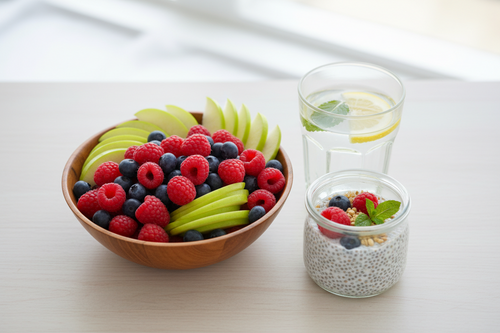
On the other side of the spectrum, we find non-climacteric fruits: citrus fruits (lemons, oranges, grapefruits, clementines), berries (strawberries, blueberries, raspberries), pineapples, grapes, and watermelons.
These fruits are incapable of ripening once harvested. If you pick a lemon when it's still green, it will stay green. Their basal metabolism is slow and stable.
However, if they are exposed to the ethylene gas released by apples or bananas, a serious reaction occurs: they do not ripen, they enter accelerated senescence (premature aging). That's the whole difference between ripening and degradation.
The biochemical mechanism: when ethylene attacks ascorbic acid
What exactly happens in the cells of your lemon when it breathes in the ethylene from your neighboring banana? The process is insidious and destroys the very goal of your healthy diet.
Oxidative stress and vitamin C loss
As highlighted by a study published in the Journal of Agricultural and Food Chemistry, exogenous exposure to ethylene triggers severe oxidative stress in non-climacteric fruits. The very structure of the citrus peel (composed of the colored flavedo and the white albedo) begins to collapse at the cellular level.
Here's what happens:
- Chlorophyll degradation: The peel loses its structural integrity
- Tissue softening: The fruit becomes soft and spongy
- Antioxidant oxidation: The fruit's valuable compounds (ascorbic acid = Vitamin C, phenolic compounds) oxidize in an attempt to counteract this accelerated aging
Over the days, sharing space with an apple speeds up your lemon's aging, and it can lose some of its vitamins, especially the more fragile vitamin C. You then eat an "impoverished" food, with less of the vital energy and nutrients your body craves.
The breach for pathogens: mycotoxins
The Journal of Postharvest Biology and Technology highlights another major danger. By softening the protective tissues of citrus fruits, ethylene destroys their natural immune barrier. The skin becomes porous and vulnerable.
This opens the door to microscopic fungal spores present in the ambient air, notably Penicillium digitatum, the fungus responsible for:
- The famous green mold on lemons
- The white rot on oranges
- The accelerated decomposition of all your citrus fruits
Double whammy: not only do you lose your fruit and your money, but a moldy citrus fruit should no longer be eaten: some molds can produce mycotoxins, substances best avoided.
Summary table: fruits that must absolutely be separated
To improve your health and stop food waste, here is a clear table (ideal to display on your fridge) so you never make a mistake again in managing your kitchen.
| Climacteric Fruits (Produce ethylene) | Non-Climacteric Fruits (Sensitive to ethylene) | Storage Rule |
|---|---|---|
| Apples | Lemons (yellow, green) | Strict separation required |
| Bananas | Oranges, Grapefruits, Clementines | Never put them in the same bowl |
| Avocados | Strawberries, Raspberries, Blueberries | Place non-climacteric fruits in the fridge |
| Kiwis, Pears, Peaches | Grapes, Pineapples, Watermelons | Leave climacteric fruits out in the open |
| Tomatoes, Melons | Cherries, Pomegranates | Vegetables (cucumbers, peppers) are also sensitive to ethylene. |
| Mangoes, Apricots | Lychees, Passion fruit | Use ethylene to your advantage (see avocado tip) |
The golden rules of naturopathic food preservation
In holistic naturopathy, we are often reminded that food is our first medicine. Preserving its nutritional integrity is therefore a therapeutic step in its own right, long before digestion.
Isolate citrus fruits to protect their antioxidants
The simplest and most effective solution is complete physical separation.
Optimal storage protocol:
-
Bowl no. 1 (open air, room temperature): your bananas, apples, pears, and other climacteric fruits. This bowl should be well-ventilated to allow ethylene to disperse.
-
Bowl no. 2 (separated or refrigerated): all your citrus fruits (lemons, oranges, grapefruits) and your delicate berries. Ideally, place them in the vegetable drawer of your refrigerator.
Why the fridge? Cold considerably slows down cellular respiration and blocks the oxidation of vitamin C. Your citrus fruits will retain their antioxidant capital for much longer.
Practical tip: take your lemon out 30 minutes before squeezing it so that it is at room temperature and provides the maximum amount of juice.
The trick to ripening a stubborn avocado
Now that you understand the power of ethylene, you can use it to your advantage.
Did you buy an avocado hard as a rock and need it for the next day?
The natural method:
- Take a brown paper bag (not plastic, paper breathes)
- Place your hard avocado inside
- Add a ripe banana or an apple
- Close the bag without tying it
- Leave it at room temperature
The bag will trap the ethylene gas released by the banana or apple, creating a "natural oven" that will force the avocado to ripen in record time: 24 to 48 hours instead of 4 to 5 days.
This same technique works for:
- Hard kiwis
- Unripe pears
- Firm peaches
- Still-green tomatoes
Micronutrition and immunity: the impact on your overall health
Why insist so much on a "simple" lemon stored next to a banana? Because health is not built on abstract concepts, but on the daily biochemical cascade of your nutritional intake.
The essential role of vitamin C
Your immune system has a constant need for electrons to neutralize free radicals generated by stress, pollution, infections, and fatigue. Vitamin C (ascorbic acid) is a universal electron donor, one of the most powerful antioxidants nature offers us.
Here's the problem:
If the vitamin C in your food is already oxidized (depleted) even before crossing the barrier of your digestive system, because it has fought against the oxidative stress caused by the gas from an apple, your body gets no benefit from it.
You think you are getting plenty of vitamins by drinking your morning lemon juice, but if that lemon spent a week next to a banana, you are essentially consuming lemon water with only a fraction of its initial nutritional potential.
The cumulative effect on your terrain
In naturopathy, we often talk about the "terrain", the overall balance of your body that determines your resistance to diseases. A healthy terrain relies on:
- A diet rich in bioavailable micronutrients
- An efficient antioxidant system
- Controlled inflammation
Every poorly stored fruit, every oxidized vitamin, every antioxidant destroyed before ingestion represents a missed opportunity to strengthen this terrain. Over weeks and months, these small losses accumulate.
Other storage tips to maximize your nutrients
Do not wash your fruits before storing them
It is strongly advised not to wash your fruits (especially berries and citrus fruits) before storing them. Residual moisture greatly promotes the proliferation of mold and bacteria. Wash them only just before consuming them.
The question of bananas in the fridge
This is a common question: should bananas be put in the refrigerator?
- Unripe banana: no. The cold stops its ripening. It will stay green and starchy.
- Ripe banana (yellow with a few spots): yes, you can. The skin will turn black because of the cold, but the flesh inside will stay intact longer. It's ideal if you want to stop the ripening.
Vegetables are also sensitive.
Ethylene does not only affect fruits. Some vegetables are also very sensitive to it:
- Cucumbers: Become soft and yellow
- Peppers: Lose their crunch
- Salad and leafy greens: Wilt quickly
- Carrots: Become bitter
Keep your vegetables away from your climacteric fruit bowl.
Action plan
Do not let simple mechanical errors ruin your nutrition anymore. Nature has its rules, and knowing them means taking back control over your vitality.
Summary of actions to put in place starting today:
- Break up your mixed fruit bowl: this is the first non-negotiable step
- Create two distinct spaces: one bowl for climacteric fruits, another (or the fridge) for non-climacteric fruits
- Keep your citrus fruits cool: the vegetable drawer of the refrigerator is their best ally
- Use ethylene intelligently: paper bag + apple = ripe avocado in 48h
- Do not wash before storing: wash only before consumption
- Protect your vegetables too: they are sensitive to ethylene
Observe the difference in the longevity of your purchases, the reduction of your food waste, and above all, the actual quality of the nutrients you provide to your body.
Eating healthily starts with knowing how to store properly.
Want daily support? Le Terrier's personalized follow-up, at €10 per month, allows you to ask us questions in writing and move at your own pace.


2 comments
Comment conserver ces fruits dans une chambre froide posi tif sur les étagères et comment les séparer quand il s’agit des grandes quantités
Je consomme beaucoup de fruits importés pommes, raisins, poires, fraises orange ect. Est ce que ces fruits une fois arrivés en Afrique perdent leurs vitamines ? Comment faire ?