Why you should avoid processed and ultra-processed foods: what science reveals
Share
The Hidden Epidemic on Our Plates
Ultra-processed foods now account for 58% of the average caloric intake in developed countries, an alarming statistic that directly correlates with the explosion of modern chronic diseases. A major study published in the British Medical Journal, following 105,000 participants over 10 years, revealed that every 10% increase in the consumption of ultra-processed foods increases the risk of cancer by 12% and the risk of all-cause mortality by 11%.
This reality goes far beyond simple nutritional considerations. Research by Dr. Carlos Monteiro of the University of São Paulo, creator of the NOVA classification, demonstrates that these industrial products are not merely modified foods but artificial constructions designed to maximize consumption and profits, at the expense of our health.
Processing: A Growing Spectrum of Dangers
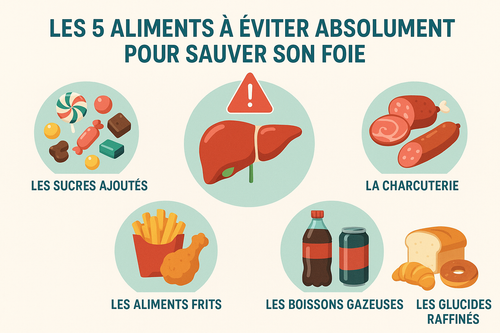
It is important to distinguish processed foods from ultra-processed ones. The former include simple modifications such as canning vegetables or pasteurizing milk. Ultra-processed foods, on the other hand, undergo complex industrial processes using extracted, refined, and recombined substances to create hyperpalatable but nutritionally devastating products.
French NutriNet-Santé studies have identified the markers of ultra-processed foods: containing more than five ingredients, the use of cosmetic additives (colorings, emulsifiers, flavor enhancers), and ingredients that are never found in a home kitchen. These simple criteria allow us to identify 80% of the problematic products in our supermarkets.
Extreme processing destroys natural food matrices, those complex structures that regulate nutrient absorption and satiety. A whole apple and an industrial apple juice theoretically contain the same nutrients, but their metabolic impact differs radically. In a study published in The Lancet (Haber et al., 1977), the juice was much less filling than the whole apple and triggered a stronger insulin response, followed by a sharper drop in blood sugar, illustrating how processing sabotages our biological regulation mechanisms.
Engineered Addiction: How These Foods Hijack Our Brains
Ultra-processed foods are deliberately designed to create addiction. Neuroscience research reveals that they activate the same reward circuits as addictive drugs. The calculated combination of sugar, salt, fat, and additives stimulates a massive release of dopamine, creating a compulsive need to consume.
A study by the University of Michigan demonstrated that ultra-processed foods cause eating behaviors identical to those observed in addiction: loss of control, consumption despite negative consequences, and withdrawal symptoms. The "bliss point," the point of gustatory bliss, is meticulously calculated by manufacturers to maximize immediate pleasure and repeated consumption.
This neurological manipulation explains why so many people struggle with their weight and health despite their best intentions. The brain circuits hijacked by these foods short-circuit the natural mechanisms of satiety and energy regulation, creating a vicious cycle of overconsumption and paradoxical malnutrition.
Metabolic Impact: The Silent Destruction
The impact of ultra-processed foods on metabolism is devastating and multifaceted. A Spanish study involving 20,000 participants showed that heavy consumers of ultra-processed foods have a 51% higher risk of developing metabolic syndrome. These foods profoundly disrupt glucose, lipid, and hormonal homeostasis.
The high glycemic load and lack of fiber in these products cause repeated insulin spikes that exhaust the pancreas and promote insulin resistance. Research shows that replacing 10% of ultra-processed calories with whole foods improves insulin sensitivity by 25% in just 4 weeks.
The chronic inflammation induced by these foods is the common denominator of modern diseases. Additives, preservatives, and processing residues activate inflammatory pathways, creating a state of permanent immune alert. Inflammatory markers (CRP, IL-6) are 40% higher in regular consumers of ultra-processed foods.
Microbiota in Distress: The Devastated Intestinal Ecosystem
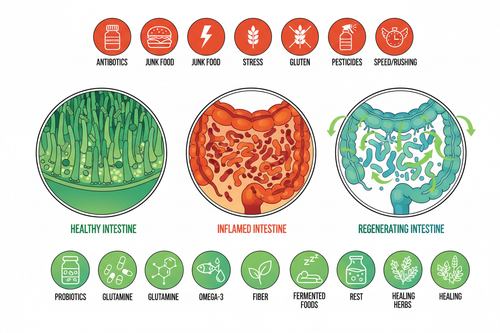
Ultra-processed foods have a catastrophic effect on the gut microbiota. Emulsifiers, ubiquitous in these products, destroy the protective mucus layer of the intestine, allowing pathogenic bacteria to penetrate the intestinal wall. This disruption of the intestinal barrier triggers a systemic inflammatory cascade.
An Israeli study revealed that artificial sweeteners, widely used in "light" products, severely disrupt the composition of the microbiota and paradoxically induce glucose intolerance. This discovery overturns the perception of these supposedly "healthy" additives and reveals the complexity of the damage caused by industrial foods.
Several studies link a high intake of ultra-processed foods to lower microbial diversity. This loss of intestinal biodiversity correlates with the increase in autoimmune diseases, allergies, and neurological disorders, highlighting the central role of the microbiota in overall health.
Cancer and Chronic Diseases: The Evidence Is Mounting
The links between ultra-processed foods and cancer are becoming undeniable. The EPIC study involving 500,000 Europeans established that a 10% increase in the proportion of ultra-processed foods in the diet increases the risk of colorectal cancer by 23%. The mechanisms involve the formation of carcinogenic compounds during high-temperature processing and the presence of potentially mutagenic additives.
Cardiovascular diseases show an equally alarming correlation. Consumers in the highest quartile of ultra-processed food consumption have a 62% higher risk of major cardiovascular events. Residual trans fatty acids, excessive sodium, and added phosphates create a perfect storm for the cardiovascular system.
Depression and anxiety, modern epidemics, also find their roots in this unnatural diet. Research shows a 33% increase in the risk of depression among heavy consumers of ultra-processed foods, a link mediated by systemic inflammation and disruptions of the gut-microbiota-brain axis.
Practical Solutions: Reclaiming Real Food
Avoiding ultra-processed foods does not require becoming a nutritional hermit. The simple rule: favor recognizable foods, with few ingredients and no incomprehensible additives. Studies show that gradually replacing ultra-processed foods with whole foods improves all health markers in a few weeks.
Homemade preparation, even simple, consistently outperforms industrial options. A homemade sandwich with whole-grain bread, fresh vegetables, and unprocessed protein generally provides more fiber and nutrients, and far fewer additives, than an industrial sandwich. The time invested in cooking represents a direct investment in your future health.
The transition can be gradual and realistic. Start by eliminating sugary drinks and ultra-processed snacks, then move toward replacing prepared meals with simple homemade versions. Behavioral studies show that it takes about two months on average for a new habit to become automatic (66 days in a University College London study), with wide differences from one person to another.
A Societal Choice as Much as an Individual One
Avoiding processed and ultra-processed foods represents much more than a personal dietary choice: it is a major public health decision. Scientific evidence converges on an inescapable conclusion: these industrial products are incompatible with optimal health and contribute massively to the epidemic of chronic diseases ravaging our societies.
Returning to real food, based on whole and minimally processed foods, is neither a fad nor a luxury but a biological necessity. Our body, the result of millions of years of evolution, is simply not adapted to these modern industrial constructions.
Want daily support? Le Terrier's personalized follow-up, at €10 per month, allows you to ask us questions in writing and move at your own pace.