

Sugar-free breakfast: the problem with processed cereals
Share
Reading time: 8 minutes
Every morning, millions of French people start their day the same way: a colorful bowl filled with crunchy cereal, topped with cold milk. Reassuring image. Cheerful packaging. Nutritional promises printed in bold on the box: "Enriched with vitamins", "Source of fiber", "Energy to start the day right".
And yet.
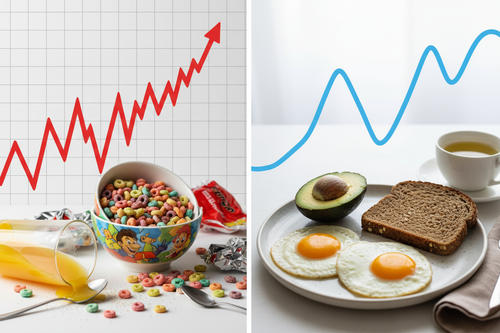
By 10 a.m., the crash hits. Concentration plummets. Irritability rises. The stomach growls. And that irresistible craving for sugar returns, like a call to order.
It's not a lack of willpower. It's biochemistry.
In 2013, Michael Moss, an investigative journalist at the New York Times, won the Pulitzer Prize for his explosive investigation into the food industry. His book "Salt Sugar Fat" revealed a concept that the research laboratories of the food giants have known for decades: the Bliss Point.
The Bliss Point is the point of bliss. The exact combination of sugar, salt, and fat that triggers an explosion of pleasure in your brain, and drives you to reach for more, and more, and more.
Your morning cereal is not food. It is an engineered product designed to create addiction.
Here is what happens in the body after a bowl of sugary cereal, and three breakfasts that sustain the body better.
The science of addiction: when a bowl of cereal activates the nucleus accumbens
The study that shocked the scientific community
In 2013, a team of researchers at Connecticut College conducted a disturbing experiment. They exposed rats to two different stimuli: on one hand, filled industrial cookies (like Oreos); on the other, cocaine or morphine.
The result? Ultra-processed cookies activated significantly more neurons in the nucleus accumbens, the brain center for reward and pleasure, than hard drugs themselves.
Reference: Schroeder, J.E. et al. (2013). Connecticut College, presented at the Society for Neuroscience.
Note: these results, obtained in rats, were presented at a conference but, as far as we know, were not published in a peer-reviewed journal. They remain preliminary and do not show that these cookies act like a drug in humans.
The neurological mechanism in detail
When you swallow a mouthful of sugary cereal, here is what happens in your brain in less than 20 minutes:
- Blood glucose spike: Refined carbohydrates are absorbed almost instantly.
- Massive dopamine release: The reward system goes into overdrive.
- Receptor overstimulation: Your brain begins to develop a tolerance.
- Search for the next dose: The craving sets in.
It is exactly the same circuit activated by addictive substances. The difference? Sugar is legal, socially accepted, and served to children as early as 6 a.m.
The disturbing biochemical comparison
Your brain makes no distinction between the "food pleasure" caused by a bowl of sugary cereal and chemical addiction. For it, dopamine = reward = "do it again".
This is what neuroscientists call the hijacking of the reward circuit. An ancestral survival mechanism (eating = living) transformed into a metabolic trap by the modern food industry.
The fatigue cycle: insulin, cortisol, and the 10 a.m. crash
The glycemic index: the key to everything
The Glycemic Index (GI) measures the speed at which a food raises your blood sugar. The higher the GI, the more brutal the blood sugar spike.
Here are some revealing examples:
| Food | Glycemic Index |
|---|---|
| Corn Flakes | 85 |
| Puffed rice | 82 |
| White bread | 75 |
| Table sugar | 70 |
| Oatmeal | 40 |
| Egg | 0 |
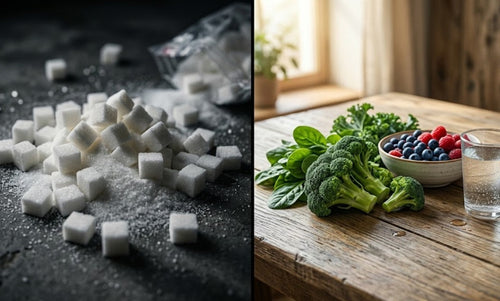
You read that correctly: your morning cereal has a higher GI than pure sugar.
A puffed cereal is a "glucose bomb". Starch, broken down by the industrial process, becomes immediately available for intestinal absorption.
The hormonal roller coaster
Here is the classic scenario for your morning:
7:00 a.m., The bowl of cereal
Brutal glycemic spike. Your pancreas secretes massive amounts of insulin to lower this dangerous blood sugar.
8:30 a.m., Reactive hypoglycemia
Insulin has done its job too well. Your blood sugar plummets below the normal level. Your body interprets this as an emergency.
9:00 a.m., The hormonal response
Your adrenal glands release cortisol (the stress hormone) and adrenaline to raise blood sugar. You are irritable, anxious, unable to concentrate.
10:00 a.m., The craving
Your brain demands a new dose of sugar to regain balance. The cycle begins again.
The ignored systemic consequences
This daily blood sugar yo-yo is not harmless. Scientific literature documents long-term effects:
- Low-grade inflammation: Repeated insulin spikes promote the production of pro-inflammatory cytokines (Hotamisligil, 2006, Nature).
- Intestinal permeability: Chronic metabolic stress alters the intestinal barrier (Fasano, 2012, Clinical Reviews in Allergy & Immunology).
- Insulin resistance: The precursors of metabolic syndrome and type 2 diabetes.
- Chronic fatigue: Repeated cortisol spikes and blood sugar swings can keep fatigue going (the often-mentioned "adrenal fatigue," however, is not recognized as a medical condition).
Comparison table: industrial cereal vs physiological breakfast
This table summarizes the fundamental differences between a conventional breakfast and a naturopathic approach:
| Criterion | Industrial cereal | Physiological breakfast |
|---|---|---|
| Glycemic Index | High (70-90) | Low to moderate (20-50) |
| Satiety | 1-2 hours | 4-5 hours |
| Protein intake | < 5g | 15-25g |
| Fiber | Low (processed) | High (intact) |
| Dopamine impact | Brutal spike → crash | Gradual synthesis |
| Concentration | Drop at 10 a.m. | Stable until lunch |
| Inflammation | Pro-inflammatory | Anti-inflammatory |
| Micronutrients | Added (synthetic) | Naturally present |
3 naturopathic breakfast alternatives for stable energy
1. The expert's porridge (focus on fiber and blood sugar)
Ingredients:
- 40g of whole rolled oats (not instant)
- 1 tablespoon of chia seeds
- ½ teaspoon of Ceylon cinnamon
- A handful of walnuts or almonds
- Fresh berries (optional)
Why it works:
Whole rolled oats are rich in beta-glucans, soluble fibers that slow glucose absorption and feed the intestinal microbiota.
Chia seeds provide additional fiber and anti-inflammatory omega-3s.
Ceylon cinnamon (caution: not cassia cinnamon, hepatotoxic at high doses) contains cinnamaldehyde, a compound that improves insulin sensitivity according to several studies published in Diabetes Care (Khan et al., 2003).
Meal GI: approximately 35-40
2. The "Miam-Ô-Fruit" revisited (focus on antioxidants)
Inspired by the work of France Guillain, this recipe relies on essential fatty acids and antioxidants.
Ingredients:
- ½ mashed banana (not too ripe)
- 1 tablespoon of flaxseed or camelina oil (omega-3)
- 2 tablespoons of ground nuts (walnuts, hazelnuts, almonds)
- Various fresh seasonal fruits
- Juice of half a lemon
Why it works:
The oil-banana emulsion creates a lipid matrix that slows the absorption of natural fruit sugars.
Plant-based omega-3s contribute to neuronal membrane fluidity and reduce systemic inflammation (Calder, 2015, Annals of Nutrition and Metabolism).
Lemon provides vitamin C, essential for collagen synthesis and iron absorption.
Meal GI: approximately 40-45
3. The savory breakfast (focus on dopamine and concentration)
Ingredients:
- 2 soft-boiled or medium-boiled eggs (organic, free-range)
- ½ avocado
- 1 slice of whole-grain sourdough rye bread
- Pumpkin seeds
- Fresh herbs (parsley, chives)
Why it works:
Eggs are an exceptional source of tyrosine, the amino acid precursor to dopamine. Consuming protein in the morning promotes the synthesis of this neurotransmitter essential for motivation and concentration.
Avocado provides monounsaturated fats and potassium, while sourdough rye bread has a significantly lower GI than white bread (approximately 45 vs 75).
Pumpkin seeds complete the mix with zinc, an enzymatic cofactor essential for many metabolic reactions.
Meal GI: approximately 30-35
Reference: Fernstrom, J.D. (2013). "Large neutral amino acids: dietary effects on brain neurochemistry and function", Amino Acids.
The fatal mistakes to avoid upon waking
The fruit juice trap
"But it's natural!"
A glass of orange juice, even homemade, contains about 25g of sugar, as much as a soda, without the fiber that would slow its absorption. You get a blood sugar spike almost identical to that of cereal.
Alternative: Eat the whole fruit, with its fiber. Or opt for green vegetable juice.
The "coffee alone" mistake
Drinking coffee on an empty stomach stimulates the production of hydrochloric acid without anything to digest, promoting gastric acidity. Furthermore, coffee mobilizes your adrenal glands already stressed by overnight fasting.
Alternative: Have your coffee after eating something, or accompany it with a glass of water and a few nuts.
The forgotten hydration
After 7-8 hours of sleep, your body is in a state of dehydration. Your elimination systems (lymph, kidneys, liver) need water to function.
The naturopathic reflex: A large glass of warm water upon waking, optionally with a squeeze of lemon, before any food intake. Wait 15-20 minutes before breakfast.
Retraining your taste buds to regain vitality
The hardest part is not changing your breakfast. It is getting through the sugar "withdrawal" period.
Allow about 15 days for your taste buds to reset and for your perception threshold of sweetness to return to normal. During this period, fresh fruits will seem bland, porridge tasteless. This is normal. It is a sign that your palate was overstimulated.
After these two weeks, something remarkable happens: you rediscover the real taste of food. An apple becomes sweet. A walnut becomes flavorful. And above all, your energy stabilizes.
No more 10 a.m. crash. No more brain fog. No more of that chronic fatigue you thought was normal.
Scientific sources and references
This section brings together all the scientific studies and publications cited in this article. In accordance with our commitment to transparency, we distinguish between primary studies, literature reviews, and reference works.
Sugar addiction and neurobiology
1. Connecticut College Study, Neuronal Response to Ultra-Processed Foods
- Schroeder, J.E., Wormack, L.M., Lussier, L.T. et al. (2013)
- "Oreos activate more neurons in the pleasure center of the rat brain than cocaine"
- Presented at the Society for Neuroscience Annual Meeting
- Evidence of the activation of the nucleus accumbens by hyper-palatable foods
2. Sugar and the reward circuit
- Ahmed, S.H., Guillem, K., & Bhindou, Y. (2013)
- "Sugar addiction: pushing the drug-sugar analogy to the limit"
- Current Opinion in Clinical Nutrition and Metabolic Care, 16(4), 434-439
- DOI: 10.1097/MCO.0b013e328361c8b8
3. Dopaminergic mechanisms of food addiction
- Volkow, N.D., Wang, G.J., & Baler, R.D. (2011)
- "Reward, dopamine and the control of food intake: implications for obesity"
- Trends in Cognitive Sciences, 15(1), 37-46
- DOI: 10.1016/j.tics.2010.11.001
4. The concept of "Bliss Point", Reference Work
- Moss, M. (2013)
- "Salt Sugar Fat: How the Food Giants Hooked Us"
- Random House (Pulitzer Prize)
- Investigation into food engineering and addictive formulations
Glycemic index and metabolism
5. International Tables of Glycemic Index
- Atkinson, F.S., Foster-Powell, K., & Brand-Miller, J.C. (2008)
- "International Tables of Glycemic Index and Glycemic Load Values: 2008"
- Diabetes Care, 31(12), 2281-2283
- DOI: 10.2337/dc08-1239
6. Impact of GI on satiety and food intake
- Ludwig, D.S. (2002)
- "The glycemic index: physiological mechanisms relating to obesity, diabetes, and cardiovascular disease"
- JAMA, 287(18), 2414-2423
- DOI: 10.1001/jama.287.18.2414
7. Reactive hypoglycemia and hormonal response
- Brun, J.F., Fedou, C., & Mercier, J. (2000)
- "Postprandial reactive hypoglycemia"
- Diabetes & Metabolism, 26(5), 337-351
- PMID: 11119013
Inflammation and insulin resistance
8. Inflammation and metabolism
- Hotamisligil, G.S. (2006)
- "Inflammation and metabolic disorders"
- Nature, 444(7121), 860-867
- DOI: 10.1038/nature05485
9. Intestinal permeability and diet
- Fasano, A. (2012)
- "Leaky gut and autoimmune diseases"
- Clinical Reviews in Allergy & Immunology, 42(1), 71-78
- DOI: 10.1007/s12016-011-8291-x
10. Added sugars and systemic inflammation
- Ma, X., Nan, F., Liang, H. et al. (2022)
- "Excessive intake of sugar: an accomplice of inflammation"
- Frontiers in Immunology, 13, 988481
- DOI: 10.3389/fimmu.2022.988481
Ceylon cinnamon and blood sugar regulation
11. Effect of cinnamon on blood sugar
- Khan, A., Safdar, M., Ali Khan, M.M. et al. (2003)
- "Cinnamon improves glucose and lipids of people with type 2 diabetes"
- Diabetes Care, 26(12), 3215-3218
- DOI: 10.2337/diacare.26.12.3215
12. Mechanisms of action of cinnamaldehyde
- Bandara, T., Uluwaduge, I., & Jansz, E.R. (2012)
- "Bioactivity of cinnamon with special emphasis on diabetes mellitus"
- International Journal of Food Sciences and Nutrition, 63(3), 380-386
- DOI: 10.3109/09637486.2011.627849
13. Distinction between Ceylon cinnamon and cassia (coumarin)
- Abraham, K., Wöhrlin, F., Lindtner, O. et al. (2010)
- "Toxicology and risk assessment of coumarin"
- Molecular Nutrition & Food Research, 54(2), 228-239
- DOI: 10.1002/mnfr.200900281
Proteins, tyrosine and dopamine synthesis
14. Amino acids and brain neurochemistry
- Fernstrom, J.D. (2013)
- "Large neutral amino acids: dietary effects on brain neurochemistry and function"
- Amino Acids, 45(3), 419-430
- DOI: 10.1007/s00726-012-1330-y
15. Tyrosine and cognitive function
- Jongkees, B.J., Hommel, B., Kühn, S., & Colzato, L.S. (2015)
- « Effect of tyrosine supplementation on clinical and healthy populations under stress or cognitive demands »
- Journal of Psychiatric Research, 70, 50-57
- DOI: 10.1016/j.jpsychires.2015.08.014
16. High-protein breakfast and satiety
- Leidy, H.J., Ortinau, L.C., Douglas, S.M., & Hoertel, H.A. (2013)
- "Beneficial effects of a higher-protein breakfast on the appetitive, hormonal, and neural signals controlling energy intake regulation"
- The American Journal of Clinical Nutrition, 97(4), 677-688
- DOI: 10.3945/ajcn.112.053116
Omega-3 and inflammation
17. Omega-3 and systemic inflammation
- Calder, P.C. (2015)
- "Marine omega-3 fatty acids and inflammatory processes"
- Annals of Nutrition and Metabolism, 66(Suppl 4), 16-26
- DOI: 10.1159/000381874
18. Essential fatty acids and brain health
- Dyall, S.C. (2015)
- "Long-chain omega-3 fatty acids and the brain"
- Frontiers in Aging Neuroscience, 7, 52
- DOI: 10.3389/fnagi.2015.00052
Fruit juice and glycemic impact
19. Fruit juice vs whole fruit
- Imamura, F., O'Connor, L., Ye, Z. et al. (2015)
- "Consumption of sugar sweetened beverages, artificially sweetened beverages, and fruit juice and incidence of type 2 diabetes"
- BMJ, 351, h3576
- DOI: 10.1136/bmj.h3576
20. Fiber and glucose absorption
- Weickert, M.O., & Pfeiffer, A.F. (2018)
- "Impact of dietary fiber consumption on insulin resistance and the prevention of type 2 diabetes"
- The Journal of Nutrition, 148(1), 7-12
- DOI: 10.1093/jn/nxx008
Coffee and digestive physiology
21. Coffee and gastric secretion
- Boekema, P.J., Samsom, M., van Berge Henegouwen, G.P., & Smout, A.J. (1999)
- "Coffee and gastrointestinal function: facts and fiction"
- Scandinavian Journal of Gastroenterology, 34(Suppl 230), 35-39
- DOI: 10.1080/003655299750025525
22. Caffeine and the hypothalamic-pituitary-adrenal axis
- Lovallo, W.R., Whitsett, T.L., al'Absi, M. et al. (2005)
- "Caffeine stimulation of cortisol secretion across the waking hours"
- Psychosomatic Medicine, 67(5), 734-739
- DOI: 10.1097/01.psy.0000181270.20036.06
Sugar withdrawal and adaptation
23. Taste receptor adaptation
- Wise, P.M., Nattress, L., Flammer, L.J., & Beauchamp, G.K. (2016)
- "Reduced dietary intake of simple sugars alters perceived sweet taste intensity but not perceived pleasantness"
- The American Journal of Clinical Nutrition, 103(1), 50-60
- DOI: 10.3945/ajcn.115.112300
24. Withdrawal duration and neuroplasticity
- Avena, N.M., Rada, P., & Hoebel, B.G. (2008)
- "Evidence for sugar addiction: behavioral and neurochemical effects of intermittent, excessive sugar intake"
- Neuroscience & Biobehavioral Reviews, 32(1), 20-39
- DOI: 10.1016/j.neubiorev.2007.04.019
Books and complementary resources
25. Miam-Ô-Fruit, Original Method
- Guillain, F. (2009)
- "La Méthode France Guillain : Le Miam-Ô-Fruit, le Miam-Ô-5"
- Éditions du Rocher
26. Naturopathy and nutrition
- Vasey, C. (2013)
- "L'équilibre acido-basique"
- Éditions Jouvence
Transparency note
This article is written for educational and informational purposes. It does not constitute personalized medical advice.
- Most of the studies cited come from peer-reviewed journals; the Connecticut College cookie study, presented at a conference, is an exception
- The mechanisms described are simplified for a general audience
- In case of a medical condition (diabetes, eating disorders, etc.), consult a healthcare professional
- Science is evolving: some conclusions may be nuanced by future research
Last update of sources: March 28, 2026
Want daily support? Le Terrier's personalized follow-up, at €10 per month, allows you to ask us questions in writing and progress at your own pace.
FAQ: your questions about a sugar-free breakfast
What is the best breakfast to avoid fatigue?
The best breakfast to avoid fatigue combines quality proteins (eggs, nuts), fiber (whole oats, chia seeds), and healthy fats (avocado, flaxseed oil). This combination ensures stable blood sugar and prolonged satiety for 4 to 5 hours.
Why am I hungry 2 hours after breakfast?
If you are hungry 2 hours after breakfast, it is probably due to an excessively high glycemic index of your meal. Industrial cereals, white bread, or fruit juices cause a blood sugar spike followed by reactive hypoglycemia, triggering the feeling of hunger.
Does cinnamon help regulate blood sugar?
Yes, Ceylon cinnamon (Cinnamomum verum) contains cinnamaldehyde, a compound that improves insulin sensitivity according to several studies published in Diabetes Care. Be careful to favor Ceylon cinnamon over cassia cinnamon, which contains coumarin that can be hepatotoxic at high doses.
Are whole grains better than refined grains?
Whole grains have a lower glycemic index and retain their fiber, vitamins, and minerals. However, even "whole grain" industrial breakfast cereals are often sweetened and processed. Favor plain oats or unsweetened muesli.
How long does it take to quit sugar?
Sugar withdrawal generally takes 10 to 15 days. During this period, you may experience intense cravings, irritability, or fatigue. After this adjustment phase, taste buds reset and naturally sweet foods regain their flavor.
Can you drink coffee on an empty stomach in the morning?
Drinking coffee on an empty stomach is not recommended because it stimulates gastric acid production without food to digest, promoting acidity and reflux. It also taxes the adrenal glands already mobilized by overnight fasting. Prefer to drink your coffee after eating.
Is freshly squeezed orange juice good for you at breakfast?
Even homemade, orange juice contains about 25g of sugar without the fiber of the whole fruit. Its glycemic index is high and causes a blood sugar spike similar to sodas. Prefer eating the whole fruit with its fiber or opt for green vegetable juice.
Why favor protein in the morning?
Protein at breakfast provides tyrosine, the amino acid precursor to dopamine. This neurotransmitter is essential for motivation, concentration, and mood. A high-protein breakfast (eggs, nuts) promotes stable mental energy throughout the morning.
1 comment
Bonjour je viens de lire l’article très intéressant mais étant routier et partir à la semaine ce sera très compliqué pour moi cordialement bonne journée .