

Kidney stones and diet: the chemical reaction between salt and oxalates you didn't know about
You eat spinach, Swiss chard, almonds, and a square of dark chocolate, convinced you are making the best possible choice for your health. And you are partly right. But there is a little-known biochemical reaction that can turn these foods, widely considered healthy, into a stone factory in your kidneys. The culprit is not the food itself: it is its combination with an excess of salt in your overall diet. This combination triggers a precise physiological cascade that results in the formation of calcium oxalate stones, responsible for one of the most intense pains the human body can experience: renal colic. In this guide, we break down this chemical reaction step by step and, above all, show you how a few simple food preparation steps can provide lasting protection for your kidneys.
Understanding Biochemistry: What Is a Kidney Stone?

The Composition of Crystals: Calcium Oxalate
A kidney stone, or urinary lithiasis, is a solid crystalline aggregate that forms in the urinary tract from minerals dissolved in the urine. According to data from the Clinical Journal of the American Society of Nephrology, approximately 80% of kidney stones are composed of calcium oxalate. Their formation follows a simple chemical logic: when two ions present in the urine, calcium and oxalate, are present in too high a concentration, they bind to form an insoluble salt, calcium oxalate, which precipitates in the form of microcrystals. These crystals then gradually aggregate until they form stones measuring anywhere from a few millimeters to several centimeters.
Hypercalciuria: When Your Kidneys Panic
The key to this phenomenon lies in the concept of urinary supersaturation. As long as the urine remains sufficiently diluted and the concentrations of calcium and oxalate remain moderate, no crystals form, and the body manages perfectly. The problem arises when the urine becomes supersaturated, meaning it contains more calcium and oxalate than it can keep dissolved. At this point, crystallization becomes inevitable. Hypercalciuria, an excess of calcium in the urine, is one of the main factors in this supersaturation. And contrary to common intuition, this calcium leak into the urine is not due to an excess of dietary calcium, but very often to an excess of sodium, as we will see.
The "Healthy Food" Trap: A Focus on Oxalates
Oxalate: A Natural Anti-Nutrient
Oxalic acid and its salts (oxalates) are molecules naturally produced by many plants as a defense mechanism against predators and as a way to regulate their calcium content. From the perspective of human nutrition, oxalates belong to the family of anti-nutrients: they bind to minerals and reduce their absorption, exactly like phytic acid found in legumes. In fact, the neutralization techniques largely overlap; if you have read our article on the bioavailability of proteins and phytic acid, you will find the same culinary preparation logic here (soaking, cooking) to deactivate these compounds.
Comparison Table: Oxalate Content of Foods
| Food | Oxalate Content | Level |
|---|---|---|
| Spinach (raw) | ~970 mg | Very High |
| Rhubarb | ~860 mg | Very High |
| Swiss Chard (chard) | ~645 mg | Very High |
| Cacao / Dark Chocolate | ~500 mg | Very High |
| Almonds | ~470 mg | Very High |
| Beets | ~150 mg | Moderate |
| Sweet Potato | ~140 mg | Moderate |
| Broccoli | ~15 mg | Low |
| Cauliflower | ~15 mg | Low |
| Zucchini | ~2 mg | Low |
This table should not lead you to ban spinach or almonds, as that would mean depriving yourself of otherwise excellent foods. It should encourage you to prepare them properly and not consume them raw in large daily quantities, especially if you are predisposed to kidney stones.
Want an opinion on your situation? During a vitality assessment, we review your diet, sleep, stress, and goals together, then create a plan tailored to your pace.
Sodium: The Real Trigger for a Kidney Stone Crisis
Renal Calcium Leak: The Salt-Calcium Link
Here is the central mechanism that most people are unaware of. According to the Journal of the American Society of Nephrology, a high sodium intake reduces the renal tubular reabsorption of calcium. In short: in the kidneys, sodium and calcium are reabsorbed through partially coupled mechanisms. When you consume too much salt, your kidneys must eliminate the excess sodium in the urine, and in doing so, they mechanically carry calcium along with it. The saltier you eat, the more calcium you excrete in your urine. This is sodium-induced hypercalciuria.
The result is a two-pronged equation: on one side, a diet rich in oxalates (raw spinach, almonds, chocolate), and on the other, an excess of sodium that increases urinary calcium. Both ions end up simultaneously in high concentrations in the urine, supersaturation is reached, and calcium oxalate crystals form. The healthy food is only dangerous when combined with an excess of salt.
Beware of Hidden Industrial Salt
The salt you consciously add to your plate represents only a fraction of your actual sodium intake. The majority of sodium comes from hidden salt in ultra-processed products: bread and pastries, cold cuts, cheeses, prepared meals, industrial soups, sauces, and crackers. It is this invisible and refined salt, devoid of any mineral cofactors, that saturates the body and triggers the calcium leak. It should be noted that the issue is not quality salt used in moderation, which we detailed in our article on the dangers of a diet too low in salt, but rather the excess of industrially refined sodium, which is the enemy to track here.
Our Natural and Scientific Solutions for Protecting Your Kidneys

Proper Cooking: Boil and Discard the Water
The most effective solution against oxalates is also the simplest, and it only requires boiling water. Soluble oxalates dissolve in the cooking water. Quantitative studies published in the Journal of Agricultural and Food Chemistry have measured that boiling vegetables rich in oxalates and then discarding the cooking water reduces their soluble oxalate content by 30% to 87%, depending on the vegetable and the boiling time. Steaming is significantly less effective than full-water boiling, as it does not allow the dissolution of oxalates in a large volume of water.
Anti-Oxalate Boiling Method Submerge spinach, Swiss chard, or other vegetables rich in oxalates in a large volume of boiling water (unsalted) for 3 to 5 minutes. Drain and absolutely discard the cooking water, as that is what contains the dissolved oxalates. Never reuse this water for soup or broth. Lightly press the vegetables to remove residual water before cooking them.
The Art of Soaking: Purging Nuts
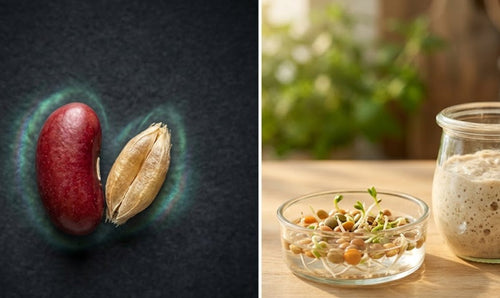
Almonds, walnuts, and other nuts are not boiled, but soaking allows for a partial leaching of their oxalates into the water, according to the same physicochemical principle. Soaking offers a double advantage: it reduces the oxalate and phytic acid content while activating the seed enzymes, improving overall digestibility and mineral bioavailability.
Nut Soaking Method Soak almonds, cashews, or walnuts in a large volume of water for 8 to 12 hours (overnight). Discard the soaking water and rinse thoroughly before consumption. Soaked nuts can be eaten as is, or lightly dried in a dehydrator or in the oven at a low temperature to regain their crunch.
The Buffering Role of Citrate and Hydration
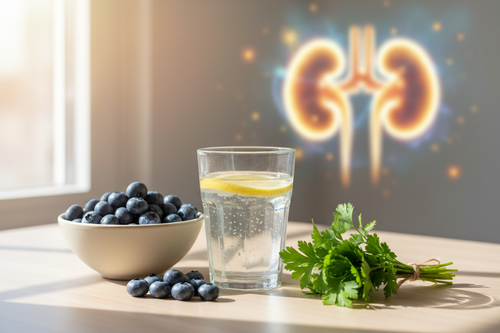
Two complementary levers complete the prevention strategy. The first is citrate, found notably in lemon juice, which acts as a natural crystallization inhibitor. Citrate binds to urinary calcium and prevents it from combining with oxalates, thus reducing crystal formation. A lemon juice squeezed into a large glass of water in the morning is a simple and beneficial habit for a lithiasic predisposition. The second lever, the most fundamental of all, is hydration. Drinking enough water (1.5 to 2.5 liters per day depending on activity and climate) mechanically dilutes the urine and reduces the concentration of ions, making supersaturation much harder to reach. Clear and abundant urine is the first protection against stones.
The Counterintuitive Reflex: do not reduce your dietary calcium intake to prevent stones; this is a common mistake. An adequate calcium intake (during meals) allows calcium to bind to oxalates in the intestine and eliminate them through the stool rather than through the urine. Reducing calcium paradoxically increases the risk of stones. The real lever is the reduction of sodium and oxalates, not calcium.
Regaining Control of Your Metabolic Health
The prevention of kidney stones is the perfect example of an area where daily lifestyle makes all the difference. No medication replaces good hydration, proper food preparation, and control of industrial sodium. But these adjustments require consistency and personalized support according to your predisposition, history of stones, urinary composition, and personal dietary habits.
For personalized nutritional support tailored to your metabolic predisposition and history, join Le Terrier's monthly follow-up for 10 euros: concrete protocols, reviewed every month, to provide lasting protection for your kidneys and mineral balance. You can also explore our health protocols and e-books to deepen the subject.
FAQ on Kidney Stones and Diet
Should I Stop Eating Spinach to Avoid Kidney Stones?
No. Spinach is rich in oxalates but also in valuable nutrients. The solution is not to ban it but to prepare it properly: boiling it for 3 to 5 minutes in a large volume of water and then discarding the cooking water eliminates 30 to 87% of its soluble oxalates. Simply avoid consuming it raw in large daily quantities, especially if you are predisposed to stones.
Why Does an Excess of Salt Promote Kidney Stones?
A high sodium intake reduces renal calcium reabsorption. To eliminate the excess salt, the kidneys excrete more calcium in the urine (hypercalciuria). This elevated urinary calcium then combines with dietary oxalates to form calcium oxalate crystals, the component of 80% of kidney stones. It is the combination of excess salt + oxalates that is dangerous, not one or the other in isolation.
Should I Reduce Calcium to Avoid Stones?
No, this is a common and counterproductive mistake. An adequate calcium intake during meals allows calcium to bind to oxalates directly in the intestine, which are then eliminated through the stool rather than reaching the urine. Reducing calcium paradoxically increases oxalate absorption and the risk of stones. The real prevention lever is the reduction of sodium and oxalates, never calcium.
How Much Water Should I Drink to Prevent Kidney Stones?
The goal is to produce at least 2 to 2.5 liters (68 to 85 fl oz) of clear urine per day, which generally corresponds to drinking 2.5 to 3 liters (85 to 100 fl oz) of fluids depending on physical activity and climate. Abundant and clear urine dilutes calcium and oxalate ions, making supersaturation and crystallization much more difficult. Hydration is the simplest and most effective preventive measure against recurrent stones.
Is Lemon Juice Effective Against Kidney Stones?
Yes, lemon is interesting thanks to its richness in citrate. Citrate is a natural crystallization inhibitor: it binds to urinary calcium and prevents it from forming crystals with oxalates. A lemon juice squeezed into a large glass of water every morning increases urinary citrate and constitutes a simple preventive habit, particularly useful for people with a low urinary citrate level (hypocitraturia).
Does Steaming Remove Oxalates Like Boiling Does?
No, steaming is much less effective than full-water boiling. Since oxalates are water-soluble, they can only be effectively removed if they dissolve in a large volume of water that is then discarded. Steam does not create this dissolution phenomenon. For vegetables very rich in oxalates (spinach, Swiss chard), always favor boiling with the discarding of the cooking water.
Why Should Almonds and Walnuts Be Soaked?
Soaking nuts for 8 to 12 hours allows a portion of their oxalates and phytic acid to leach into the water, which is then discarded. This reduces their lithogenic potential (stone formation) while improving digestibility and mineral bioavailability. Rinse thoroughly after soaking before consumption.
When Should I Seek Emergency Care for Kidney Stones?
Seek immediate care in case of acute and intense pain in the lower back or flank (renal colic), especially if it is accompanied by fever, chills, blood in the urine, nausea or vomiting, or an inability to urinate. Renal colic is a medical emergency that requires hospital management. The prevention advice in this article only applies to prevention and predisposition, never to the management of an acute crisis.
Protecting Your Kidneys Starts in Your Kitchen
Kidney stones are not an inevitable genetic fate; in the vast majority of cases, they are the result of an unbalanced urinary chemistry that diet and hydration can correct. Understanding that the danger does not come from spinach itself, but from its combination with an excess of refined sodium, changes everything: you do not have to give up healthy foods, you simply need to prepare them intelligently and control your hidden salt. Boil and discard the water, soak nuts, drink plenty of fluids, squeeze a lemon: four simple actions that, practiced consistently, provide lasting protection for your kidneys. A renal colic remains, however, an absolute medical emergency, and naturopathic prevention never replaces nephrological follow-up for a diagnosed stone.

2 comments
Merci infiniment
Je vous remercie du fond du cœur,pour le travail acharné que vous faites pour la communauté.Sachez qu’il n’est pas ignoré de tous, certains vous voient.Continuez,Dieu vous accompagne