Parasites in Children: 4 Common Warning Signs and Naturopathic Solutions
Share
Reading time: 10 minutes
Silent invaders may be attacking your child's health right now. Their body is trying to speak to you, but do you know how to decode its signals?
As an attentive parent, you have probably noticed some unusual behaviors: disturbed sleep, a finger constantly in the nose, ravenous hunger without weight gain, or dark circles under their little eyes. You may have put it down to school fatigue or a growth spurt. What if these seemingly harmless symptoms were actually the warning signs of an intestinal parasitic infection?
Intestinal parasites affect millions of children every year, including in developed countries. According to the World Health Organization (WHO), soil-transmitted helminths (intestinal worms) affect more than a billion people worldwide, with a particularly high prevalence among school-aged children.
Here are the 4 most common signs of a parasitic infection in children, and gentle solutions to help them. Of course, this content is purely educational and does not replace a medical consultation with your pediatrician.
Understanding the impact of intestinal parasites on children's health
Why are children prime targets?
Children represent the most vulnerable population to parasitic infections for several physiological and behavioral reasons:
-
An immune system under construction: until the age of 7-8, the child's immune system is still maturing. It has not yet developed all the defenses necessary to effectively fight parasites.
-
Hand hygiene: children frequently put their hands in their mouths after touching contaminated surfaces (floors, toys, pets).
-
Group living: daycare centers, preschools, and elementary schools are environments conducive to the transmission of parasites, especially pinworms, which spread extremely easily.
-
Contact with nature: playing in the sand, the garden, or with animals exposes children to parasite eggs present in the environment.
The mechanism of action: nutritional depletion and nerve irritation
Once settled in the digestive tract, intestinal parasites act on several fronts:
-
Nutritional depletion: parasites feed on the nutrients ingested by the child (proteins, vitamins, minerals), creating deficiencies despite a normal diet.
-
Irritation of the intestinal mucosa: their presence causes chronic inflammation of the intestinal wall, disrupting nutrient absorption and triggering immune responses.
-
Release of toxins: the metabolic waste of parasites (especially ammonia) overloads the liver and lymphatic system.
-
Irritation of the nervous system: the activity of parasites, particularly at night, stimulates the vagus nerve and disrupts the child's autonomic nervous system.
Decoding the 4 emergency signs and natural solutions
Sign No. 1: restless sleep, nightmares, and nocturnal enuresis
Does your child wake up several times a night, have recurring nightmares, or have started wetting the bed again after being dry? This is a classic sign of parasitic infections.
The scientific mechanism
According to the Centers for Disease Control and Prevention (CDC), pinworm (Enterobius vermicularis) infection is the most common parasitic infection in temperate countries. These small 1 cm (0.4 in) white worms have a particularity: they become active mainly at night.
The female pinworm migrates to the anal region to lay her eggs, causing intense nocturnal pruritus (itching). This local irritation triggers stimulation of the vagus nerve (vagal irritation), which disrupts the child's parasympathetic nervous system. Result: fragmented sleep, nocturnal restlessness, nightmares, and sometimes enuresis (bedwetting) due to sphincter relaxation.
The naturopathic solution: a gentle cleansing through diet
Garlic (Allium sativum) is one of the most documented natural antiparasitics. Its active compound, allicin, has proven antiparasitic, antibacterial, and antifungal properties in vitro (studies referenced on PubMed). Garlic creates an intestinal environment unfavorable to parasites.
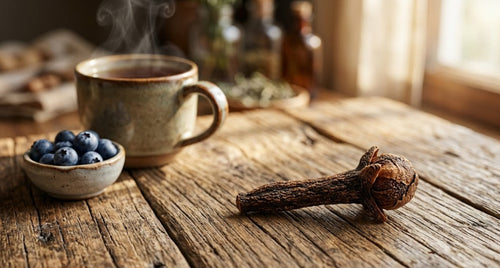
Clove perfectly complements the action of garlic. It contains caryophyllene, a compound capable of destroying parasite eggs that garlic alone cannot reach. This synergy is fundamental to breaking the reproductive cycle.
In practice:
- Incorporate raw garlic (crushed or finely chopped) into your child's salad dressings or dishes
- Add a pinch of powdered clove to compotes or smoothies
- For reluctant children: deodorized garlic capsules are available in a pediatric version
Sign No. 2: incessant nose-picking and digestive irritation
Does your child constantly have their finger in their nose? Do you think of allergies, but antihistamines make no difference? The origin could be intestinal.
The scientific mechanism
This surprising sign perfectly illustrates the gut-sinus connection that functional medicine has highlighted for years. Here is the mechanism:
- Parasites cause chronic inflammation of the intestinal mucosa
- This inflammation triggers an immune response with eosinophilia (increase in eosinophils, white blood cells involved in the fight against parasites)
- Eosinophils release histamine systemically
- Histamine causes localized itching, especially in the nasal mucosa (rich in histamine receptors)
The child picks their nose not because of an external allergen, but because of an internal inflammatory response triggered by intestinal irritation.
The naturopathic solution: changing the intestinal terrain
Pumpkin Seeds are a little-known treasure. They contain cucurbitacin, an amino acid scientifically documented (PubMed) for its ability to paralyze certain intestinal worms, facilitating their natural elimination through transit.
Limiting sugar is absolutely fundamental. Sugar is the parasites' favorite fuel. It also feeds the yeasts (Candida) that often coexist with parasitic infections, creating an inflammatory vicious circle.
In practice:
- Offer a handful of plain pumpkin seeds as a snack (about 30g)
- Drastically reduce refined sugars, sodas, candies, and industrial cereals
- Introduce high-quality probiotics to restore the balance of the microbiota
Sign No. 3: insatiable hunger without weight gain
Does your child eat a lot, constantly ask for food, but their weight curve stagnates or decreases? Parasites may be stealing their nutrients.
The scientific mechanism
The WHO extensively documents this phenomenon under the term nutritional depletion. Soil-transmitted helminths (worms transmitted through the soil such as roundworms, hookworms, and whipworms) settle in the small intestine and feed directly:
- On macronutrients (proteins, carbohydrates, lipids) intended for the child
- On essential micronutrients, especially iron and vitamin A
- On blood for certain species (hookworms)
Result: despite abundant food, the child suffers from nutritional deficiencies. Their body, deprived of energy, sends constant hunger signals. It is a vicious circle: the more they eat, the more they feed the parasites, and the less they absorb for themselves.
Associated signs may include: chronic fatigue, concentration difficulties, irritability, growth delay.
The naturopathic solution: replenish reserves and repair the intestinal barrier
Bone Broth is an ancestral elixir with remarkable benefits. It is naturally rich in:
- Glutamine: essential amino acid for enterocytes (intestinal wall cells). Glutamine helps repair the intestinal barrier damaged by parasitic inflammation.
- Collagen and gelatin: support tissue healing.
- Bioavailable minerals (calcium, magnesium, phosphorus).
Zinc is an essential mineral with a double action:
- It supports the immune system in its fight against parasites
- It promotes tissue healing of the intestinal mucosa
- It is often deficient in children with parasites (malabsorption)
In practice:
- Prepare homemade bone broth (organic chicken bones, vegetables, herbs) and incorporate it into soups and purees
- Consult your pediatrician for a possible assessment of zinc status
- Offer foods rich in zinc: red meat, seafood, pumpkin seeds (them again!)
Would you like personalized support? If you want to set up a natural protocol tailored to your child (anti-parasite diet, immune support, rebalancing the microbiota), join my naturopathic follow-up program for only €10 a month. You will receive personalized advice and gentle protocols adapted to children.
Sign #4: dark circles and paleness around the eyes
Does your child have very dark circles, puffy eyes in the morning, and a pale complexion despite apparently getting enough sleep? It is not just a matter of tiredness.
The scientific mechanism
These visible signs on the child's face reflect a deep metabolic fatigue. Here is what happens inside:
-
Liver overload: parasites produce toxic metabolic waste, including ammonia. The liver, the body's central detoxification organ, becomes overloaded by having to eliminate these toxins.
-
Lymphatic congestion: the lymphatic system, the body's true "sewer network," is overwhelmed by the amount of waste to clear. The lymph nodes of the face and neck may be constantly under strain.
-
Resulting anemia: chronic malabsorption of iron and vitamin B12 causes anemia, which shows up as paleness (especially around the mouth and eyes) and fatigue.
Dark circles (known as "allergic shiners") are a recognized clinical sign of toxic overload and chronic inflammation.
The naturopathic solution: support elimination and drain gently
Hydration is the absolute foundation. Water helps the kidneys and bowel movements work properly. A dehydrated child will have a slowed-down elimination system.
Fiber is essential to:
- Capture toxins in the gut and remove them through the stool
- Feed the good bacteria of the microbiota
- Speed up transit and reduce the time toxins stay in contact with the intestinal lining
Green vegetables (broccoli, spinach, cabbage, green beans) are rich in:
- Chlorophyll: a natural blood purifier
- Sulfur compounds (in cruciferous vegetables): essential for Phase II liver detoxification
- Antioxidants: protect cells from the oxidative stress caused by toxins
In practice:
- Make sure your child drinks enough plain water (about 1 to 1.5 liters depending on age)
- Include green vegetables at every meal (even in small amounts)
- Offer fiber-rich fruit: apples with the skin, pears, raspberries
Summary table: the 4 signs and their solutions
| Warning sign | Mechanism | Natural solutions |
|---|---|---|
| Restless sleep, nightmares, bedwetting | Nighttime activity of pinworms, irritation of the vagus nerve | Garlic (allicin) + Clove (caryophyllene) |
| Constant nose picking | Intestinal inflammation → eosinophilia → histamine release | Pumpkin seeds (cucurbitacin) + Less sugar + Probiotics |
| Insatiable hunger without weight gain | Nutrients diverted by the parasites | Bone broth (glutamine) + Zinc + Iron-rich foods |
| Dark circles and paleness | Liver and lymphatic overload, anemia | Hydration ++ + Fiber + Green vegetables (liver detox) |
Would you like advice on your situation? During a vitality assessment, we review together your diet, sleep, stress, and goals, then build a plan adapted to your pace.
The holistic approach: beyond elimination
The importance of probiotics to restore the flora
After a parasitic cleansing (natural or with medication), the child's intestinal microbiota is often unbalanced. Parasites have altered the intestinal ecosystem, and the "good" bacteria have been weakened.
The introduction of high-quality probiotics is essential to:
- Repopulate the intestine with beneficial strains (Lactobacillus, Bifidobacterium)
- Strengthen the intestinal barrier
- Stimulate local immunity (80% of the immune system is in the intestine!)
- Prevent reinfection by creating an environment hostile to parasites
In practice: choose pediatric probiotics containing multiple strains, with at least 5 billion CFU per dose.
Essential hygiene measures to prevent reinfection
Reinfection is the classic trap of parasitic infections, especially for pinworms whose eggs are extremely resistant. Here are the essential hygiene measures:
- Cut nails short: Eggs settle under the nails during nocturnal scratching
- Rigorous hand washing: Before every meal, after using the toilet, after playing outside (30 seconds minimum with soap)
- Wash sheets and pajamas: At 60°C (140°F) minimum, once a week during the cleansing period
- Morning shower: To remove eggs deposited during the night around the anal region
- Clean underwear every day: An obvious point often neglected
- Avoid sharing towels between family members
When to consult a pediatrician? The importance of diagnosis
The naturopathic approach is valuable for prevention and support, but it never replaces a medical diagnosis. Be sure to consult your pediatrician if:
- Symptoms persist despite natural measures (more than 2-3 weeks)
- Your child has lost a significant amount of weight
- You observe blood in the stool
- Your child suffers from intense or recurring abdominal pain
- They have a fever associated with digestive symptoms
- You suspect anemia (extreme paleness, shortness of breath, intense fatigue)
The doctor may perform a scotch tape test (Graham test) to detect pinworms, a stool analysis (parasitological stool examination) to identify other parasites, and prescribe an appropriate antiparasitic treatment if necessary.
Important: if diagnosed, medication should often be given to the entire family to prevent cross-recontamination.
Listen to your child's body
Your child's body is an intelligent machine that is constantly communicating. Disturbed sleep, compulsive scratching, excessive hunger, or dark circles under the eyes are not whims or simple phases: they may be calls for help from their body.
Summary of key actions:
- Carefully observe the signs mentioned in this article
- Add garlic, cloves, and pumpkin seeds to their diet
- Drastically reduce sugar (fuel for parasites)
- Support their liver with green vegetables and proper hydration
- Strengthen their intestinal barrier with bone broth and probiotics
- Implement strict hygiene measures to prevent reinfection
- Consult your pediatrician if you have any doubts or if symptoms persist
By adopting a preventive and natural approach, you give your child the best chance of maintaining a healthy gut, a strong immune system, and abundant vitality.
Take care of them, naturally.