Mediterranean diet and gut health: what science says
Share
Among all the dietary patterns studied, the Mediterranean diet is one of those that comes up most often when talking about health. Heart, brain, longevity... and more and more, the gut. It's no coincidence: this pattern ticks almost all the boxes of what your microbiota needs.
Good news, it's neither a strict diet nor a list of forbidden foods. It's a simple, delicious way of eating that can be adapted to French cuisine. In this article, we review what research has really shown, and we give you concrete steps to start this week.
What exactly is the Mediterranean diet?
The word "diet" is misleading. It's more of a dietary pattern, inspired by the way people traditionally ate around the Mediterranean (Crete, southern Italy, Greece) in the mid-20th century.
| Frequency | Foods |
|---|---|
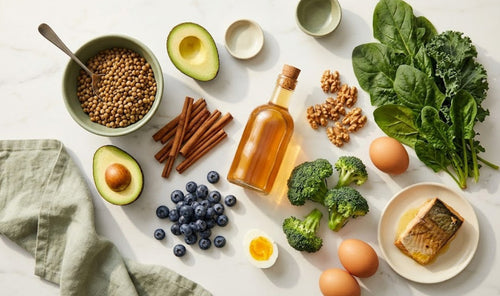
| At every meal | Vegetables, fruits, whole grains, extra virgin olive oil, herbs and spices |
| Every day | Nuts (walnuts, almonds), seeds, yogurt or cheese in moderation |
| Several times a week | Legumes (lentils, chickpeas, beans), fish and seafood, eggs |
| In moderation | Poultry, red meat, charcuterie, pastries, sugary products |
There is also a dimension we often forget: meals taken together, without rushing, and daily physical activity. The Mediterranean pattern is a lifestyle as much as a plate.
What science says about the gut
The Mediterranean diet is best known for its effects on the heart. In the large Spanish PREDIMED trial, a Mediterranean diet enriched with olive oil or nuts reduced the risk of major cardiovascular events by about 30% compared to a low-fat diet (Estruch et al., New England Journal of Medicine, 2018).
In recent years, several studies have looked at the gut:
- More short-chain fatty acids. In Italian adults, a diet close to the Mediterranean pattern is associated with more short-chain fatty acids in the stool, molecules produced by good bacteria from fiber (De Filippis et al., Gut, 2016).
- An effect in 8 weeks. In overweight adults, eight weeks of a Mediterranean diet, without reducing calories, increased Faecalibacterium prausnitzii, an anti-inflammatory bacterium, and lowered cholesterol (Meslier et al., Gut, 2020).
- In seniors. In the European nu-AGE study, one year of a Mediterranean diet in over 600 older people changed the microbiota. These changes were associated with less frailty and lower inflammation markers (Ghosh et al., Gut, 2020).
- In Crohn's disease. In the DINE-CD trial, the Mediterranean diet gave results comparable to a much more restrictive diet on symptoms, making it an easier option to follow (Lewis et al., Gastroenterology, 2021). It is always a complement to medical follow-up.
What to remember: these studies show real but modest effects, and many are observational. The Mediterranean diet does not work miracles, but it is a solid foundation.
Why it works: 4 mechanisms
1. Lots of varied fiber
Vegetables, fruits, legumes and whole grains provide fibers of very different types. Each type of fiber feeds different families of bacteria. The more varied your plate is, the more chances your microbiota has of being diversified.
2. Plenty of polyphenols
Extra virgin olive oil, herbs, red fruits, onions, colorful vegetables: all these foods are rich in polyphenols. A large part of these molecules reaches the colon, where bacteria transform them. They also promote certain beneficial species. Extra virgin olive oil notably contains oleocanthal, which we talk about in our article on anti-inflammatory olive oil.
3. Good fats
The Mediterranean pattern favors olive oil, nuts and fatty fish. It thus provides omega-3s and monounsaturated fats, instead of the fats from ultra-processed products. To go further, read our article on the omega-3 / omega-6 ratio.
4. Few ultra-processed products
Fewer additives, emulsifiers and added sugars, that's less disruption for the intestinal wall. It's not so much what we remove that counts as the space we leave for whole foods.
Want an opinion on your situation? During a vitality assessment, we review together your diet, your sleep, your stress and your goals, then we build a plan adapted to your pace.
What the daily plate looks like
| Meal | Example |
|---|---|
| Breakfast | Plain yogurt, oatmeal, seasonal fruits, a handful of nuts |
| Lunch | Lentil salad, crunchy vegetables, fresh herbs, olive oil and lemon, whole wheat bread |
| Snack | A fruit and a few almonds |
| Dinner | Sardines or mackerel in the oven, roasted vegetables, quinoa or bulgur |
Do you like pasta? It has its place, especially whole wheat or cooked al dente and accompanied by vegetables. We talk about it in our article on Italian pasta and digestion.
Want a plan adapted to your tastes and your pace? Le Terrier's personalized follow-up at ten euros per month helps you evolve your diet step by step, without frustration.
Start with 7 simple steps
1. Change your oilUse extra virgin olive oil for gentle cooking and seasoning. Keep a canola or walnut oil for vinaigrettes, for the omega-3s.
2. Legumes 3 times a weekLentils, chickpeas, beans: in salad, in soup, in hummus. Start with small portions if you are not used to it.
3. Half the plate in vegetablesRaw, cooked, roasted, in soup: variety counts more than the perfect quantity. Aim for about thirty different plants per week, including herbs and spices.
4. A handful of nuts per dayWalnuts, almonds, plain hazelnuts: about 30 g, as a snack or in your dishes.
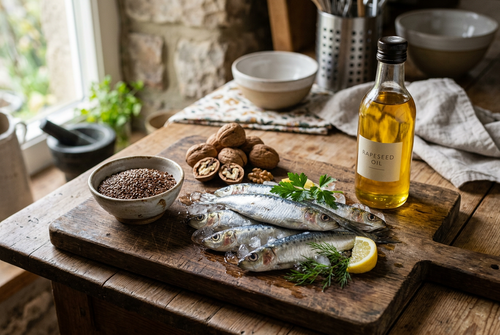
5. Fatty fish once a weekSardines, mackerel, herring: affordable, rich in omega-3s, and easy to cook.
6. Switch to whole grainsWhole wheat or sourdough bread, semi-brown rice, bulgur, oats. Whole grains keep their fiber.
7. Take your timeEat sitting down, without a screen, chewing well: your digestion starts in the mouth, and stress at the table weighs on the gut.
What if my gut is sensitive?
A sudden intake of fiber can cause bloating, especially if your flora is unbalanced. A few tips:
- Increase fiber gradually, over two to three weeks.
- Prefer well-cooked, rinsed, or sprouted legumes, and cooked vegetables at the beginning.
- Drink enough water throughout the day.
- If transit remains difficult, a gentle fiber like blonde psyllium can help regularize it.
To knowIn case of irritable bowel syndrome, inflammatory bowel disease or persistent pain, adapt your diet with your doctor or a health professional. Our advice does not replace medical follow-up.
To go further on the signs of an unbalanced flora, read our article on intestinal dysbiosis, and for fermented foods that complement this pattern well, the one on natural probiotics.
Frequently asked questions
Is the Mediterranean diet good for the gut?
Yes, it is one of the best studied dietary patterns. Rich in fiber, varied plants and olive oil, it is associated with a more diversified microbiota and a higher production of short-chain fatty acids, molecules that feed the colon wall.
How long does it take to see an effect on the microbiota?
The composition of the microbiota changes in a few days when the diet changes. In a trial conducted in overweight adults, eight weeks of a Mediterranean diet, without calorie reduction, was enough to increase certain beneficial bacteria and lower cholesterol.
Do you need to eat fish to follow a Mediterranean diet?
Fish is part of it, with two portions per week including one of fatty fish. But the heart of the pattern remains plant-based: vegetables, legumes, whole grains, fruits, nuts and olive oil. A vegetarian version is entirely possible.
Does the Mediterranean diet make you lose weight?
It is not a weight-loss diet, and that is precisely its strength. It does not rely on restriction but on the quality of the foods. Many people see their weight stabilize, but the main goal remains overall health.
Can you follow a Mediterranean diet with a sensitive gut?
Yes, by adapting. Legumes and certain vegetables rich in fermentable fiber can cause bloating at the beginning. Increase quantities gradually, prefer well-cooked or sprouted legumes, and ask for advice if you have irritable bowel syndrome.
Is olive oil enough to enjoy the benefits?
No. Extra virgin olive oil is a pillar, but the observed benefits come from the whole pattern: the variety of plants, the fiber, the legumes, the few ultra-processed products and the pleasure of eating together.
Is red wine part of the Mediterranean diet?
It appears in some traditional descriptions, but this is not a reason to start drinking. Alcohol, even in small quantities, is not recommended for health. Polyphenols are also found in red fruits, grapes, olive oil and tea.
Which foods to reduce first?
Without forbidding anything, first reduce ultra-processed products, sugary drinks, charcuterie and large quantities of red meat. They naturally leave more room for plants, legumes and good fats.
What to remember
The Mediterranean diet is nothing exotic or complicated. More plants, legumes, olive oil, fish from time to time, and fewer ultra-processed products: it's a pattern your microbiota loves, and that research has supported for decades. No need to change everything at once: choose one or two steps this week, then add others. It's consistency that makes the difference.
Want to go further, subject by subject? Discover our health protocols and e-books, designed to accompany you at your pace.
This article is informative and does not replace medical advice.
To go further
- Intestinal health: the complete guide for a naturally balanced microbiota
- Anti-inflammatory diet: the practical guide to soothe inflammation daily
- Omega-3 and omega-6: how to rebalance your ratio, simply
- Olive oil and oleocanthal: the natural anti-inflammatory that intrigues science